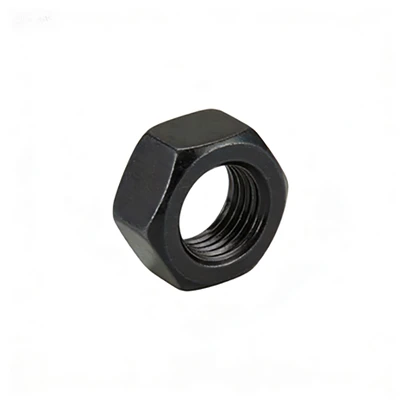
Welcome to our blog! As a trusted supplier of structural nuts, I’m excited to delve into a fundamental property that plays a crucial role in the performance of these essential fasteners: ductility. Structural Nuts
Understanding Ductility
Ductility is defined as the ability of a material to deform plastically under tensile stress without fracturing. In simpler terms, it’s the capacity of a nut to stretch and change shape when pulled apart before it breaks. This property is of utmost importance in structural applications where loads can vary widely and unexpected stresses can occur.
Let’s consider a real – world example. In a large construction project, such as a bridge or a high – rise building, structural nuts are used to hold different components together. When the structure experiences dynamic loads, like wind gusts or seismic activity, the nuts are subjected to forces that can cause them to stretch or deform. A nut with high ductility can withstand these forces and deform gradually, distributing the stress evenly and preventing sudden failure.
Measuring Ductility
The ductility of a material is typically measured by two main parameters: elongation and reduction of area.
Elongation is determined by conducting a tensile test. A sample of the nut material is placed in a testing machine, and a gradually increasing tensile force is applied until the sample breaks. The percentage increase in the length of the sample from its original length to the length at the point of fracture is the elongation. For example, if a nut sample with an original length of 100 mm stretches to 120 mm before breaking, the elongation is 20%.
Reduction of area is another important measure. It is calculated by comparing the cross – sectional area of the sample at the point of fracture with the original cross – sectional area. A higher percentage reduction of area indicates greater ductility.
Factors Affecting the Ductility of Structural Nuts
Material Composition
The type of material used to manufacture the structural nut is the most significant factor influencing its ductility. Common materials for structural nuts include carbon steel, alloy steel, and stainless steel, each with different levels of ductility.
Carbon steel is widely used due to its cost – effectiveness. Low – carbon steels generally have high ductility because they contain a relatively small amount of carbon, which allows the iron atoms to slide past each other more easily when stressed. As the carbon content increases, the steel becomes harder and less ductile.
Alloy steels are made by adding elements such as chromium, nickel, and molybdenum to carbon steel. These alloying elements can enhance the strength, hardness, and corrosion resistance of the nut, but they may also reduce ductility depending on the specific composition and heat treatment.
Stainless steel, known for its corrosion resistance, is also used for structural nuts in environments where rust is a concern. Austenitic stainless steels, in particular, have good ductility because of their face – centered cubic crystal structure, which allows for easy dislocation movement during deformation.
Manufacturing Process
The way the structural nut is manufactured also affects its ductility. Processes such as forging, machining, and heat treatment can have a significant impact.
Forging is a common manufacturing method for structural nuts. During forging, the metal is heated and then shaped by applying pressure. Forged nuts generally have better ductility because the forging process aligns the grain structure of the metal in a way that enhances its strength and ductility.
Machining, on the other hand, involves cutting and shaping the nut from a solid piece of metal. If not done properly, machining can introduce stress concentrations in the nut, which may reduce its ductility.
Heat treatment is a critical step in the manufacturing process. Annealing, for example, is a heat – treatment process that involves heating the nut to a specific temperature and then slowly cooling it. Annealing can improve the ductility of the nut by relieving internal stresses and refining the grain structure.
Importance of Ductility in Structural Applications
Safety
In structural applications, safety is paramount. Ductile nuts can absorb energy during deformation, which is crucial in preventing sudden and catastrophic failures. For instance, in an earthquake – prone area, a building’s structural nuts need to be able to stretch and deform to absorb the seismic energy. This ductile behavior can help prevent the collapse of the structure and protect the lives of the people inside.
Load Distribution
Ductile nuts can distribute loads more effectively across the connected components. When a load is applied, a ductile nut will deform slightly, allowing the stress to be spread out over a larger area. This reduces the risk of stress concentrations, which can lead to premature failure of the nut or the connected components.
Fatigue Resistance
Structural nuts are often subjected to cyclic loading, such as vibrations in a machinery or traffic – induced vibrations in a bridge. Ductility plays a vital role in fatigue resistance. A nut with good ductility can withstand repeated loading without developing cracks, which extends its service life and reduces the need for frequent replacements.
Our Commitment as a Structural Nuts Supplier
As a supplier of structural nuts, we are committed to providing products with optimal ductility. We carefully select the materials for our nuts, ensuring that they meet the highest quality standards. Our manufacturing processes are designed to enhance the ductility of the nuts while maintaining their strength and other important properties.
We conduct rigorous testing on all our products to verify their ductility and other mechanical properties. Our in – house testing facilities are equipped with state – of – the – art equipment, allowing us to accurately measure elongation, reduction of area, and other parameters related to ductility.
In addition, we offer technical support to our customers. Our team of experts is available to answer any questions you may have about the ductility of our structural nuts and help you choose the right product for your specific application.
Conclusion
Ductility is a critical property of structural nuts that directly impacts their performance, safety, and reliability in various applications. Understanding the factors that affect ductility and how it is measured is essential for selecting the right nuts for your project.
As a leading supplier of structural nuts, we take pride in offering products with excellent ductility. Whether you are working on a small construction project or a large – scale infrastructure development, we have the right nuts to meet your needs.
Double End Studs If you are interested in learning more about our structural nuts or would like to discuss a potential purchase, we encourage you to reach out to us. Our sales team is ready to assist you in finding the best solutions for your specific requirements and to start a fruitful business relationship.
References
- Callister, W. D., & Rethwisch, D. G. (2017). Materials Science and Engineering: An Introduction. Wiley.
- ASM Handbook Committee. (1997). ASM Handbook, Volume 1: Properties and Selection: Irons, Steels, and High – Performance Alloys. ASM International.
Handan Jihao Fastener Co., Ltd.
We’re known as one of the most professional structural nuts manufacturers and suppliers in China. With abundant experience, we warmly welcome you to wholesale customized structural nuts made in China here from our factory. If you have any enquiry about cooperation, please feel free to email us.
Address: A2, Row 31, Feiyu Screw World, Hebei Pu, Linmengguan Town, Yongnian District, Handan City, Hebei Province
E-mail: wenzhaona0@gmail.com
WebSite: https://www.chinaboltnut.com/
