If you’ve ever walked through a chemical processing plant, a food and beverage production line, or a water treatment facility, you’ve likely seen stainless steel plates and sheets doing heavy-lifting work that other materials can’t handle. But one of the most common questions I get from engineers, plant managers, and project designers is this: how does stainless steel hold up when exposed to phosphoric acid? As a third-generation stainless steel plate and sheet supplier, I’ve answered this question so many times that I’ve stopped giving generic one-liners. The truth is, there’s no single answer—it depends on a handful of factors that make all the difference between a long-lasting component and a corroded headache. Let’s break this down like I would with a customer standing in our warehouse, running their hand over a 304 sheet and asking, “Is this worth the investment for my phosphoric acid application?” Stainless Steel Plate Sheet
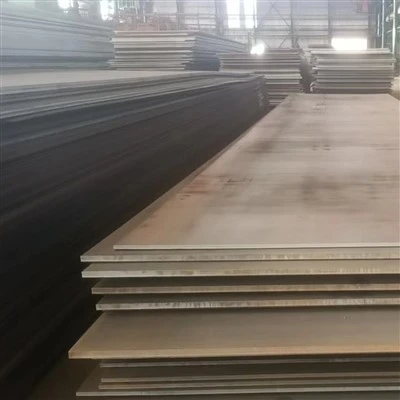
First, let’s get one thing straight: phosphoric acid isn’t a single, static chemical. It’s easy to think of it as a simple liquid, but its concentration, temperature, and even the presence of other impurities turn it into a wildly different corrosive agent. For example, dilute phosphoric acid used in soft drink production is nothing like the hot, concentrated phosphoric acid used in fertilizer manufacturing. I’ve seen customers come to us with 304 stainless steel sheets, thinking “stainless is stainless,” only to have those sheets pit and fail in weeks because their phosphoric acid was 85% concentration and 180°F—far beyond what 304 can handle. That’s the kind of mistake we aim to help them avoid.
Let’s start with the most common stainless steel grades people reach for: 304 and 316. These two make up about 70% of the stainless steel plate and sheet we supply for industrial use, so they’re a natural starting point. 304, also called 18/8 stainless, has 18% chromium and 8% nickel—elements that form a passive chromium oxide layer on the surface that resists corrosion. But this layer only works up to a point. For phosphoric acid concentrations below 10% and temperatures under 120°F, 304 does a decent job—we’ve supplied 304 sheets for small-scale mixing tanks with dilute phosphoric acid that lasted 5+ years with minimal maintenance. But once the concentration climbs above 10% or the temperature hits 140°F, that passive layer starts to break down. At 50% concentration and 160°F, 304 can suffer from uniform corrosion at a rate of 0.5 mm per year—meaning a 2 mm sheet would be gone in 4 years. That’s too fast for most industrial applications where components need to last 10+ years.
Now, 316 stainless steel changes the game a little. It adds 2% molybdenum, which is a game-changer for resistance to acidic environments, especially those with chlorides or higher concentrations of oxidizing agents. For dilute phosphoric acid up to 30% concentration and temperatures up to 160°F, 316 can hold its own—we’ve got a customer in the food processing industry using 316 sheets for their pH adjustment tanks with 15% phosphoric acid, and they’ve had zero corrosion issues in 7 years. But again, push it too far: above 50% concentration and 180°F, 316’s corrosion rate starts to spike. I remember a bulk fertilizer plant that tried using 316 sheets for their phosphoric acid transfer pipes a few years back. Within 18 months, the pipes had deep pitting that caused leaks, forcing them to shut down a production line at a cost of $200,000. That’s the kind of story that stays with me—it’s why we don’t just sell metal; we give recommendations based on real-world results.
So when do you step up to the more specialized grades? Let’s talk about 904L stainless steel. This is a high-alloy austenitic grade with 20% chromium, 25% nickel, 4.5% molybdenum, and small amounts of copper and nitrogen. It’s designed specifically for harsh corrosive environments, including high-concentration phosphoric acid. For phosphoric acid up to 85% concentration and temperatures up to 200°F, 904L has a corrosion rate of less than 0.1 mm per year—well within the acceptable range for most industrial applications. We supplied a set of 904L sheets for a mining company’s leaching process last year, where they’re handling 75% phosphoric acid at 190°F. After 12 months of operation, the plant’s inspection team measured the corrosion and found it to be negligible. That’s the kind of performance that makes the extra upfront cost worth it.
But wait—there’s another factor that’s just as important as the grade itself: the environment’s pH and impurities. Phosphoric acid isn’t always pure. If it’s got sulfuric acid, hydrochloric acid, or even small amounts of heavy metals like iron or lead mixed in, the corrosion dynamics change. For example, the presence of even 1% sulfuric acid in phosphoric acid can double the corrosion rate of 316 stainless steel. I once had a customer in the metal finishing industry who was using 316 sheets for their phosphoric acid pickling tanks, not realizing their waste stream had trace amounts of hydrochloric acid. Their sheets corroded in 6 months, and once we identified the impurity, we recommended they switch to 254 SMO, another high-alloy grade with extra molybdenum and chromium, and their problems stopped. That’s why we always ask customers to share the full composition of their acid, not just the concentration—those extra details can save them thousands in replacements.
Another common variable is temperature, and it’s a tricky one because the corrosion rate doesn’t just increase linearly—it accelerates exponentially as temperature rises. Let me put this in perspective: for 304 stainless steel in 20% phosphoric acid, at 70°F (room temperature), the corrosion rate is 0.05 mm per year. At 140°F, that jumps to 0.8 mm per year—16 times faster. For 316, the same acid at 70°F has a corrosion rate of 0.02 mm per year, but at 180°F, it’s 0.6 mm per year. That’s why temperature is often the make-or-break factor, even more than concentration. We always ask customers to share their operating temperature specs because a sheet that works in a cold storage tank will fail in a hot process line.
Now, let’s talk about a common misconception I run into all the time: “passivation makes stainless steel immune to phosphoric acid.” Passivation is a process where you treat stainless steel with an acid solution (usually nitric acid) to remove free iron from the surface and enhance that chromium oxide layer. It’s important for improving corrosion resistance, especially in mild environments, but it’s not a magic fix for phosphoric acid. Passivated 304 might hold up a little better than non-passivated 304 in dilute acid, but in high-concentration, high-temperature acid, the difference is minimal. I’ve had customers ask us to passivate sheets for their hot phosphoric acid tanks, and we always explain that while passivation is good practice, they need the right grade of steel first—passivation can’t compensate for a suboptimal alloy.
There’s also the issue of galvanic corrosion, which comes into play when two different metals are in contact in the same acidic environment. If you have a stainless steel sheet bolted to a carbon steel support structure, the carbon steel will act as an anode and corrode rapidly, while the stainless steel acts as a cathode. We had a customer a few years back who installed 316 sheets for their phosphoric acid mixing tanks, but used standard carbon steel bolts to secure them. Within 9 months, the bolts had corroded so badly that the sheets started to sag, causing leaks. The fix was simple: switch to 316 or 904L bolts matched to the sheet grade, and they haven’t had an issue since. Galvanic corrosion is often overlooked, but it’s a big one in phosphoric acid applications where multiple metals are in use.
So what’s the takeaway for someone working with phosphoric acid and stainless steel plates and sheets? It’s not about picking the “best” stainless steel—it’s about matching the grade to your specific application’s concentration, temperature, and impurity profile. For most food and beverage applications with dilute, cool phosphoric acid, 304 works perfectly. For industrial applications with moderate concentration and temperature, 316 is a solid choice. For high-concentration, high-temperature applications, 904L or 254 SMO are the way to go. And always consider secondary factors like impurities, galvanic coupling, and passivation—they can make a good choice turn bad or a bad choice turn acceptable.
As a supplier, I pride myself on not just selling stainless steel plate and sheet—I’m a resource for my customers. I’ve spent years building relationships with metallurgists and process engineers, and I keep detailed notes on every application we’ve supplied for phosphoric acid, so I can give accurate, practical advice instead of just generic data. I’ve seen too many projects go wrong because someone picked the wrong stainless steel grade, or cut corners on material quality, and it’s never worth the risk. A little research upfront, and the right recommendation from someone who knows phosphoric acid, will save you from costly downtime, replacement costs, and safety hazards down the line.

If you’re working on a project that involves phosphoric acid and you’re not sure which stainless steel plate or sheet is right for you, I’d be happy to walk through the details with you. We can discuss your acid concentration, operating temperature, impurities, and any other specifics, and I’ll help you pick a material that’s durable, cost-effective, and built to last for your needs. Don’t guess when it comes to corrosion—reach out and let’s find the right solution together.
Stainless Steel Pipe References
ASM International. (2005). Corrosion: Materials. ASM Handbook, Vol. 13A.
NACE International. (2018). Phosphoric Acid Corrosion Handbook.
Stainless Steel World. (2021). Selecting Stainless Alloys for Phosphoric Acid Service.
Shandong Henry Group Co., Ltd.
As one of the most professional stainless steel plate sheet manufacturers and suppliers in China since 1995, we’re featured by quality products and good price. Please rest assured to buy premium stainless steel plate sheet for sale here from our factory. Contact us for more details.
Address: No. 2688 Meili Road, Meilihu Office, Huaiyin District, Jinan City
E-mail: sales01@henry-china.com
WebSite: https://www.henry-steelpipe.com/
