Hey there, if you’ve ever wondered how those insanely detailed, perfectly shaped parts go into everything from medical implants to aerospace jet engines, you’re in the right spot. As a precision machining supplier, I get this question all the time from engineers, product designers, and even small business owners who’ve hit a wall trying to make a complex shape that standard machining can’t touch. Today, I’m breaking down the actual precision machining processes we use every day for these tricky, custom shapes—no stuffy jargon, just real talk about what works, what doesn’t, and why it matters when your part can’t be off by even a hair. Precision Machining
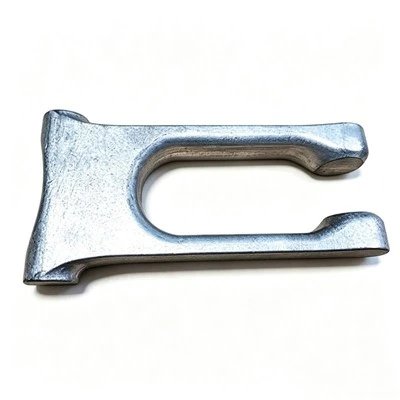
First off, let’s get one thing straight: a “complex shape” isn’t just a part with weird curves. It’s a geometry that standard milling or turning can’t handle alone—think a hip implant with micro-porous surfaces for bone integration, a turbine blade with twisted aerodynamic curves, or a sensor component with tiny internal channels that are smaller than a grain of sand. One wrong cut, and that part is useless, sometimes dangerous. So we rely on specialized precision machining processes tailored exactly to those shapes. Let’s start with the workhorse that’s become non-negotiable for most complex parts: 5-axis machining.
I know, 5-axis sounds like some high-tech buzzword, but let’s keep it simple. Regular 3-axis milling moves a tool across X, Y, Z axes—left/right, forward/back, up/down. But 5-axis adds two more rotational axes: usually A (tilting around the X axis) and B (tilting around the Y axis), or sometimes C for rotary spin. What that means for complex shapes? You don’t have to re-clamp (or “refixture”) the part 10 times to hit every angle and curve. For example, when we make a custom aerospace turbine blade, 5-axis lets the cutter follow the twisted aerofoil smoothly, no awkward gaps between cuts. That’s a huge deal because re-fixturing introduces tiny errors—like a part shifting even a micrometer, which messes up tolerances. We run almost all our high-volume complex parts on 5-axis mills now, and the consistency is night and day. The only catch? You have to program it right. If your CAM (computer-aided manufacturing) software doesn’t map the tool path correctly, you’ll end up with a gouge or a cut that’s too deep. But when done right, 5-axis is the backbone of our precision machining for complex shapes.
Next up, if you need shapes that are even more intricate—like microchannels or internal geometries you can’t reach with a mechanical cutter—electrical discharge machining (EDM) is our go-to. There are two main types we use: sinker EDM and wire EDM. Let’s talk about wire EDM first, because it’s super versatile for complex, tight-tolerance shapes. Wire EDM uses a thin copper or brass wire (like 0.004 inches thick, sometimes even thinner) that travels through the part, and a high-voltage electrical current that erodes material where the wire touches. It’s not cutting—it’s sparking material away, so there’s no physical pressure on the part, which is perfect for soft materials or thin parts that would warp under a mill’s cutter pressure. We used wire EDM recently for a medical component that had 12 tiny, intersecting internal channels for fluid flow—no way we could mill that without damaging the part, but wire EDM got every channel exact, within 0.0001 inches tolerance. Sinker EDM is similar, but it uses a custom-shaped electrode (often made of graphite) that’s dipped into the part to carve out complex cavities. That’s how we make those micro-textured surfaces on hip implants—sinker EDM can replicate even the tiniest, most uneven surface patterns that help bone grow in.
Then there’s additive manufacturing (AM), or 3D printing for industrial parts, which has changed the game for complex shapes a lot of people didn’t even think possible. Wait, I know—some purists used to swear additive was only for prototypes, but not anymore. For complex, organic shapes that you can’t machine at all, lattice structures, or parts that have internal features you can’t reach, AM is the way to go. We use powder bed fusion (specifically selective laser melting, SLM) for high-precision metal parts. For example, a customer came to us with a bracket for a drone that needed to be super light but still strong, with a lattice internal structure to boost stiffness. Machining that lattice would be impossible—you can’t get a mill cutter into those tiny gaps. But SLM builds it layer by layer, melting titanium powder exactly where it needs to be, no extra material to remove. The key here is that AM isn’t for every part. If you need a fully dense, ultra-tough metal part, you might still need to machine it after AM to smooth surfaces. But for complex, organic geometries, it’s a total game-changer.
Don’t overlook one process that’s often paired with these: CNC turning for non-round complex shapes, or more specifically, multi-tasking CNC machines. Wait, turning is usually for cylindrical parts, right? But modern multi-tasking machines combine turning, milling, drilling, even grinding all in one setup. So if you have a part that’s got a curved shaft with flat, angled faces and micro-holes drilled at weird spots, you don’t have to move it between a lathe and a mill. We did a custom hydraulic component last quarter that had a tapered curved body, internal threads, and 8 angled ports—all done on a single multi-tasking CNC in one setup. No re-fixturing, no alignment errors, and we turned the lead time from 2 weeks to 4 days. That’s the kind of efficiency (and precision) that changes things for customers.
Now, let’s talk about a few niche processes that we pull out for really specific complex shapes, because not every job fits the big machines. One is ultrasonic machining (USM), which is perfect for brittle materials like ceramics, glass, or carbide—materials that are way too fragile for EDM or milling, because they’ll crack under pressure. USM uses a vibrating tool (think 20,000 vibrations per second) that’s covered in abrasive slurry, and it erodes material by pounding tiny abrasive particles against the part. We used USM last year for a custom ceramic sensor housing that had a complex, curved cavity—if we tried to mill that ceramic, it would’ve shattered before we finished the first cut. USM got the shape exact, no cracks, perfect for the customer’s needs. Another niche one is laser ablation, which is great for micro-complex shapes—like tiny markings, micro-slots, or surface textures on parts that are smaller than a dime. We use it for things like serial numbers on medical implants that are so small you need a magnifying glass to read them, no risk of damaging the part’s surface or shape.
Wait, I should also mention something that’s not a process, but super important for getting these complex shapes right: tolerance validation and post-processing. All these processes give you tight tolerances, but you need to check them with coordinate measuring machines (CMMs) or optical scanners to make sure. A lot of suppliers skip that, but as a precision machining vendor, we scan every complex part before it ships to confirm it matches the CAD (computer-aided design) file down to the micrometer. For example, a turbine blade’s shape has to be exactly right to get the aerodynamic performance the customer needs—even a 0.001 inch error can reduce fuel efficiency by a noticeable amount. So post-processing isn’t an afterthought; it’s part of the precision process.
Now, let’s get real about what matters when you’re choosing which process to use. It’s not one-size-fits-all. If you need a high-volume steel bracket, 5-axis is probably best. If you need a custom medical implant with micro-channels, EDM or AM might pair with machining. If you have a brittle ceramic part, USM is the only way to go. The worst thing you can do is force a process that’s not right for the job—we’ve seen customers come to us with parts they tried to make with a standard mill that ended up warped or cracked, just because they didn’t know about the specialized processes for complex shapes.
At the end of the day, all these precision machining processes exist because complex shapes aren’t just a design trend. They’re how we make better, more reliable products—from tools that help surgeons do minimally invasive operations to aircraft that burn less fuel and run longer. If you’re working on a project that needs a complex shape and you’re not sure which process will work, or you’ve had issues with parts that are off, hit us up to talk sourcing and get the part done right. We work with everything from small prototype runs to large production orders, and we tailor every process to your exact specs, no cutting corners.
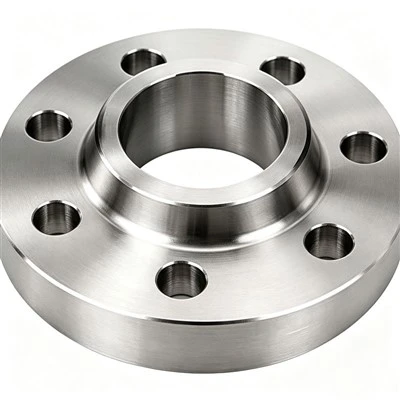
When it comes to precision machining for complex shapes, it’s not about having the fanciest machine—it’s about knowing which tool to use for the job, paying attention to the tiny details that make a part work, and not cutting corners at any step. If you’ve got a part that has you stuck, we’re here to walk through the best options together.
Electric Height Adjustable Desk References
- Metal Improvement Company. (2022). Advanced Precision Machining Processes for Complex Geometries.
- Gibson, I., Rosen, D., & Stucker, B. (2021). Additive Manufacturing Technologies: 3D Printing, Rapid Prototyping, and Direct Digital Manufacturing (3rd ed.).
- Kunaporn, S., & Phajon, J. (2020). A Review of Non-Traditional Machining Processes for Micro-Complex Shapes. Journal of Manufacturing Processes.
- Aerospace Industries Association. (2023). Precision Machining Standards for Complex Turbine Components.
Ningbo Yirui Machinery Manufacturing Co., Ltd.
As one of the most professional precision machining manufacturers and suppliers in China, we’re featured by quality products and good price. Please rest assured to wholesale durable precision machining made in China here from our factory. Customized orders are welcome.
Address: No.107, Wanzhong Village, Jishigang Town, Haishu District, Ningbo City
E-mail: James.he@yiruitek.com
WebSite: https://www.yiruime.com/
