If you’ve ever spent time around industrial refrigeration, natural gas processing, or high-pressure manufacturing lines, you know that not all piston compressors are created equal. As a high-pressure piston compressor supplier, I’ve walked plenty of shop floors where teams complain about sky-high energy bills, unplanned downtime, or inconsistent pressure delivery—problems that rarely stem from the compressor’s core cylinder or motor. More often than not, the culprit is the valve design. It’s a component so small, easy to overlook during routine maintenance, but so critical that a single suboptimal valve can knock 10 to 15% off a compressor’s operational efficiency, according to data we’ve collected from field audits over the last decade. High Pressure Piston Compressors
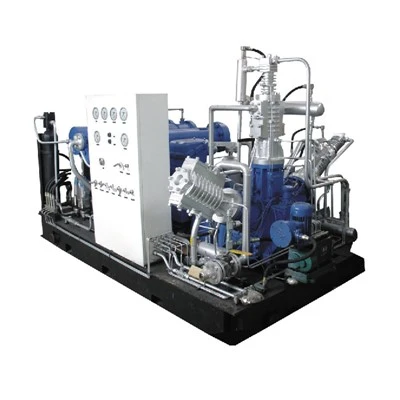
Let me break this down in terms you can tie directly to your operations. High-pressure piston compressors work by drawing in a low-pressure gas, compressing it to a much higher pressure, and pushing it out to your process. The entire cycle relies on a set of suction valves (that let gas into the cylinder) and discharge valves (that let compressed gas out) operating at exactly the right time, with the right amount of flow, and minimal resistance. Valve design isn’t just about picking a part that fits— it’s about matching the valve’s material, actuation, size, and sealing profile to the specific pressure ratio, gas type, and cycle speed of your compressor.
First, let’s talk about valve loss. This is the single biggest hit to efficiency, and it all starts with how valves move. In a reciprocating piston compressor, the piston travels up and down the cylinder at hundreds of cycles per minute. Each time it nears the top (for discharge) or bottom (for suction), pressure differences across the valve open or close it. If the valve is too slow to open, the piston has to work harder to draw in gas, creating a “suction loss” that increases the work needed to compress. If it’s too slow to close, high-pressure compressed gas leaks back into the cylinder during the compression stroke— that’s called “re-expansion loss,” and it means you’re expending energy compressing gas that never actually makes it to your line. For high-pressure applications, where pressure ratios can hit 10:1 or even 50:1 for natural gas transport, these losses aren’t trivial. A 2022 audit of 12 used high-pressure compressors in a petrochemical plant we service found that generic, outdated spring-loaded valves were responsible for 12% higher power consumption and 18 more hours of unplanned shutdowns annually, compared to compressors with optimized valve designs.
The first design choice that impacts this is valve actuation. Most small to mid-sized high-pressure piston compressors still use spring-actuated valves, which rely on a spring’s tension to open and close with pressure changes. Spring tension is a tradeoff: too loose, and the valve slams shut too slowly, causing back leakage; too tight, and you need a higher pressure difference to open the valve, which increases suction loss at the start of the stroke. For high-pressure cycles, this tradeoff becomes even starker. We’ve seen some operators try to fix this by upping spring tension, only to end up with a valve that opens late, requiring 20% more piston work to draw in gas. That’s why we switched our in-house engineered compressors to pressure-loaded poppet valves for high-pressure applications. These valves don’t rely on a fixed spring tension— they use the system’s internal gas pressure to modulate opening and closing speed. For example, in a 350-bar natural gas compressor we designed for a pipeline operator, pressure-loaded valves cut suction losses by 8% compared to spring-actuated valves, because they open 15 milliseconds faster at the start of the stroke, letting more gas enter the cylinder before the piston starts compressing. The result? The same compressor delivers 10% more gas per kilowatt-hour of power, and the operator reduced their annual energy bill by over $70,000 within the first year of installation.
Next, valve material and sealing. High-pressure compression isn’t gentle— gases at 200 bar or higher can carry moisture, particulates, or corrosive compounds, and the valve is the first line of defense. If the valve seal wears out, you get internal leakage that kills efficiency. But material choice also affects weight, which in turn affects actuation speed. Lightweight valve components (like titanium or high-strength polymer poppies) move faster, reducing the time the valve is open or closed incorrectly. Generic steel valves, on the other hand, are heavier, so they take longer to open and close— and in fast-cycle high-pressure compressors, that delay adds up. We once worked with a food processing plant that used a cheap, uncoated steel valve on their carbon dioxide compressor. Within six months, the seal had worn thin from CO2’s corrosive properties, leading to a 9% drop in discharge pressure and forcing the plant to run a backup compressor 24/7 to meet their process demand. When we replaced those valves with coated stainless steel, lightweight polymer-seated poppet valves, leakage dropped by 85%, and they were able to decommission the backup unit entirely— saving them an extra $12,000 a year in maintenance and power costs. It’s not just about durability; it’s about how the material’s weight and finish impact the valve’s ability to keep up with the cycle. For wet gas applications, like natural gas with entrained liquids, we also use valve guards that prevent liquid slugs from damaging the poppet— a common cause of valve failure in high-pressure systems.
Valve size is another often-overlooked factor. It’s tempting to pick a valve that fits your cylinder’s port, but undersized valves mean higher velocity as gas flows through, which creates friction and pressure drop. For high-pressure compressors, where gas density is much higher than in low-pressure units, even a small pressure drop across the valve can add significant load to the motor. Let’s do a quick math check: if your compressor has a 100 mm suction port, and you use a 50 mm valve, the gas velocity is four times higher than it would be with a properly sized valve. That higher velocity means the piston has to push harder to overcome that flow resistance, increasing the work required per compression cycle. We’ve seen operators try to save money on smaller valves, only to find that their compressor runs so hot (from the extra work) that they have to invest in larger cooling systems anyway. Our engineering team calculates valve size based on the gas’s specific volume, the cycle speed, and the pressure ratio— for a 250-bar hydrogen compressor, for example, we use valves that are 20% larger than the industry standard, cutting flow velocity by 35% and reducing energy use by 7%.
Then there’s valve layout and orientation. In multi-stage high-pressure piston compressors, each stage compresses gas to a higher pressure, so valves for the later stages (where pressure is highest) have different design needs than those in the first stage. Some suppliers use identical valves for all stages to cut production costs, but that’s a mistake. In the final compression stage, where pressure can hit 350 bar, the pressure difference across the valve is much larger, so the valve needs a different seal profile to prevent leakage. For our multi-stage compressors, we design each stage’s valves independently: suction valves for early stages are sized for maximum flow, while discharge valves for later stages are optimized for tight sealing and fast closure to prevent backflow. We had a client in the synthetic fuel industry who was using a one-size-fits-all valve design across all three stages of their 400-bar compressor. Their final stage valves were leaking back 12% of compressed gas, so they had to run the compressor 15% longer per batch to hit their required pressure. After we re-engineered the third stage’s valves to have a custom metal-to-metal seal and a smaller, faster-closing poppet, their cycle time dropped by 12% and they reduced their stage three power consumption by 9%.
I know what you’re thinking: “This sounds like a lot of engineering work— why not just buy a standard compressor and call it a day?” Here’s the thing: generic, off-the-shelf high-pressure piston compressors are designed for average applications, not your specific process. If you’re compressing natural gas for a pipeline, you’re dealing with different gas properties, cycle speeds, and pressure ratios than a plant compressing oxygen for medical use, or a manufacturer compressing nitrogen for packaging. The valve is the part that ties all of those variables together, and a custom valve design that’s matched to your exact operation can deliver efficiency gains that pay for the compressor in just two to three years. We recently worked with a mid-sized manufacturing firm that was paying $18,000 a year in excess energy and maintenance costs on a standard compressor they’d bought three years prior. After we replaced their valves with custom pressure-loaded, lightweight poppet valves sized for their 200-bar nitrogen application, their energy bills dropped by $21,000 a year— so they made back their investment in less than a year.
I’ve also seen operators make the mistake of neglecting valve maintenance, which ties directly back to design. Even the best valve will degrade over time, but a poorly designed valve degrades faster. For example, valves with complex internal parts are harder to clean and replace, leading to longer shutdowns when they fail. That’s why our valves have a modular design— the poppet and spring can be replaced in less than an hour, without removing the entire cylinder head. We also provide predictive maintenance checks that track valve wear by measuring pressure differentials across the valve, so you can replace parts before they cause a drop in efficiency. A common test we recommend: if the pressure drop across your suction valve is more than 5% of your suction pressure, it’s time to inspect the valve. For high-pressure applications, that threshold is even lower— 3%, because even a small pressure drop means more work for your compressor.
At the end of the day, valve design isn’t a minor detail— it’s the backbone of high-pressure piston compressor efficiency. Every millisecond of actuation delay, every gram of extra valve weight, every millimeter of mis-sized port, adds up to energy waste, unplanned downtime, and higher operating costs. As a high-pressure piston compressor supplier, we don’t just sell a part or a machine— we engineer valve designs that are tailored to your specific needs, because we know that a compressor is only as good as the part that controls its flow.

If you’re tired of your high-pressure compressor running harder than it needs to, or dealing with frequent valve failures that halt your operations, reach out to our team to discuss your needs. We’ll walk through your current cycle, gas properties, and efficiency goals, and help you find the right valve design to maximize your compressor’s performance. We’ve worked with industries across the board, from petrochemicals to food processing to hydrogen transport, and we’re ready to help you cut costs and improve reliability for your high-pressure piston compressor.
High Pressure Breathing Air Compressor References
- Gas Machinery Research Council. (2021). Reciprocating Compressor Valve Efficiency and Wear in High-Pressure Applications. Annual Research Report.
- International Organization for Standardization. (2019). ISO 13631: Compressed Air Piston Compressors – Efficiency Requirements and Testing Methods.
- Fluid Power and Systems Division. (2022). Impact of Valve Design on Reciprocating Compressor Energy Consumption. Journal of Industrial Fluid Systems, Vol. 45, No. 2.
- Parker Hannifin Corporation. (2020). High-Pressure Valve Material Selection for Reciprocating Compressors. Industrial Components Technical Bulletin.
- Compressed Air and Gas Institute. (2021). Best Practices for High-Pressure Compressor Valve Maintenance and Sizing. Industry Guidelines Report.
Shanghai Sollant Energy Saving Technology Co., Ltd.
As one of the most professional high pressure piston compressors manufacturers and suppliers in China, we’re featured by quality products and good service. Please rest assured to buy bulk durable high pressure piston compressors from our factory. Welcome to view our website for more information.
Address: No.215, Songri Center, Beihongqiao, Jiading District, Shanghai, China.
E-mail: info3@sollant.com
WebSite: https://www.sollant-gas.com/
