If you’ve ever lingered by a bike rack at a grocery store, a trailhead, or a busy downtown street, you’ve probably spotted two distinct two-wheelers rolling past: one with a frame you can ride up a steep hill without breaking a sweat, and another that leaves you panting to keep up. As an electric bicycle supplier who’s spent the last 12 years talking to everything from casual commuters to weekend trail riders, I get asked this question all the time: what’s the actual difference between an e-bike and a regular bike? It’s not just about the battery, or the extra weight, or how fast you can go—though those are important details. It’s about how they fit into your daily life, how they handle, and what kind of rider they’re built for. Let’s break this down like I would in a workshop, no fancy jargon, just real-world stuff I’ve seen firsthand. Electric Bicycle
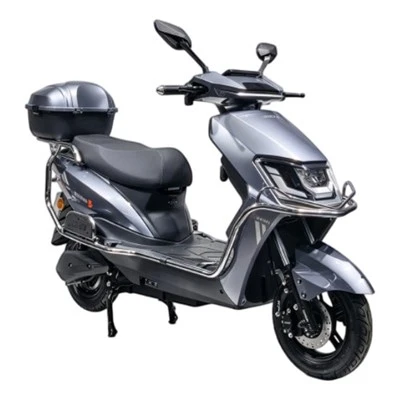
First, let’s start with the most obvious, but most misunderstood, difference: the electric assist system. A regular bike is a purely human-powered machine. All the power that turns the wheels comes from your legs, plain and simple. If you’re climbing a 10% hill, you’re pressing down on the pedals as hard as you can, building muscle, working up a sweat, and wondering if you should just turn around and take the bus. That’s not a knock on regular bikes—they’re fantastic for building fitness, they’re low-cost, and they don’t require any extra parts to function. But an e-bike? It has a motor, a battery, and a controller that work together to give you a boost when you need it. The motor doesn’t do all the work for you—most e-bikes limit power to cut off when you hit a certain speed, usually 20 or 28 miles per hour, depending on where you are in the world. The assist is there to take the edge off, not to turn you into a passenger. Last month, a customer of mine, a 62-year-old teacher, told me she’d given up riding a regular bike to work because the three miles with a steep bridge on the route left her too sore to teach for the next hour. She bought a step-through e-bike, and now she rides every day—she even says she’s getting more exercise than she did driving, because she doesn’t show up to work exhausted. That’s the power of that assist, right there.
Next up is weight, and it’s a big one. A basic regular bike for an adult usually weighs between 18 and 30 pounds, depending on the type—road bikes are light, heavy touring bikes are heavier, mountain bikes are somewhere in between. An e-bike? Add that motor and battery, and you’re looking at 45 to 70 pounds, sometimes even more if it’s a heavy-duty cargo e-bike. That extra weight changes how you handle the bike in so many small ways. Try lifting a regular bike over a curb, or carrying it up a flight of stairs if your apartment doesn’t have an elevator, and it’s manageable. Try lifting an e-bike that’s 60 pounds? That’s a two-person job, or at least a lot of grunting. I see this all the time with first-time e-bike buyers who don’t realize how much that extra mass changes their routine. I always tell new customers: if you live in a ground-floor apartment or have easy access to secure parking, the weight is less of a hassle. If you’re climbing stairs every night, you might want to look for a lightweight e-bike model, some of which are under 50 pounds these days. It’s not a dealbreaker, but it’s something you have to plan for, unlike a regular bike that you can sling over your shoulder and take anywhere.
Then there’s the way you ride them, the experience itself. A regular bike rewards effort. The faster you want to go, the harder you have to pedal. If you stop pedaling, you slow down pretty quickly, thanks to the low rolling resistance of tires and no extra weight to keep momentum going. That makes regular bikes great for riders who want a pure, old-school cycling experience—riding a narrow mountain trail, cruising along a boardwalk, or racing a friend on a flat street. E-bikes? They’re built for efficiency, so you can maintain a steady speed without working as hard, especially over long distances or in tough conditions. Last summer, I joined a group ride for local business owners—half were on regular bikes, half on e-bikes. We rode 20 miles around the county, and by mile 15, the regular bike riders were dropping back, their legs burning from headwinds and rolling hills. The e-bike riders stayed with us the whole way, and none of them were gasping for air. That’s not to say e-bike riders aren’t getting exercise—studies from the European Cyclists’ Federation show that e-bike riders get about 60% of the cardio exercise that regular bike riders get, which is still a lot more than driving a car. It’s just a different style of riding, one that’s less about grinding through every mile and more about getting where you’re going without the stress.
Battery and maintenance are another key difference, and they’re tied directly to cost and upkeep. A regular bike is pretty low-maintenance. You inflate the tires, lubricate the chain every few months, and adjust the brakes if they get loose. You can ride one for years with minimal work. An e-bike? You’ve got a battery that needs charging, a motor that needs occasional checks, and a controller that can have issues if it gets wet or knocked around. The battery is the most expensive part of an e-bike—most will last 3 to 5 years, depending on how often you charge them, and replacing one can cost $500 to $1,000, which is a big chunk of change. That’s why I always tell customers to take care of their e-bike battery: don’t leave it plugged in overnight, don’t store it in extreme heat or cold, and charge it to around 50% if you’re not going to use it for a while. Regular bike maintenance is way simpler—if your chain snaps on a ride, you can replace it with a $20 part and a little know-how. If your e-bike motor dies mid-ride? You’re walking, or calling a tow, because fixing that on the side of the road isn’t easy. That said, most e-bikes these days are built to last, and with proper care, they can be just as reliable as a regular bike for most people.
Legality and where you can ride them are also pretty different, depending on where you live. Regular bikes are legal almost everywhere—you can ride them on bike lanes, on sidewalks (though some cities ban that), on trails marked for non-motorized use, and even on most roads as long as you follow traffic rules. E-bikes? They fall into a weird gray area in a lot of places. In the U.S., for example, they’re usually classified by how much power they have and their top speed: Class 1 e-bikes have assist only when you’re pedaling, up to 20 mph; Class 2 have a throttle that works without pedaling, also up to 20 mph; Class 3 have assist up to 28 mph. Each class has different rules about where you can ride—some trails ban Class 3 e-bikes, some cities require you to register e-bikes, and in a few places, they’re treated like motor vehicles. I had a customer from a small town in Ohio last year who bought an e-bike and got a $150 ticket for riding it on a multi-use trail that only allowed non-motorized bikes. He didn’t know the rule, and that’s the kind of mistake I try to help people avoid by checking local regulations before they buy. Regular bikes don’t have that hassle—you just ride, no extra paperwork or permits (for the most part).
Cost is probably the biggest difference most people care about when choosing between the two. A basic entry-level regular bike can cost $200 to $500, and even a high-end road or mountain bike is usually under $3,000. Entry-level e-bikes, on the other hand, start around $800, and mid-range models for commuting or trail riding are $1,500 to $3,500. Cargo e-bikes, which are built to carry kids or groceries, can go up to $6,000 or more. That price gap is why a lot of people hold off on e-bikes at first, but I always point out the long-term value. If you use an e-bike for commuting, you’ll save thousands a year on gas, parking, and public transit fares, not to mention the cost of a car. For people who would otherwise skip riding a bike entirely because of distance or terrain, the e-bike pays for itself in convenience, not just exercise.
Wait, let’s make one thing clear: I’m not here to say one is better than the other. I’ve sold e-bikes for over a decade, and I still ride my old regular road bike on weekends for long, grueling rides where I want to push myself. They serve different needs. A college student living in a small apartment who just needs to get to class and the library? A regular bike is probably perfect, cheap, easy to store. A parent who needs to ferry two kids to school and groceries every day, or someone who has a 10-mile commute with a steep hill that would make them late and sweaty? An e-bike is a game-changer. A 2022 study from the University of California, Davis, found that e-bike use has increased by 140% in the last five years, mostly because people are looking for alternatives to driving that are cheaper, healthier, and less stressful. That’s not to say regular bikes are going anywhere—they’re still the backbone of casual cycling, and they’ll always have a place.
What I see as the biggest misconception out there is that e-bikes are for people who are “too out of shape” to ride a regular bike, or that they’re cheating. Nothing could be further from the truth. The assist is a tool, same as gears or padded bike shorts. Last year, I worked with a group of adults with mild mobility issues who wanted to get back to cycling, and their e-bikes let them do that. A few months later, one of them told me she’d been able to walk around her neighborhood without pain more often because she was getting regular exercise on her e-bike. That’s the kind of impact that a regular bike couldn’t have had for her, at least not at first.
If you’re trying to decide which is right for you, start with how you plan to use it. Are you riding 5 miles on flat, bike-friendly roads for fun? A regular bike will work great, and save you a few hundred dollars. Are you commuting 10 miles with hills, carrying cargo, or riding in all kinds of weather? An e-bike is almost certainly worth the investment. And if you’re still not sure, most local shops (like ours, of course) let you test ride both types, so you can feel the difference for yourself.
At the end of the day, the line between e-bikes and regular bikes is getting blurrier every year. A lot of new “hybrid” bikes blend the best of both, with lightweight motors and simple designs that don’t feel like a big, clunky machine. But the core differences remain: one is built for pure human effort, the other is built to extend what you can do on two wheels, without replacing the joy of riding.

If you’re ready to explore e-bike options or want to learn more about how to choose the right one for your needs, don’t hesitate to reach out to our team for procurement consultations. We’re here to help you find the perfect fit, whether it’s for personal use, commercial fleets, or bulk orders.
Electric Commuter Tricycle References
- European Cyclists’ Federation. (2021). E-bike Health and Impact Report.
- University of California, Davis, Transportation Institute. (2022). U.S. E-Bike Adoption Trends and Usage Patterns.
- League of American Bicyclists. (2023). E-Bike Legal Classification and Regulation Guide for North America.
- Electric Bicycle Industry Association. (2022). E-Bike Maintenance and Battery Lifespan Data.
Dikalu Locomotive Technology (Nanjing) Co., Ltd.
With abundant experience, we are one of the most professional electric bicycle manufacturers and suppliers in China. Please feel free to buy high quality electric bicycle made in China here from our factory. Good service and reasonable price are available.
Address: Room 1109, Building 5, Jiangning Wanda Plaza (West Zone), No.68 Zhushan Road, Dongshan Subdistrict, Jiangning District, Nanjing, Jiangsu Province, China
E-mail: merchandising2@zl-international.cn
WebSite: https://www.motorbicycle.net/
