Hey everyone, let’s talk about something I geek out on daily as a loader mixing bucket supplier: the loader mixing bucket. If you’ve ever worked on a construction site, a farm, or even a small landscaping job, you’ve probably seen a standard front loader bucket just shoveling dirt or concrete. But the mixing bucket? That’s a game-changer. Way too many people still don’t get how it actually works—so I’m gonna break it down like I would to a new guy on a job site, no super jargon, just real stuff. Loader Mixing Bucket
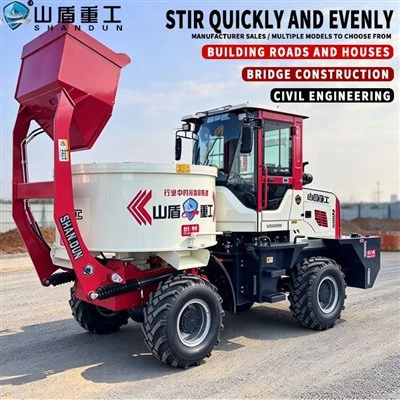
First, let’s start with the basics: why would you even want a mixing bucket instead of a separate cement mixer, mortar mixer, or even a stand-on batch mixer? Let’s be honest, hauling two separate machines around is a pain. If you’re moving from a job site to another, or bouncing between a farm mixing feed and a crew prepping concrete footings, you don’t need to rent or own a whole other piece of gear. The loader mixing bucket attaches right to your existing wheel loader, skid-steer, or compact track loader—so you’re not doubling your equipment. That’s the biggest sell for most guys, trust me.
Now, how does it work? Let’s get into the guts, no engineer-level crap, just what makes it spin and mix. A standard loader mixing bucket isn’t just a steel trough bolted to your loader. There’s two main parts that do the work, hidden under that outer shell: the hydraulic drive system and the mixing paddles.
First, the hydraulic side. Your loader already has hydraulics, right? That’s what makes the arms lift, the bucket tilt, all that stuff. The mixing bucket taps into that. Most of the good ones (the ones we supply, anyway) use a dedicated hydraulic motor that connects straight to the loader’s auxiliary hydraulic lines. Wait, auxiliary lines are the little hoses you probably already have on your loader for things like snow blowers or pallet forks—you don’t need to add anything extra, mostly. Some of the cheap knockoffs skip this and try to run off the loader’s main lift hydraulics, but that’s a disaster. It doesn’t have enough pressure, so the paddles spin too slow, or the loader’s main arms stutter every time you mix heavy stuff. That’s why our units use a high-torque hydraulic motor—so even when you’re mixing 1,200 pounds of premix concrete, it’s smooth, no strain on your loader or the bucket.
Then the paddles. These aren’t the flat metal tabs you see on a stand mixer. They’re curved, heavy-duty steel, bolted to a central shaft that runs the length of the bucket from one end to the other. Wait, why curved? If they were straight, they’d just push the material around the edges, not actually fold it. Curved paddles grip the mix, lift it up, drop it down, and pull it toward the center at the same time. That’s the secret to a good mix in like 2 to 5 minutes, instead of 20 minutes with a old-fashioned stand mixer. Also, we arrange the paddles in a staggered pattern—some point up, some point down, some at an angle. No two are the same height, so there’s no dead spots in the bucket. Every bit of sand, cement, water, or feed gets turned over, not just pushed to the sides.
Wait, let’s test that with a concrete example. Suppose you’re pouring a small patio: you dump 800 pounds of premix, add 30 gallons of water, and hit the mixing button. The motor spins the central shaft, the curved paddles lift the wet mix from the bottom, fling it up toward the top edges, then the angled paddles pull that outer mix back toward the center. No lumps. No cement that’s dry at the bottom and soupy on top. That’s the difference between a good pour that sets right and one that cracks or has weak spots.
Now, what about different materials? I’ve seen these buckets used for way more than just concrete. Farmers mix livestock feed—you can throw grain, hay, and liquid supplements in there, and it mixes evenly, no one gets a handful of just corn. Landscapers mix soil, compost, and mulch for new garden beds. Even demolition crews mix mortar for repointing brick walls on the fly. The best part? You don’t have to transfer the mix from a separate machine to your truck or wheelbarrow. When you’re done mixing, you just tilt the bucket like you would with a regular loader bucket, and it dumps the finished material straight where you need it. No extra handling, less mess.
Wait, let’s address a common mistake people make: overloading the bucket. A lot of new users think, “Oh, it’s a big bucket, I’ll cram twice as much in.” But that kills the mixing action. If the mix is too thick, the paddles can’t turn, which either strains the hydraulic motor (that’s how you end up with a broken part, not covered under warranty) or stops completely, leaving you with a half-mixed batch. We always tell folks: stick to the manufacturer’s capacity—for our standard units, that’s between 1,000 and 1,800 pounds depending on the size. That’s enough for most small to mid-sized jobs, and it lets the paddles do their job properly.
Another thing to know: these buckets aren’t one-size-fits-all. You need to match the bucket size to your loader’s hydraulic flow. If you have a compact skid-steer with only 15 gpm (gallons per minute) of auxiliary flow, a big 2,000-pound mixing bucket is gonna spin too slow, no matter what. That’s why when a new customer hits me up, first thing I ask is: what machine are you mounting it to, and what’s its hydraulic specs? We don’t sell a bucket that’s wrong for your loader. It’s not good for you, and it’s bad for our brand.
Let me also talk about how this is different from the old “mixing auger buckets” you might have heard of. Those are the ones with a big screw inside, right? They work for light jobs, but when you’re mixing heavy concrete or wet clay, the auger bends or gets clogged. The paddle design we use is way more durable. Paddles take the force of the mix evenly, instead of a single auger shaft that gets all the pressure. We use 1/2-inch thick AR400 steel for the paddles, too—AR400 is that hard, wear-resistant steel used on construction equipment, so it doesn’t bend or dent even if you accidentally mix in a few rocks or rebar pieces.
Wait, I should mention the release valves too. A lot of people forget about that part. When you’re mixing, the material needs room to expand, right? If the bucket is completely sealed, the pressure from the mixing action can build up, push the paddles, or even crack the bucket. We have small pressure relief vents on the back of the bucket that let air escape, so the mix flows smoothly. No pressure, no strain, and it dumps clean when you’re done.
Let’s talk about a real job example, just to make it relatable. Last month, a guy who does residential patios reached out to me. He was using a stand mixer that kept breaking, and he had to rent a wheelbarrow and a skid-steer just to haul concrete back and forth. He got our 1,200-pound capacity bucket for his 60-gpm skid-steer. Now, he parks his loader next to his truck, mixes a full batch in 3 minutes, drives straight to the patio, and dumps it. No more renting the stand mixer, no more extra labor moving concrete. He saved like $2,000 in the first month alone on rental fees. That’s the kind of win we love to see.
Now, let’s clear up a few myths. Myth #1: mixing buckets are only for big jobs. No, we have small 500-pound capacity units perfect for small landscaping jobs or even farm feed mixing for a few horses. Myth #2: you can’t mix different types of materials. We have customers who mix mortar, concrete, soil, compost, even food-grade material for small farms (we make food-safe lined paddles for those guys). Myth #3: it’s hard to operate. You just use the same controls you already use for your loader. You flip the auxiliary hydraulic switch, hit the button to spin the paddles, that’s it. No fancy training needed.
What about maintenance? A lot of guys think it’s high-maintenance, but it’s actually super simple. After every job, you just spray the inside of the bucket with a pressure washer to get rid of leftover concrete or feed. Check the hydraulic hoses once a month for cracks or leaks, and tighten the paddle bolts every 6 months. That’s it. No oil changes, no rebuilding the motor every year. Most of our units have a 2-year warranty, and we sell replacement parts for cheap if something does go wrong.
Now, why are we talking about this? Because a lot of potential customers don’t realize how these buckets work, or what they need to look for. If you’re in construction, farming, landscaping, or any job where you need to mix material on site, a loader mixing bucket saves you time, money, and hassle. No more separate mixers, no more double handling, no more wasted time moving material around.
I get it, if you’ve never used one, it sounds like another piece of equipment you have to buy. But when you crunch the numbers: the cost of a good mixing bucket is way less than renting a stand mixer every month, or paying extra labor to mix material by hand. And since it attaches to your existing loader, you’re not buying a whole new machine. It’s an add-on that pays for itself in a few months.
If you’re thinking about getting one, don’t just buy the cheapest one online. The cheap ones use thin steel, small hydraulic motors, and don’t have the staggered paddle design. They break all the time, and you end up paying more in repairs than you would for a good one. When you’re ready to look, make sure you ask about capacity, hydraulic requirements, and warranty. We only supply units that are built to last, no cut corners.
At the end of the day, this is what we do: we build equipment that makes your job easier. I’ve been around this stuff for 15 years, and I’ve seen way too many guys waste money on bad gear. That’s why we make sure every bucket we sell works with your existing machine, mixes every material evenly, and holds up to the hard stuff.
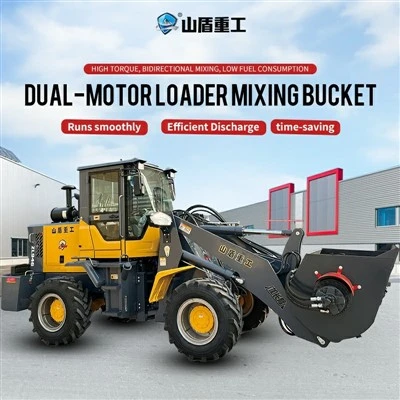
If you’re tired of juggling multiple machines, tired of lumpy mix, tired of extra labor on your jobs, reach out to us. We can help you pick the right size for your loader, answer all your questions, and get you set up to make your mixing jobs way faster and smoother. No sales pitches, no hidden fees, just straight talk about what works for your specific job.
Four Wheel Drive Mixer Truck References
- Construction Equipment Association. "Utility Attachments for Compact Loaders." 2023.
- American Society of Agricultural and Biological Engineers. "Mixing Equipment for Agricultural Applications." 2022.
- Wear Metals Association. "AR400 Steel Specifications for Heavy-Duty Equipment." 2021.
- National Ready Mixed Concrete Association. "On-Site Concrete Mixing Best Practices." 2023.
Shandong Shandun Heavy Industry Machinery Co., Ltd.
Shandong Shandun Heavy Industry Machinery Co., Ltd. is one of the most reliable loader mixing bucket manufacturers and suppliers in China. With abundant experience, we warmly welcome you to buy cheap loader mixing bucket in stock here from our factory. All customized machinery are with high quality and low price.
Address: South of He Ping Street Village, Shaha Town, Laizhou City, Yantai City, Shandong Province, China
E-mail: info@shandunmc.com
WebSite: https://www.shanduncn.com/
