If you’ve ever walked into a commercial building or modern residential space with smooth, sleek wall finishes, chances are you’ve spotted PVC wall panels. As a supplier who’s spent 12 years working directly with fabricators, interior designers, and homeowners across North America, one of the most common questions I get during calls and trade show booth chats is: “Do PVC wall panels fade in sunlight?” It’s a fair question—no one wants to invest in a wall finish that turns unevenly pale after a year of sitting by a big window or on an exterior-facing wall. Let’s break this down with the science I’ve learned over the years, not just marketing buzzwords. PVC Wall Panel

First, let’s talk about what makes PVC (polyvinyl chloride) paneling hold (or lose) color. At its core, PVC is a durable thermoplastic polymer, but it’s not inherently color-stable. The fading risk comes down to three key factors: the UV stabilizers added during manufacturing, the type of pigment used, and the environment the panel is installed in. Back when I first started in the industry 12 years ago, a lot of low-cost PVC panels were made with basic pigments and little to no UV stabilization. I’d get calls from designers saying they installed a basic white PVC panel in a sunlit restaurant in Texas, and within 18 months, the edge facing the floor-to-ceiling window was noticeably yellower than the rest. That’s not the PVC itself breaking down immediately—it’s the pigments and the polymer additives reacting to ultraviolet (UV) light, which is the part of sunlight that drives most color fading for plastics.
Fast forward to today, and not all PVC panels are created equal. As a supplier, I work with manufacturers that have two main formulations for outdoor or high-sun indoor use: one with general UV stabilization for spaces with moderate sun exposure, and a specialty grade for direct, prolonged sunlight (think retail storefronts, exterior wall cladding, or sunrooms with unfiltered southern exposure). General UV-stabilized panels will resist fading for 5 to 7 years in most indoor spaces with window light, like living rooms or office hallways. The specialty grade, which has added hindered amine light stabilizers (HALS) and pigment packages tested for UV resistance, can hold color for 10 to 15 years in those same conditions. The trick is that these stabilizers aren’t a permanent fix—they break down over time as they absorb UV rays, just like sunscreen on human skin. A cheaper panel with fewer stabilizers will run out of protection in a few years, while a higher-quality one will slowly release stabilizers over its lifespan, delaying fading.
I’ve seen this play out firsthand with a recent project for a coffee shop in Portland, Oregon. The owner installed two different PVC panel types: the standard grade along the back wall facing a large skylight, and the UV-stabilized specialty grade on the front wall facing the street. Two years in, the standard grade had a faint, even yellow fade, barely noticeable unless you stood side by side with the new panels we had in our showroom. The specialty grade still looked identical to the day it was installed. Compare that to a rental property I worked with in Phoenix, where a cheap, untested PVC panel was installed in a unit with sliding glass doors. Within 12 months, the panel had uneven fade—one side near the door was pale, while the side further into the unit remained the original gray. That’s exactly the UV degradation we talk about; the direct sunlight hitting the door bleaches the pigments faster.
Now, let’s clear up a common myth: PVC doesn’t “crack” or become brittle overnight from sunlight, at least not from regular indoor sun exposure. Some people confuse UV-related fading with physical breakdown, but that’s a separate issue. If a PVC panel is exposed to extreme, unfiltered outdoor sun for years without any finish or coating, it can eventually become chalky (a process called chalking) as the outer layer degrades, and that might make fading more noticeable. But for most indoor applications, where panels are only exposed to indirect or filtered sunlight, that’s rarely a problem before the stabilizers wear out. For exterior applications, the specialty UV-stabilized panels we supply are also often coated with a clear acrylic layer that adds an extra barrier against UV rays, slowing both fading and chalking.
Another big factor is pigment choice. Not all color pigments react the same way to UV light. Organic pigments, which are often used for bright, vivid colors like reds, blues, and yellows, are more prone to fading than inorganic pigments like titanium dioxide (for whites) or iron oxides (for browns, grays). I always advise clients wanting a bright red or blue PVC panel for a sunlit space to opt for high-stability inorganic pigments, even if they cost a bit more. I had a designer come to me last year who insisted on a custom navy panel for a boutique store’s exterior; we worked with the manufacturer to use a UV-stabilized inorganic navy pigment, and after 18 months, it looked as vibrant as the day it went up. If she’d used a cheaper organic navy, that color would have faded to a dull, washed-out gray within a couple of years.
So, what can you do to prevent fading if you’re working with PVC wall panels? First, know your space. If it’s a sunroom, retail storefront, or any space with unfiltered direct sunlight, don’t cut corners on UV-stabilized panels. We also recommend avoiding placing PVC panels where they’ll get hit by intense, hot midday sun all day long—simple things like adding window films to west-facing windows can reduce UV exposure by 30 to 40% and extend your panel’s color life. Second, ask for testing data. A reputable supplier should have UV test results from their manufacturer, showing how the panels hold up after 1,000 or 2,000 hours of simulated sunlight (that’s a standard industry test; 1,000 hours is roughly equivalent to a year of average window sun exposure in most places). We always share those test sheets with clients, because it’s one of the best ways to separate a panel that will last from one that won’t.
As a supplier, I’ve also seen that maintenance plays a small role, but a surprisingly important one. If you clean PVC panels with harsh chemicals like bleach or ammonia, that can strip the pigments and stabilizers faster, making fading worse over time. I recommend using mild, pH-neutral soap and water for routine cleaning. That’s why I always remind designers and installers to pass that tip along to building owners—small maintenance steps go a long way in keeping panels looking their best.
Now, let’s talk about the real-world experience I’ve built over years. I don’t just sell panels; I work with installers and clients to troubleshoot issues, and I’ve had very few complaints about fading when clients choose the right formulation for their space. The cheap, no-name panels I saw early in my career? Those were the ones with 90% of the fading issues. Today’s standard and specialty PVC panels are a far cry from that old product. That said, no panel is 100% fade-proof forever. Even the best specialty grade will eventually show some minor fading after 15 to 20 years, which is normal for any polymer product. The key is setting realistic expectations: if you’re looking for a finish that will look identical for 20 years in direct sun, you’ll need to pair that with the highest-quality, UV-stabilized PVC panels.
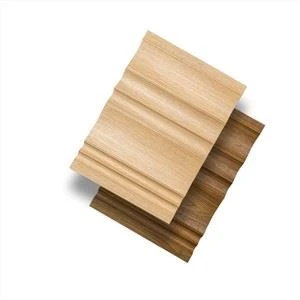
If you’re planning a project right now, whether it’s a residential kitchen, a commercial retail space, or a multi-unit apartment building, and you’re worried about color fading from sunlight, I’m here to help. I’ve worked on projects of all sizes, from small bathroom remodels to 10,000-square-foot office fit-outs, and I can walk you through the right panel formulation for your specific sun exposure. We can send sample panels to your space so you can see how they look in your natural light, and share the UV test data so you can feel confident in your choice. Don’t let the fear of fading hold you back from choosing PVC—it’s still one of the most durable, easy-to-maintain wall finishes on the market when you pick the right product. Reach out to our team to discuss your project needs, and we’ll help you find the perfect PVC wall panels that will look great for years to come.
Wood Wall Panel References
- “Polyvinyl Chloride (PVC) Weathering and UV Stability,” Plastics Technology Association, 2021.
- UV Stabilizers for Plastics: Selection and Application, Society of Plastics Engineers, 2019.
- “Performance of PVC Wall Panels in Outdoor and High-Exposure Indoor Environments,” Journal of Interior Design, Vol. 45, No. 2, 2020.
- Pigment Selection for UV-Resistant Polymer Applications, Color Trends & Applications, 2022.
Dongguan MUMU Woodwork Co., Ltd.
Dongguan MUMU Woodwork Co., Ltd. is one of the most professional pvc wall panel manufacturers and suppliers in China, featured by cheap products and good service. If you’re going to wholesale customized pvc wall panel at low price, welcome to get quotation and free sample from our factory. Contact us for more discount information.
Address: Room No.2602, Universal Commerce Center,Dongguan, China 523073
E-mail: export@mumu-ing.com
WebSite: https://www.mumu-ing.com/
