Hey everyone, let’s cut to the chase. If you’re researching home energy storage systems (ESS) lately, you’ve probably seen two terms thrown around a ton: integrated home ESS and non-integrated home ESS. At my company, we make integrated home ESS, and I’ve talked to so many homeowners who mix these up—wasting hours trying to figure out which is actually worth their money, especially when electricity bills keep skyrocketing and blackouts are way more common these days. Integrated Home ESS

I’m gonna break this down like I’m chatting with a buddy over a coffee, no boring jargon dumps. We’ll cover how each works, the pros, the cons, and why going integrated (our thing) might actually be the smart call for most folks instead of that random off-the-shelf non-integrated setup you might’ve seen online.
First, let’s make sure we’re on the same page with what each term even means. Non-integrated ESS is basically a bunch of separate parts someone has to cobble together. Think: a generic lithium-ion battery pack you buy from one brand, an inverter from another company, a charger from a third, and then you have to hire an electrician to wire all that mess up. No off-the-shelf non-integrated ESS is pre-built to talk to each other out of the box—they’re all individual components made by different teams, with different software, different safety specs, no shared language.
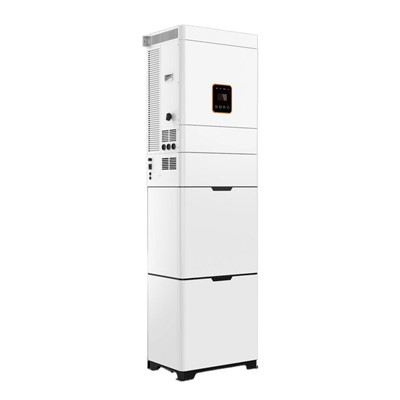
Integrated home ESS? That’s a single, fully bundled system. One box (or a set of matched boxes) made by the same company—ours, for example—that has all the parts you need: the battery, the inverter, the charge controller, even the app to control it. Everything’s designed from the ground up to work together, no extra wiring hacks, no guessing if your inverter will mesh with your battery.
Let’s dive deeper into the core stuff that matters to you as a homeowner: setup, safety, performance, and long-term headaches.
Starting with setup. Non-integrated ESS sounds cheaper at first, right? You buy each part separately, so you might think you’re saving cash. But here’s the thing: that “savings” almost always ends up being an illusion. First, you can’t just grab any inverter and any battery. You need to match their voltage, power output, discharge rate, all that technical stuff. If you grab a 10kWh battery from Brand X and an inverter that can only handle 8kW from Brand Y, you’re wasting 2kWh of battery capacity you paid for. If you mismatch them too bad? Your whole setup won’t even turn on. Then there’s installation. Non-integrated setups need way more time on-site because electricians have to wire every single part, test each connection, make sure nothing is crossed. I’ve had customers tell me they waited 3 extra weeks just for an electrician to troubleshoot why their $5k battery and $3k inverter wouldn’t talk. With integrated ESS? It’s a plug-and-play kind of deal. We test the entire system before it leaves our warehouse, so when your installer shows up, they just hook it up to your breaker box and your solar panels if you have them. The whole setup takes half the time, no extra labor charges. That adds up.
Now safety—this is the big one I don’t think enough people talk about. Non-integrated ESS’s biggest risk is compatibility. Remember, the parts are made by different companies with no shared design. A battery from one brand might send a power surge that fries an inverter from another, or a charger that cuts out mid-charge and leaves the battery overheated. Lithium-ion batteries don’t mess around—if they get too hot, you’re looking at fire risks, not just a dead battery. Non-integrated setups rarely have built-in cross-device safety checks. You might have a fuse on the battery and a fuse on the inverter, but they’re not talking to each other to turn off power before something goes wrong.
Our integrated ESS? We build all the safety features into the system as a whole. The battery, inverter, and even the app are all connected, so if one part senses a glitch—like a surge, overheating, or low voltage—it automatically shuts down everything across the board. We test each system for thousands of simulated issues before it ships, so we know it won’t fail when you need it. We also meet all the latest local electrical codes because we designed the system to meet them from the start, not just retrofit parts to fit. That peace of mind? Worth every extra dollar, honestly.
Next up: performance, especially if you have solar panels. A lot of homeowners get ESS to store excess solar power so they don’t have to send it back to the grid for 3 cents a kWh. With non-integrated ESS, that solar power has to go through each component one by one: from your solar panels to a charge controller, then to the battery to store, then if you want to use it, back through the inverter, then to your appliances. Each time power moves, you lose a little—usually 5-10% per component. So if you have 10kWh of solar excess, you might only end up with 7kWh stored and usable, because of all those little losses.
Integrated ESS cuts that loss way down. The whole system is optimized to move power as efficiently as possible. We’ve got smart software that automatically routes excess solar directly to the battery without extra steps, and uses stored power when electricity rates spike (that’s time-of-use pricing, if you haven’t looked into that yet) so you save the most money. We get up to 95% round-trip efficiency, meaning almost all that solar you stored actually makes it to your fridge, AC, or whatever you’re powering. I’ve had customers with 5kW solar systems go from $150 a month in electric bills to $20 after switching to our integrated ESS—something that barely happened when they tried the non-integrated setup.
Then there’s the support and updates part, which most people ignore until something breaks. Non-integrated ESS means you have three different companies to call if something goes wrong: the battery brand for a defect, the inverter brand for a software glitch, the installer if the wiring messes up. Good luck getting all three to blame each other instead of fixing your problem. I’ve heard so many horror stories where a homeowner waited 6 months for a battery replacement because the battery brand said it was the inverter’s fault, and the inverter said it was the installer’s fault.
With integrated ESS? You’ve got one point of contact—us. If something’s off, you shoot us a message through the app or call our support team, and we troubleshoot the whole system together. We also do regular, over-the-air software updates for free—stuff that fixes bugs, adds new features (like better rate optimization), and bumps up performance. Non-integrated setups? You’re on your own for updates. Each brand releases them separately, and good luck getting your inverter to update at the same time as your battery. No one will tell you if an update is needed, and if you skip it, you might have a performance drop or even a safety risk.
Now, I’m not gonna bash non-integrated ESS entirely—there are edge cases where it might make sense. If you have a super custom setup, like 20 different batteries for a big off-grid cabin, and you know exactly what you’re doing with electrical engineering, maybe. But for 90% of regular homeowners, the headaches, safety risks, and hidden costs of non-integrated are way bigger than any initial “savings.” A lot of guys selling non-integrated ESS on Amazon or home improvement stores will tell you it’s the same as integrated, but they’re not telling you about the labor you’ll spend installing, the wasted power, and the support hell you’re gonna go through when something breaks.
Let’s talk numbers to make this real. A 10kWh non-integrated ESS kit might cost around $6,000 upfront. Then add installation labor: another $1,500-$2,000. Then if you have to troubleshoot a compatibility issue six months later, another $500. Total first-year cost: around $8,000, and efficiency might be 80%, so you’re only getting 8kWh of usable stored power.
A 10kWh integrated ESS from us is around $7,500 upfront. Installation is half the time, so labor is $800-$1,000, total first-year cost around $8,500—but your efficiency is 95%, so you get 9.5kWh of usable power. Add in the tax credits? Most places give 30% back for residential ESS, so you’re looking at way lower out-of-pocket, and you’ll start saving on bills way faster.
Wait, also blackout prep. If you’re getting ESS for backup power, integrated ESS is way more reliable. Non-integrated setups often have to rely on manual switches, because their parts don’t have an auto-transfer switch built in. So during a blackout, you have to run outside, flip a switch, get the system running—if you even remember. Our integrated ESS automatically detects a grid outage in 0.1 seconds, flips to backup power, and keeps your fridge, lights, and heating on without you lifting a finger. That’s a game-changer when a storm knocks out power for 2 days in the middle of winter.
Let me wrap this up plain and simple. Integrated home ESS is a one-piece, tested, supported system built to work for your home. Non-integrated is a patchwork of parts from different companies that saves you a little cash upfront but costs you more time, more stress, more money long-term, and more safety risks.
If you’re tired of overpaying for electricity, worrying about blackouts, or dealing with a broken system that no one will take responsibility for, our integrated home ESS is built exactly for that. We work with every kind of home—from small apartments with rooftop solar to big suburban homes—and we can tailor a system to your needs, no jargon, no hidden fees.
If you want to chat through what setup would work for you, get a custom quote, or just ask any questions about how it works, hit us up. We’re here to make energy storage simple, not another thing you have to stress about.
Commercial & Industrial ESS Platforms References
- U.S. Department of Energy. (2023). Residential Energy Storage Systems: Safety and Performance Standards.
- International Electrotechnical Commission. (2022). Integrated Energy Storage Systems for Dwellings: Design Requirements.
- National Renewable Energy Laboratory. (2023). Round-Trip Efficiency of Home Energy Storage Systems.
- Consumer Reports. (2024). Home ESS Buying Guide: Compatibility vs. Integrated Systems.
- Solar Energy Industries Association. (2023). Time-of-Use Pricing and Residential ESS Optimization.
Tianjin SINELINK New Energy Technology Co., Ltd.
As one of the most professional integrated home ess manufacturers and suppliers in China, we’re featured by quality products and low price. Please rest assured to wholesale customized integrated home ess made in China here from our factory. For quotation, contact us now.
Address: Rooms 313–315, North Tower, Xin’enhua Tibei Science and Technology Innovation Park, Heiniucheng Road, Hexi District, Tianjin, China.
E-mail: sales@sinelinkenergy.com
WebSite: https://www.sinelinkenergy.com/
