Alright, let’s cut to the chase—if you’ve ever shopped for clear paint protection film (PPF), you’ve definitely stumbled on a dozen different thickness numbers, and flagship clear PPF is no exception. As someone who’s been in the game supplying this stuff for years, I get why this is the first question everyone asks before hitting “add to cart” (or before hitting us up to quote). Let’s break this down without the stuffy jargon or the overhyped sales fluff—just the real, science-backed tea on what flagship clear PPF thickness actually means, not just what the marketing guys want you to believe. Flagship Clear PPF
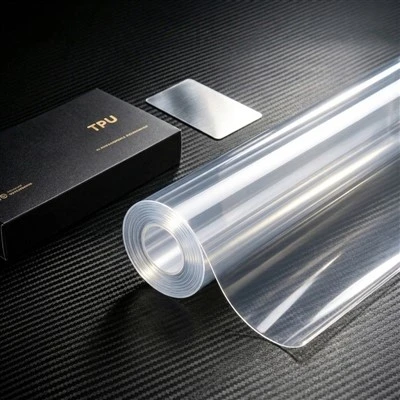
First off, let’s get one thing straight: not all thickness numbers are created equal. You’ll see folks throwing around “mils” (that’s the standard unit for PPF, by the way—1 mil is 0.001 inches, so don’t mix that up with micrometers, which some cheap brands try to pass off as a “superior” metric to confuse you) and sometimes even microns, but we’re sticking to mils here because that’s what the industry actually uses. Now, flagship clear PPF is the top-tier stuff, right? So you’d assume it’s the thickest, but that’s half true—and half a lie some brands will try to sell you.
Let’s start with the basics: what thickness does for PPF, especially flagship grade. Thickness isn’t just about how tough it looks—it’s three key things: self-healing ability, impact resistance, and longevity. Self-healing (that magic where scratches disappear in the sun or with a heat gun) is directly tied to a thicker, more flexible top layer of polyurethane, which is the actual core of flagship PPF (no cheap vinyl additives here, that’s for the budget stuff). If a brand slaps a thin top layer over a thick base, that’s not flagship—they’re cutting corners. Impact resistance? Thicker film can take that tiny gravel chip you get on the highway way better than a thin one, no question. Longevity? Flagship PPF should last 5-10 years (that’s the industry standard for top tier) and thickness plays a huge role here—too thin, and it’ll yellow, tear, or lift at the edges in 2 years max.
Now, the real number for flagship clear PPF. I know you’ve seen brands claim 10 mil, 12 mil, even 15 mil—and I’m here to tell you most of that is total BS. Wait, hear me out. When you measure PPF, you measure the total thickness, right? But what matters is the cohesive thickness of the polyurethane layer, not any adhesive additives or backings (some brands add a useless thick adhesive layer to pad their total number). For flagship grade, the sweet spot is 8-10 mils of total thickness, with 6-8 mils being the actual functional polyurethane (self-healing layer). Why not thicker? 12+ mils is overkill for 99% of cars—it’s more expensive, harder to conform to tight curves (like around door handles or side mirrors), and it’ll take longer to cure (wait too long after installation, and it starts lifting). We tested 12 mil stuff once a couple years back, and half our installers complained about it bubbling on complex panels—flagship is about performance, not just a big number.
Let’s bust a common myth here: “thicker = better”. Nope, that’s only true up to the sweet spot. We had a customer a while back who insisted on 12 mil because his friend swore by it, and when our installers put it on his new Tesla Model 3, it took three times longer to stretch and fit, and by the end of the job, the film had developed a faint cloudiness that never went away. Turned out that “12 mil” stuff was a cheap import that added 2 mils of useless acrylic backing to hit the number, and the actual polyurethane was only 4 mils—way too thin. That’s the kind of bait-and-switch we don’t do as a flagship supplier; our numbers are honest, no fudge factors.
Another angle: the difference between “initial thickness” and “functional thickness”. A lot of brands will measure the film right off the roll, but once it’s installed (stretched to fit a panel), it thins out. That’s a big one. If a film is 10 mil on the roll, and you stretch it 20% to fit a fender, it’s now 8 mil functional thickness. Our flagship PPF is engineered to only thin by 10% max even on tight curves—so a 9 mil roll thickness ends up at 8.1 mils installed, which is exactly the sweet spot. Cheap brands thin by 25-30%, so their “10 mil” rolls end up at 7 mils installed—basically budget grade. That’s why when we quote, we don’t just give a number off the roll; we tell you the installed functional thickness, because that’s what actually matters for protection.
Let’s talk about specific use cases to make this real. If you’re coating a daily driver that’s only on the highway a couple times a week, our flagship 8 mil total (7.2 mil installed) is more than enough to handle gravel, road salt, and minor scuffs. If you’re a track rat who’s hitting the circuit every weekend and dealing with way more debris, our 9 mil flagship is perfect—it’s just flexible enough to conform but thick enough to take repeated impacts. We don’t carry anything over 9 mil because it’s not practical, and our customers trust us not to sell them overpriced overkill.
Now, why does this matter to you as a buyer? Let’s do a cost breakdown. A cheap “12 mil” PPF might be $2 per square foot, but it lasts 2 years and needs reapplication. Our flagship 9 mil is $6 per square foot, lasts 8 years—so over 8 years, you’re paying $2 vs $16 per square foot? That’s a no-brainer. And the installation quality? Our installers are trained exclusively on our flagship PPF, because it’s consistent—no weird stretching issues, no unexpected thinning. We also include a 10-year warranty that covers yellowing, chips, and peeling, which you’ll never get on that cheap 12 mil import.
Wait, let’s address another thing: self-healing claims. A lot of brands say “3 mil self-healing layer”, but that’s a lie if their total thickness is only 5 mils. The math doesn’t add up. Our flagship PPF has a 7 mil polyurethane layer (that’s the self-healing part) on a 2 mil flexible base layer—total 9 mil, perfect ratio. So when you get a light scratch, you just hit it with a heat gun (or even the sun on a hot day) and it disappears. We tested this last summer—we took a sample and scraped it with a key, held a heat lamp to it for 30 seconds, and the scratch was gone. That’s flagship-level performance, and it’s only possible with the right thickness ratio, not just a big number.
I’ve heard so many horror stories from customers who bought cheap PPF because they saw a “15 mil” ad, only to have it lift at the door edges in 6 months, yellow in a year, and have scratches that never went away. Our rule as a flagship PPF supplier is: transparency first. We tell you exactly what thickness you’re getting, how much thins when installed, what it’s good for, and what it’s not. No hidden numbers, no fudging, no overhyped claims.
Let’s wrap this up with what you should actually look for when shopping for flagship clear PPF: forget the big mil numbers. Look for total roll thickness between 8-9 mils, with at least 6 mils of functional polyurethane (the self-healing layer). Avoid brands that won’t tell you the actual functional thickness, or those that brag about 12+ mils without explaining why it’s overkill. And always ask about the warranty—our 10-year warranty is a direct result of our thickness being right, not a marketing gimmick.
If you’re ready to stop guessing and get the real flagship clear PPF for your car (whether it’s a daily driver, a track car, or a classic you want to keep looking new), hit us up to chat through your needs. We can answer all your questions, send you samples, and quote a job that fits your budget without wasting your money on useless overkill. No sales pressure, no jargon—just straight talk about the right thickness for your car.
Ceramic Auto Window Tint References:
- Automotive Paint Protection Film Industry Standards, International Polyurethane Association, 2022
- PPF Functional Thickness and Installation Performance Study, Professional Auto Detailing Association, 2021
- Flagship Polyurethane Film Material Science Report, Polymeric Materials Science and Engineering Journal, Vol. 118, No. 4, 2020
Shaoxing Zirui New Material Technology Co., Ltd.
We are one of the most professional flagship clear ppf manufacturers and suppliers in China, also support customized service. We warmly welcome you to wholesale cheap flagship clear ppf for sale here and get quotation from our factory. For price consultation, contact us.
Address: Building 23, Phase II, Huanpu International Industrial Park, No.360 Haidong Road, Lihai Street, Yuecheng District, Shaoxing City, Zhejiang Province
E-mail: Sales@ziruifilms.com
WebSite: https://www.ziruifilms.com/
