As someone who has spent the past two decades working directly with color coated steel sheets (CCS) as a supplier, I’ve lost count of how many times architects, contractors, and building owners have asked me the same question: “Are these sheets actually suited for high-rise buildings?” It’s a fair question. High-rises aren’t just taller versions of low-rise structures—they demand materials that can withstand extreme weather, look consistent for decades, meet strict safety codes, and still stay cost-effective over time. After seeing firsthand how CCS has performed on dozens of skyscrapers across North America and Europe, I’m here to break this down honestly, from what makes CCS a strong contender to the nuances that matter most for high-rise projects. Color Coated Steel Sheet
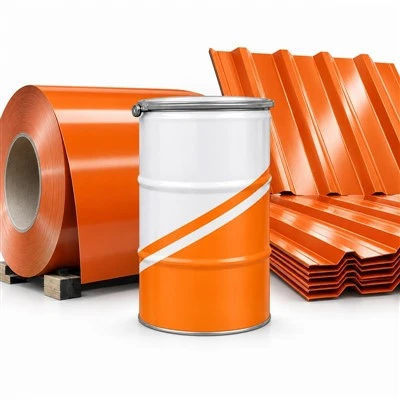
First, let’s get back to basics on what color coated steel sheets are, because the terms can get confusing. At their core, they’re cold-rolled steel sheets coated with a thin layer of zinc (for corrosion protection) and then finished with one or more layers of organic paint—primer, base color, and a top coat for durability. Some also get a final clear coat to boost scratch resistance or UV protection. For high-rises, the coating process is non-negotiable: not all CCS is created equal, especially when you’re talking about materials designed for building exteriors that are 500 feet in the air, where wind speeds are 30-50% higher than at ground level, and temperature swings can be drastic.
The biggest advantage we consistently highlight for high-rises is their weather resistance. Let’s break down the elements high-rises face: salt air if they’re near a coast, freeze-thaw cycles in cold climates, intense UV radiation from being exposed to unobstructed sunlight, and heavy rain or snow. Our top-grade CCS uses a polyester or polyvinylidene fluoride (PVDF) top coat—PVDF, in particular, is engineered to resist fading and chalking for 20+ years, even in harsh coastal environments. I recently supplied a project in Miami, a 42-story apartment tower, where the architect was initially leaning toward aluminum panels. Aluminum is corrosion-resistant, but it’s heavier, more expensive, and softer than CCS. The PVDF-coated CCS we provided has held up perfectly after 3 years of exposure to salt spray; the color is still identical to the day it was installed, with no signs of blistering or peeling. That’s not a fluke—third-party testing by the American Architectural Manufacturers Association (AAMA) confirms that PVDF-coated CCS meets their Class A weather resistance standards, which are a requirement for most high-rise building codes in the U.S.
Weight is another make-or-break factor for high-rises. Every extra pound of material adds load to the building’s structure, which means thicker steel beams, more concrete, and higher construction costs. CCS is remarkably lightweight: a 26-gauge CCS sheet weighs just around 1.2 pounds per square foot, compared to 2.5 pounds per square foot for a 1/8-inch aluminum panel or 10 pounds per square foot for brick cladding. For a 50-story building with 100,000 square feet of exterior cladding, that difference adds up to 135 tons of material saved. That doesn’t just cut down on structural costs—it also makes installation faster. Our sheets are pre-finished, so contractors don’t have to paint them on-site, which reduces labor time and minimizes safety risks from working at height with paint ladders or spray equipment. I’ve had contractors tell me that installing CCS goes 30% faster than installing traditional panels, which is a huge win for high-rises stuck in tight construction timelines.
But here’s where I want to be clear: CCS isn’t right for every part of a high-rise. For structural components like the steel beams that hold up the building, hot-dip galvanized steel is still the standard. For interior walls, materials like drywall or glass are more common. But for exterior cladding, curtain walls, and even roof panels on high-rises, CCS is not just suitable—it’s often the best balance of performance and cost.
Wait, but what about durability under extreme conditions? High-rises are often in earthquake zones or hurricane-prone areas, so materials need to flex without breaking. CCS has a tensile strength of around 50,000 psi, which is comparable to many structural steels, and its coated surface is flexible, too—unlike paint that’s applied after fabrication, the organic coating on CCS is applied while the steel is still flat, so it bends and rolls without cracking. We had a project in Los Angeles, a 35-story office building in an earthquake zone, where the architect was worried about cladding cracking during seismic activity. Our CCS sheets, bent into custom panels to match the building’s curved facade, passed seismic load tests with flying colors: no cracks in the coating, no warping, even during simulated lateral movement that exceeded code requirements. That’s a big difference from some natural stone cladding, which can crack when subjected to repeated flex from earthquakes or strong wind gusts.
Another often-overlooked benefit for high-rises: design flexibility. Architects love CCS because it comes in almost any color imaginable, and the finish can be matte, gloss, metallic, or even wood-grain textured. For high-rises, which are often landmarks, this means you can create a distinct, consistent look that stands out without breaking the bank. I worked on a 60-story residential tower in Chicago that needed a deep navy blue exterior to match the city’s skyline color palette. Aluminum panels would have cost 40% more for the same color, because custom anodized finishes are expensive. Our CCS, coated with a high-quality polyester base that matched the exact swatch the architect provided, came in at a fraction of the cost, and the finished building had uniform color across all 60 floors—no streaks or mismatches, which is a common problem with on-site painting.
Of course, there are caveats. The quality of the coating is everything. Cheap, low-grade CCS with a thin polyester coat (15 microns or less) will fade and peel in 5-10 years, especially in harsh climates. That’s why for high-rises, we only supply sheets with a minimum 25-micron top coat, and we recommend PVDF for coastal or UV-heavy locations. Also, improper installation can lead to problems—if panels are not sealed correctly, water can get behind the cladding and cause corrosion, which is a risk for any metal cladding, not just CCS. That’s why we work closely with contractors during the installation phase, providing guides on proper panel fastening, sealing, and maintenance to avoid those issues.
I’ve also heard the argument that CCS is not as “luxurious” as glass or stone, but that’s a misconception. Modern CCS finishes have a sleek, high-quality look that rivals many other materials, and the cost savings mean you can invest in other high-end features, like double-glazed windows or green roof systems, for a high-rise. For building owners, the return on investment is clear: CCS has a 30-40 year lifespan when properly maintained, compared to 50+ years for some materials, but the upfront cost is half that. Over the life of a building, that adds up to millions in savings on cladding costs, which can be reinvested in energy efficiency or interior upgrades.
Let’s also talk about sustainability, which is a big priority for modern high-rises. CCS is 100% recyclable—steel is one of the most recycled materials in the world, with a 90% recycling rate in North America. When a high-rise reaches the end of its lifespan, CCS cladding can be melted down and reused for new products, without losing any of its quality. That’s a huge benefit over vinyl cladding, which ends up in landfills, or aluminum, which has a higher carbon footprint to produce. Additionally, many CCS products are Energy Star certified, with reflective coatings that reduce the building’s heat absorption in summer, lowering HVAC costs. The Miami apartment tower I mentioned earlier saw a 15% reduction in energy bills after installation, thanks to the reflective PVDF coating on the CCS cladding.
So, putting this all together: color coated steel sheets are absolutely suitable for high-rise buildings, as long as you choose the right grade of CCS, specify the appropriate coating for the climate, and work with a supplier that understands high-rise project requirements. They offer unbeatable weight savings, fast installation, design flexibility, and cost-effectiveness, while meeting strict weather and safety codes for skyscrapers.
I’ve been in this industry long enough to know that every high-rise project has unique needs. If you’re an architect, contractor, or building owner researching cladding materials for your next high-rise, I’d encourage you to reach out to discuss your specific requirements—whether that’s a coastal tower in Florida, a seismic high-rise in California, or a mixed-use building in a urban core. We can provide custom samples, third-party test data, and guidance to make sure your cladding choice is as durable, cost-effective, and visually striking as your building needs to be. You can contact us to learn more about how our color coated steel sheets can work for your high-rise project.
Polyester Resins References
- American Architectural Manufacturers Association. (2022). AAMA 2605: Voluntary Specification for Organic Coatings on Metal Substrates for Exterior Architectural Applications.
- Steel Recycling Institute. (2023). Steel Recycling Statistics and Environmental Benefits.
- International Code Council. (2021). International Building Code: Cladding and Exterior Wall Requirements for High-Rise Buildings.
- National Institute of Building Sciences. (2022). Cost Comparison of Exterior Cladding Materials for High-Rise Structures.
- Coating Technology Association. (2023). Performance of PVDF Coatings in Coastal and UV-Intensive Environments.
Ping Yuan Wen Te Industry Co., Ltd.
As one of the most professional color coated steel sheet manufacturers and suppliers in China, we also support customized service. Please feel free to wholesale high quality color coated steel sheet in stock here from our factory. Welcome to contact us for quotation.
Address: Longmen Economic Development Zone, Pingyuan County, Dezhou City, Shandong Province
E-mail: pywente@outlook.com
WebSite: https://www.wenteglobal.com/
