If you’ve ever walked the floor of a contract manufacturing shop, stopped at a trade show booth talking to an electronics engineer, or scrolled through a supplier directory hunting for someone to bring your circuit design to life, you’ve probably seen two terms used interchangeably: “PCB assembly” and “turnkey assembly.” I’ve been on this side of the table for 12 years, running a turnkey PCB assembly service for customers ranging from startup founders with a sketched prototype to mid-sized medical device makers scaling production, and I can say with absolute certainty that this mix-up is one of the most common and costly mistakes new customers make. Last year alone, I sat across from three product engineers who’d paid a “PCB assembly” provider to build their first production run, only to get a pile of boards that didn’t work because they’d missed step after step that turned a bare PCB into a functional, tested, and deliverable product. Let’s break this down clearly, no industry jargon that only veteran technicians understand, just real talk from someone who sees the gap between these two services every single day. Turnkey PCB Assembly
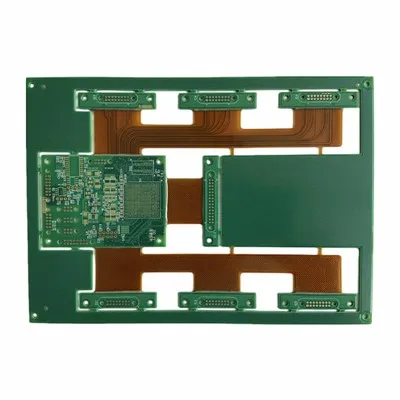
First, let’s define both terms in plain, practical language, not the stiff textbook stuff you’ll find on Wikipedia. Basic PCB assembly—sometimes called “box build light” or “component placement and soldering” by cheaper, smaller shops—stops at a very specific point: taking your empty printed circuit board, sourcing all the electronic components you’ve specified, putting each resistor, capacitor, IC, and connector exactly where your design file says, and soldering them securely to the board. That’s it. The customer’s job doesn’t end there, either. If your design has a flaw that causes the board to short out when power is applied, the assembly shop will call you and say “hey, this board is broken, fix the Gerber file.” If you forgot to order a rare surface-mount IC that’s backordered, the same shop will leave it missing, send you half-assembled boards, and tell you they did what you asked. And once the boards are built, that’s the end of their work. You’re on your own to program the microcontroller, run functional tests, build the outer housing, label the product, ship it, and handle any returns or fixes if the first run fails.
Turnkey PCB assembly, on the other hand, is a full end-to-end service where the supplier takes 100% of the work off your plate—every single step, from the moment you send your design files to the second you get a pallet of fully functional products ready to sell or deploy. For me and my team, that starts long before we ever touch a soldering iron. The first thing we do when a new customer comes to us is run what we call a DFM (Design for Manufacturing) check, which is free of charge for all our turnkey clients. That’s not just a quick glance to make sure your Gerber files are formatted correctly; it’s a deep dive that finds and fixes flaws most amateur designers miss. For example, a customer last year sent us a board for a portable air quality monitor that had a 0201-sized resistor (super tiny, hard to place) in a spot where the component placement machine couldn’t reach without rearranging nearby parts. Instead of just building it and letting the machine mess up half the run, we reached out and offered to adjust the layout to move the resistor to an accessible spot, which cost us nothing but saved the customer 10 hours of rework they would have had to do on their own if they’d gone with basic assembly.
Next, component sourcing—this is where most basic assembly shops cut corners. If you specify a capacitor with a 10% tolerance, a basic assembly shop will source the cheapest capacitor they can find that fits that description, which might actually have a 20% tolerance, causing your product’s battery life to drop by 30% once it’s in the field. Turnkey assembly shops like ours don’t work that way. We have pre-vetted suppliers for every component category, from passives to ICs to connectors, and we buy in bulk to get consistent parts, not the random mixed lots that show up with a basic shop. If a component is on backorder or discontinued, we don’t just leave it out—we check with you first, present 2-3 equivalent parts that are pin-compatible and meet your design specifications, and get your sign-off before sourcing. Last quarter, we had a customer with a wireless sensor node whose microcontroller was discontinued. We found three drop-in replacements that had the same processing power, connectivity, and power draw, and the customer picked the one that cost $0.10 more per unit, which was a no-brainer compared to the $1,500 they would have spent retooling their software to support a custom part.
Once all the parts are sourced and delivered to our shop, we move into the actual assembly process. We use the same high-speed pick-and-place machines as basic assembly shops, but the difference starts here: every single board is tracked with a unique serial number from the moment the first part is placed to the day it ships. That’s non-negotiable for turnkey, because if a batch has a defect, we can trace exactly which machine placed a bad part, which reel it came from, and which boards were affected, no guessing. After soldering, we do automated optical inspection (AOI) on 100% of the boards, not just a sample. AOI uses high-resolution cameras to spot missing parts, solder bridges, reversed components, and other defects that a human technician would miss. Then we do functional testing—we program every microcontroller, connect sensors and connectors, power on each board, and run a suite of tests to make sure it does exactly what your design says it should. For a medical device client last year, that included testing temperature accuracy to within 0.1 degrees, which is required by FDA regulations, something a basic assembly shop would never have had the test equipment or expertise to do.
Wait, but what about the “turnkey” part of the name? That isn’t just about building and testing boards. Turnkey also includes all the post-assembly steps that turn bare PCBs into a finished product. If you need your boards placed into an enclosure, we can coordinate with our trusted injection molding partner to build the housing, then assemble the PCB, screen-print labels, add buttons and displays, and even pack the products with instructions. We handle all shipping, customs, and warehousing if you need it. And here’s the part that makes turnkey worth every penny: responsibility. If a batch of turnkey products fails testing, it’s our problem to fix, not yours. If a component is bad, we source a replacement, rebuild the boards, and cover the cost. Last year, we had a customer’s first run of home automation thermostats that had a faulty batch of relays that caused 2% of the units to fail. We pulled every unit out of stock at our warehouse, rebuilt all 500 units with new relays, and didn’t charge the customer a dime. That’s not a gesture; it’s standard for turnkey, because the supplier owns the entire process from start to finish.
So why do people mix these two up? A lot of smaller, lower-cost assembly shops will slap the word “turnkey” on their website to sound more impressive, but what they’re actually offering is basic assembly plus a couple of extra steps like housing assembly, with no responsibility for defects. That’s the scam, and it’s why I try to be super clear with every customer when we first talk: if you tell me “I need PCB assembly,” I’ll ask you how much of the process you want to handle on your own. If you say “I just need someone to put the parts on the board,” that’s basic assembly, and I’ll give you a quote for that. If you say “I want a box of fully working products I can just plug in and sell,” that’s turnkey, and I’ll lay out exactly what we do, what you’re responsible for, and what the timeline will look like.
Another common mistake: new customers think basic assembly is cheaper. In the short term, maybe a basic shop will give you a lower hourly rate or a lower per-unit cost, but when you factor in rework time, component sourcing delays, testing costs, and the risk of a failed batch that sets your product launch back weeks or months, turnkey almost always ends up being more cost-effective in the long run. I’ve seen a startup spend $20,000 on a basic assembly run that took 12 weeks to deliver, with half the boards failing testing, and end up paying an extra $15,000 to have us do a full turnkey run that was delivered in 8 weeks, with zero defects. The launch delay cost that startup a major retail contract, so the extra cost was trivial compared to the loss of revenue.
For design engineers who are reading this, here’s a quick test to tell if a supplier is selling basic assembly or turnkey. Ask them: “If my design has a flaw that causes a batch of boards to fail testing, who pays for the rework?” If their answer is “You do,” that’s basic assembly. If they say “We cover all costs,” that’s turnkey. Ask them: “If a component is discontinued mid-run, what happens?” If they say “We’ll hold the run until you approve a replacement,” that’s basic assembly. If they say “We’ll source equivalent parts, get your sign-off, and keep the run on schedule,” that’s turnkey. These are the small, specific questions that cut through the marketing buzzwords and tell you exactly what service you’re getting.
At the end of the day, the difference between PCB assembly and turnkey assembly comes down to control and responsibility. With basic PCB assembly, you’re in control of every single step, but you’re also on the hook for every mistake, every delay, and every problem. With turnkey PCB assembly, you hand over the entire process to a team that knows how to do it right, and they take full responsibility for delivering a finished, working product. I don’t blame customers for mixing these terms up—every supplier seems to use them differently, until you dig into the details. That’s why I make it a point to never use the word “turnkey” lightly, and to lay out every part of the process for every customer, no fine print, no hidden fees, no surprises.
If you’re working on an electronics project right now, whether it’s a prototype, a small batch, or a full production run, and you’re not sure whether you need basic PCB assembly or a full turnkey solution, let’s talk. I’m here to answer your questions, walk you through the process, and help you pick the service that works for your project, no pressure, no sales pitch that’s too good to be true. You can reach out directly to discuss your needs and get a clear, transparent quote tailored to your design.
Cable Harness References
- Design for Manufacturing (DFM) Handbook, IPC Association Connecting Electronics Industries, 2021
- Turnkey Manufacturing Best Practices for Aerospace and Medical Electronics, Manufacturing Engineering Magazine, 2022
- PCB Assembly Defect Reduction: 2023 Industry Performance Report, Electronics Manufacturing Services Association
Huaswin Electronics Technology Co., Ltd.
With abundant experience, we are one of the most professional turnkey PCB assembly manufacturers and suppliers in China. Welcome to wholesale customized turnkey PCB assembly at competitive price from our factory. If you have any enquiry about pricelist, please feel free to email us.
Address: Building A2, Hao Hai Hong Industrial Park, No.3 Yu He Road, Gong He, Sha Jing, Bao An, Shenzhen
E-mail: sales@huaswin.com
WebSite: https://www.huaswin-pcba.com/
