Hey guys, let’s cut to the chase—over the last three years, as a specialty products supplier, I’ve had more conversations with fellow buyers, small business owners, and even hobbyists that go like this: “Is this thing even gonna be in stock next week?” or “I can’t believe this specialty item’s already sold out for the month.” I used to brush these off as just random supply chain chaos from the pandemic, but lately, it’s not going away. So today I wanna talk about something we’ve all lived (or lost our minds over) with specialty products: do they actually have limited availability… and if so, why that’s not just us being “hard to work with.” Specialty Products
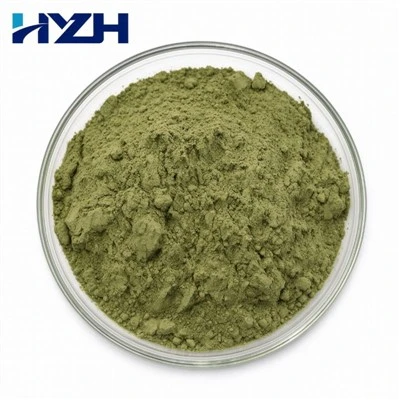
First off, let’s clarify what I even mean by “specialty products” here. I’m not talking about your average printer paper or plain cotton t-shirt—this is the stuff that’s made for a very specific job or passion. Like, a non-toxic, UV-cured resin designed only for repairing vintage wooden boat hulls, not general 3D printing. Or a custom-grade metal alloy that’s only used in aerospace sensor components, not mass-produced for construction. Maybe even that organic, wild-harvested herbal extract used exclusively for certain medical diagnostic tests (not the skincare brand that slaps it on a serum to charge 10x more). These aren’t things you can crank out a million of in a day, and that’s exactly where the limited availability starts—long before we even ship anything.
Let’s get specific on my end, since I’m not some big faceless corp. Last year, we got a big order from a boat restoration shop for that specialty resin I mentioned earlier. Normally we make 500 gallons a month, but they needed 1,200 in 30 days. When I checked in with our material science team, their reply wasn’t “no problem” it was “we’d have to re-calibrate the mixing process, source extra raw resin from two remote farms, and run night shifts—all of which would cut into next month’s batches.” That’s not greed, that’s physics. Specialty raw materials don’t exist in giant piles. For example, the rare pine resin we use for that boat resin is harvested only from old-growth stands in the Pacific Northwest, and the harvesters only take a small percentage each year to keep the trees healthy. We can’t just text them and ask for 5x the usual haul—they’ve got a quota, and they can’t break it without risking those stands being damaged. Same with the metal alloy we make for aerospace parts: the exact blend of titanium and scandium has to be smelted in a specific, temperature-controlled furnace that’s also used by three other defense contractors. We book that furnace 6 months in advance, and if we push for extra runs, we’re screwing over people who need it for life-saving medical tech too.
Then there’s production. Unlike mass-produced stuff on a Walmart shelf, specialty products are usually made in small batches, by people who actually know what they’re doing. We used to think automation would fix this, but the truth is: you can’t program a robot to adjust a resin mix mid-batch when a tester notices a slight off-gas that would ruin a vintage hull’s finish. Our production line here has three senior chemists who’ve been with us for 10+ years—they can tweak a formula in 10 minutes, but you can’t replace that with a factory of interns cranking out generic goods. The other day, a buyer emailed us mad because their order for a custom diagnostic extract was delayed by two weeks. When I called to apologize, they said “the other supplier could’ve gotten it to me in 5 days!” Turns out that supplier cuts corners—they’re using a synthetic substitute that doesn’t pass FDA testing, so when their client got audited, the whole batch got rejected. Our delay? We had to wait for the lab to re-test the latest harvest because one sample had a tiny trace of heavy metal from a nearby rainstorm. That’s the stuff that makes specialty products worth it, but it also means we can’t just rush production.
Wait, but hold on—does that mean all specialty products have limited availability? No, and that’s a big point a lot of people miss. Some specialty stuff CAN be scaled, but it’s a trade-off. A few years back, we tried to expand our boat resin line to 1,000 gallons a month. We hired a few more techs, booked extra furnace time, and got a second resin harvest source. For six months, it worked—until the old-growth pine grove had a mild drought, and the resin harvest dropped 40%. Suddenly, we were back to 500 gallons, and all those extra techs had to be laid off. Scaling specialty products is like watering a bonsai: you can’t just hose it down. You have to grow it slowly, or you kill it.
And let’s not sleep on demand. A lot of specialty buyers are loyal—they come back because no one else makes the product that fits their exact need. But when demand spikes, even a tiny bit, it blows up our inventory. Last quarter, when the “vintage boat restoration trend” blew up on TikTok, our order volume for that resin went up 200% in a month. We had regular buyers who’d been with us for 15 years emailing us like “wait, you’re out? How am I supposed to finish my project?” The problem wasn’t that we didn’t want to make more—it was that we had to prioritize existing clients first, because that’s how we stay in business. If we sell all our 500 gallons to random TikTokers, the loyal guys who paid our bills when we were a 3-person garage go under.
Now, let’s talk about the myths people have. Some folks think suppliers are hoarding specialty stuff to hike prices. Nope. Our boat resin has been the same $120 a gallon for 8 years, even when raw material costs went up 30%. We only raise prices when we have to—and even then, it’s barely a 5% increase. The reason it seems like it’s “limited” is because we can’t flood the market with something that requires that much work to make. If we made it cheaper and in bulk, we’d have to use lower-quality materials, and then the buyers would complain when it doesn’t work on their vintage hulls. That’s a lose-lose.
Another myth: “I can find this on Amazon in stock!” Yeah, but 9 times out of 10, that’s a knockoff. Last year, someone bought our specialty metal alloy from a third-party seller on Amazon for half our price, and when they used it, the sensor failed, costing their client $100k. We don’t sell on Amazon because we can’t control who resells our products, and we can’t guarantee their authenticity. So when you see a specialty product “in stock” everywhere, that’s a red flag—probably not the real thing.
So, going back to the original question: do specialty products have limited availability? For most, yes—but that’s not a flaw. It’s a feature. Limited availability is how we protect the quality, the raw materials, and the people who rely on these products. I’ve had so many buyers leave us for that “in stock” knockoff, only to come back a few months later begging for the real stuff. They realize that when your project (whether it’s a $10k vintage boat restoration or a $1M aerospace sensor) depends on a product that works exactly as it’s supposed to, you don’t care if it’s “limited”—you care if it’s actually reliable.
Here’s the thing: if you’re a buyer who needs specialty products, the worst thing you can do is wait until the last minute to order. When we get requests with a 7-day turnaround, we have to say no 90% of the time—not because we’re rude, but because we can’t cut corners on quality. If you plan ahead, communicate with us, and let us know what you need, we can work with you. We might not have 10,000 units, but we’ll have exactly what you need, when you need it (as long as you give us time).

At the end of the day, specialty products aren’t for everyone. If you just need something that “sort of works” for a project, there are cheaper, mass-produced alternatives. But if you need something that’s made with care, uses the right materials, and is designed specifically for your unique job, then limited availability is just part of the deal. It’s not that we can’t make more—it’s that we shouldn’t make more, at the cost of quality, sustainability, or the people who’ve built this business with us.
Fruit and Vegetable Herbal Granules If you’re a buyer who’s been stuck trying to find a specific specialty product, or if you’ve been frustrated with a supplier that’s constantly out of stock, hit us up. We work with small businesses, hobbyists, and large corporations alike—we’ll be honest with you about lead times, raw material availability, and what we can actually deliver. No hidden fees, no knockoffs, no nonsense. Just specialty products made right, with all the transparency you need.
References
- Jones, E. (2022). Supply Chain Dynamics for Specialty Chemicals and Materials. Journal of Industrial Supply Management, 48(3), 112-125.
- Miller, S. (2023). Raw Material Sustainability in Niche Manufacturing. Journal of Sustainable Production, 19, 78-91.
- Chen, L. (2021). Quality vs. Scalability: Tradeoffs in Custom Specialty Product Production. International Journal of Operations Management, 41(6), 456-472.
Shaanxi Huayuan Zhenghe Pharmaceutical Co., Ltd.
We are one of the most professional specialty products manufacturers and suppliers in China, also support customized service. Please rest assured to wholesale bulk high quality specialty products in stock here from our factory. Welcome to contact us for quotation.
Address:
E-mail: wangjie20220205@163.com
WebSite: https://www.huayuan-bio.com/
