If you’ve ever stepped into a metal fabrication shop, a woodworking studio, or even a small custom machining space, you’ve probably seen saws whirring away, cutting through everything from thin aluminum sheets to thick steel beams. Two machines that often get mixed up are contour saws and vertical band saws. As a supplier with years of experience in vertical band saw equipment, I’ve talked to countless customers who ask the same question: how are these two tools different, and which one do I actually need for my job? It’s a fair question—both look like they have a vertical blade loop, both cut shapes, and both are staples in many workshops—but the differences are far more than just surface level. Let’s break this down, no jargon overload, just the real-world stuff I’ve learned talking to machinists, woodworkers, and fabricators every day. Vertical Band Saw Series
First, let’s start with the basics: how each machine is built, because that design directly dictates what it can do. A contour saw, by most industry definitions, is a small, handheld or table-mounted machine with a thin, narrow blade that’s usually less than a quarter-inch wide. The blade is a continuous loop, just like a vertical band saw, but that’s where the similarities end. Contour saws are designed for ultra-fine control; the table is small, and the blade runs between two small wheels, often with a guide assembly that lets the blade pivot almost 180 degrees. That pivot is key. Contour saws are made to turn tight corners, cut intricate curves, and work on small, detailed pieces. Think of cutting a wooden puzzle piece, a thin metal stencil, or a small plastic model part. The thin blade can bend easily, so it can follow even the most convoluted lines without wandering.
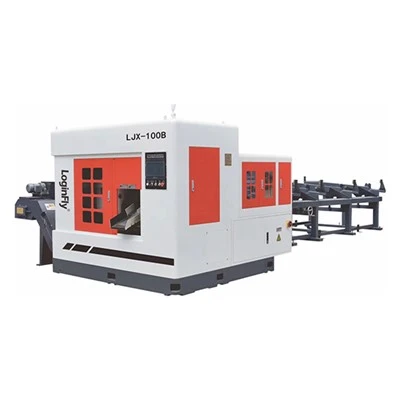
Now, a vertical band saw—this is what I supply, and it’s built for power and versatility, not tiny detail work. The blades for a vertical band saw are much wider, ranging from a half-inch to several inches depending on the model, and they’re made from tougher material, like high-speed steel or bi-metal, to handle thick materials. The wheels on a vertical band saw are larger, usually 12 inches or more, and the blade runs through a rigid frame that’s bolted to the floor or a heavy workbench. There’s very little blade play, and the blade can only pivot about 90 degrees, not 180. That design is intentional: it lets the vertical band saw handle cuts that contour saws can’t, from 6-inch steel beams to thick hardwood planks, while still being precise enough for many fabrication jobs.
Next up, the cutting capabilities, and this is where the lines between the two machines really separate. Let’s talk about curves first, because that’s what people often use contour saws for. A contour saw can cut extremely tight internal curves—think a radius of less than an inch. That’s because the thin blade can bend without breaking or wandering. If you’ve ever used a contour saw to cut a scroll pattern for a wooden sign, you know how smooth those tiny curves look. But here’s the catch: contour saws are limited in the thickness of material they can handle. Most can only cut up to about 2 inches of soft wood, and even less for metal—like 1/8 inch aluminum, tops. Push it harder, and the blade will break, or the machine will stall.
A vertical band saw, by contrast, excels at both straight cuts and larger curves. The tightest radius a vertical band saw can cut depends on the blade width: a 1/2-inch blade might handle a 2-inch radius, while a 2-inch wide blade can only do a 8-inch radius. That’s way bigger than what a contour saw can do, but it’s still enough for most workshop needs—like cutting a circle for a table leg base, or a gentle curve for a custom furniture edge. And when it comes to thickness? A vertical band saw can cut through material that’s feet thick, depending on the model. Our heavy-duty vertical band saws, for example, can handle up to 24 inches of steel or 30 inches of solid hardwood. That’s a world away from a contour saw’s thin material limit.
Wait, but what about precision? A lot of people think contour saws are more precise, but that’s not always the case. Contour saws are great for small, detailed cuts, but they can have blade drift if you’re not holding the piece perfectly steady. Because the blade is so thin, it’s easy for it to pull slightly to one side if you’re pushing too hard, which can throw off a tight cut. Vertical band saws, on the other hand, have a guide system that holds the blade in place, so drift is minimal—especially on straight cuts. For example, if you need to cut a long, straight strip of steel for a bracket, a vertical band saw will cut that faster and more accurately than a contour saw, no wandering required. The only time a contour saw is more precise is on tiny, intricate shapes that demand that tight 180-degree turn.
Then there’s the range of materials each machine can handle. Contour saws are mostly for soft materials: wood, plastic, thin sheet metal, foam, and even cardboard. They’re not built for hard materials like stainless steel, cast iron, or thick hardwood, because those would snap the thin blade. Vertical band saws? They handle just about everything. We’ve sold vertical band saws to customers cutting 10-inch steel I-beams for construction, custom woodworkers cutting 12-inch walnut planks for countertops, and even artists cutting thick acrylic sheets for large sculptures. The blades can be swapped out too—for woodworking, you use a blade with more teeth per inch for smooth cuts; for metal, a coarser blade or a bi-metal blade that stands up to heat. That versatility is a big reason why vertical band saws are so popular in fabrication shops.
Let’s also talk about use cases, because that’s where most people run into confusion. If you’re a hobbyist making wooden jewelry, cutting small, intricate scrollwork, a contour saw is the right pick. If you’re a small furniture maker cutting curved chair legs or ripping 8-inch oak planks, a vertical band saw is what you need. If you’re a metal fabricator making brackets, gears, or custom metal parts, a vertical band saw is going to save you way more time than a contour saw. I remember a customer last year who was using a contour saw to cut 1/4-inch steel parts for farm equipment. He was spending 3 hours a day cutting parts, and the blade was breaking every 10 cuts. Once he upgraded to a mid-sized vertical band saw, he cut his time down to 45 minutes a day, and the blades lasted a month. That’s the kind of difference the right machine makes.
Wait, but are there any overlaps? Sure, both machines cut curves, both use a continuous band blade, both have a table to hold the material. But even those overlaps are superficial. A contour saw is portable, often used on small workbenches, while vertical band saws are stationary, built for heavy use. A contour saw’s blade is designed to bend; a vertical band saw’s blade is designed to be rigid. A contour saw is for small jobs; a vertical band saw is for jobs that matter, the ones where speed, power, and consistency count.
Now, as someone who sells vertical band saws, I don’t want to make it sound like contour saws are useless. They fill a very specific niche: small, detailed, low-thickness cuts. But too many customers come to me thinking they need a contour saw for a job that’s better suited for a vertical band saw, or vice versa. For example, a customer once asked for a contour saw to cut 6-inch circles for fire pits. I asked him what material he was cutting, and he said 1/2-inch steel. A contour saw can’t handle that—even the thickest contour saw blades max out at 1/4-inch steel. A vertical band saw, though, can cut those 6-inch circles smoothly, and with a blade designed for metal, the cut is clean enough that he barely needs to sand the edges. That’s the kind of insight I bring to every conversation with a customer.
Another common misconception: people think vertical band saws are only for industrial use. We sell models for small shops and hobbyists too—they’re not just the big machines you see in factories. Our entry-level vertical band saws are designed for customers who work in garages or small studios, with a footprint that fits on a 4×4 foot bench, and the ability to cut up to 12 inches of material. They’re affordable, easy to use, and way more powerful than a contour saw for most jobs. If you’re running a small woodworking business, that’s often the sweet spot.
Let’s also talk about maintenance, because that’s a big part of choosing the right machine. Contour saws are low-maintenance: you just change the blade when it breaks, clean the table occasionally. Vertical band saws do need a bit more upkeep: you have to align the wheels regularly, tension the blade correctly, and lubricate the guides. But that’s not a downside—it’s a tradeoff for the power and versatility. I’ve had customers use their vertical band saws for 10 years with just basic maintenance, so it’s not like it’s a high-effort machine. For the extra work, you get a tool that can handle almost any cut you throw at it, from small curves to thick beams.
So, to wrap this up, let’s get back to the core differences, the ones that matter when you’re choosing a machine. Contour saws: thin blades, 180-degree pivot, low material thickness limit, small curve radius, ideal for tiny, intricate cuts on soft materials. Vertical band saws: wide, tough blades, 90-degree pivot, high material thickness limit, larger curve radius, ideal for straight cuts, big curves, and thick materials across wood, metal, and more. The key isn’t which one is better—it’s which one fits your job. If you’re making small scroll art, go with a contour saw. If you’re cutting beams, planks, or custom metal parts, a vertical band saw is the way to go.

I’ve seen too many customers waste money on the wrong machine because they didn’t know the differences. That’s why I’m always happy to walk through what you need, whether you’re a first-time buyer looking for your first shop tool, or a seasoned fabricator upgrading your equipment. If you’re in the market for a saw that can handle your everyday cuts—from curved trim to thick steel brackets, with the power and precision to get the job done right—reach out to discuss your needs. I can help you find the right vertical band saw for your workshop, no matter the size.
Band Saw Machine References:
- Woodworking Machinery Association, "Band Saw and Contour Saw Design Specifications," 2022
- Metal Fabrication Supply Guide, "Cutting Tool Capabilities for Ferrous and Non-Ferrous Materials," 2023
- Small Shop Machinist Journal, "Choosing the Right Saw for Hobby and Light Industrial Applications," 2021
Shanghai Loginfly Sawing Technology Co., Ltd.
As one of the most professional vertical band saw manufacturers and suppliers in China, our products have good reputation in the market. We warmly welcome you to wholesale premium vertical band saw from our factory. If you have any enquiry about cooperation, please feel free to email us.
Address: Room 506 NO.655 Yinxiang Road,Nanxiangtown,Jiading District, Shanghai.China
E-mail: sales01@loginfly.com
WebSite: https://www.loginflysaws.com/
