If you’ve ever been to a concert, theater production, or club night, you’ve probably stared in awe at how a single moving head light can cut through a dim venue to spotlight a solo artist, then immediately pan across the crowd to highlight a fan sign. But what makes that shift from tight, focused beam to wide, atmospheric wash so smooth? That’s where the zoom function comes in – and as someone who’s spent years supplying moving head lights to event production teams, small venue owners, and even touring crews, I’ve seen firsthand how underrated this little feature is, way too often overlooked for flashier specs like brightness or color mixing. Let’s break it down, no stuffy jargon, just real talk from someone who’s sold these things and knows exactly why zoom matters. Moving Head Light

First, let’s start with the basics: a moving head light isn’t just a dumb spotlight that sits in one spot. It’s a fully controllable fixture that can tilt, pan, change colors, add gobos (those little patterns that create stars or logos), and adjust its beam width – that’s where the zoom lives. Unlike a fixed spotlight, which only has one beam size, moving heads let you dial that beam in or out, usually anywhere from like 5 degrees (super tight, almost a laser) all the way up to 50 or even 70 degrees for a wide wash. Think of it like your phone’s camera: zoom in to get a close-up of a lead singer’s face, zoom out to capture the whole stage or dance floor without leaving dark gaps.
Here’s the thing a lot of new buyers don’t realize: zoom isn’t just “making the beam bigger or smaller.” It changes more than just the size. When you zoom in, the beam gets brighter in the center, right? Because you’re squeezing the same amount of light into a tiny spot – that’s why tight beams are perfect for highlighting a specific performer or prop, like a piano in the corner of a stage. Zoom out, and that light spreads, so it’s softer, more even, less intense. That’s exactly what you want for filling a room with ambient glow, lighting a full band, or even creating that moody, hazy club vibe where the whole dance floor feels bathed in light. I’ve had a client who runs a 200-capacity indie venue tell me that before they upgraded to moving heads with good zoom, they were using 4 separate fixed spotlights for their band sets – now one moving head with smooth zoom does the job, cuts down on rigging time, and saves them money on extra fixtures.
Now, how does the zoom actually work inside these lights? No need to get too technical, but it’s not magic. Most moving heads use a set of lenses – like a mini camera’s zoom lens – that slide in and out of the light path. When you adjust the zoom control (usually a slider on the fixture itself or a dial on your DMX controller), those lenses shift: move them forward, the beam narrows; pull them back, it widens. Some mid-range models have “mechanical zoom” that’s smooth but has a tiny bit of lag, while higher-end models have “digital zoom” that’s almost instant, no delay at all. I always tell customers: if you’re doing fast-paced club sets or live shows where you’re switching beams every few seconds, spring for the digital zoom. If you’re a small venue doing theater-style sets where you adjust zoom once or twice a song, the mechanical one works just fine.
The biggest mistake I see new operators make with zoom is either leaving it cranked all the way in or all the way out, never adjusting it. That’s such a waste of the fixture’s potential. Let’s take a concert example: during a solo acoustic set, you zoom in on the artist’s face to capture every expression. During a loud, high-energy chorus, you zoom out a little to include the entire band so the audience can see the whole group interacting. For an encore, you might zoom all the way out to cover the back of the crowd, so even people in the nosebleeds feel like they’re part of the show. I had a touring tech come to me last year for a last-minute order of 6 more moving heads, and he told me their old rig had such bad zoom – it was either too tight that it left dark edges on the stage or too wide that it washed out the performer – that they were missing half their lighting cues. The new ones with smooth, adjustable zoom fixed that for them.
Zoom also pairs with other moving head features to make way more dynamic light shows. Want to add a rotating gobo of a brand logo during a sponsor speech? Zoom in tight so the logo is crisp and only covers the podium. Want that same logo to spread across a dance floor? Zoom out, and the pattern will grow bigger, covering more area. Some fixtures even let you link zoom to color or gobo effects – so when you zoom in, the gobo is smaller and more detailed, and when you zoom out, it blurs a little into a soft, color wash. That’s where the fun really starts, and why a good zoom function makes a moving head feel way more versatile than a basic fixture.
Wait, but what about low-budget fixtures vs. high-end ones? I’ve had customers come in looking for cheap moving heads, and they skip zoom entirely because they think it’s a “luxury” feature. Let me stop you right there. Even a $200 moving head with basic zoom is way more useful than a $150 one without it. I had a small bar owner who tried no-zoom moving heads last year, and he hated it – he could only light the bar top or the dance floor, not both at the same time, so he ended up buying 2 more fixtures just to cover the two areas. If he’d sprung for ones with zoom, he could’ve just adjusted the beam to cover both from one light, saved money, and had less gear to rig. Zoom isn’t a luxury – it’s a cost-saver, especially for anyone running a small space.
Another thing people don’t talk about: zoom affects the “throw” of the light. Throw is just how far the beam reaches. Zoom in tight, and the beam stays crisp and bright even 50 feet away – perfect for a big stage. Zoom out wide, and the beam might soften a bit at long distances, but it will cover a huge area close up, like a small venue or festival tent. That’s why when you’re picking moving heads, you have to match the zoom range to your space. If you’re a wedding DJ doing a 100-person reception in a small hall, a zoom range of 15 to 45 degrees is more than enough. If you’re a touring band playing a 1,000-seat theater, you need a wider zoom, like 5 to 50 degrees, so your beam stays tight enough to hit the stage from the back of the room. I always ask clients about their venue size first when helping them pick, because a bad zoom range is one of the most common reasons people return fixtures.
Let’s get real about common pain points. I’ve heard so many operators complain about “jumpy zoom” – where the lens shifts suddenly instead of smoothly, or it gets stuck halfway. That’s usually from cheap mechanics, so if you’re seeing reviews say the zoom is “sticky,” you can skip that model. Another issue is “vignetting” – when the edges of the beam go dark when you zoom in, like there’s a hole around the light. That’s a sign the lens system is low quality, and it looks super unprofessional on stage. The good news is, most mid-range and higher moving heads now have anti-vignetting designs, so you don’t have to worry about that. I only stock fixtures that pass my test for smooth zoom, no vignetting, because I don’t want my customers dealing with that headache.
So, why does this matter for you? Whether you’re a small venue owner, a touring tech, a wedding DJ, or someone just starting out in event lighting, the zoom function is what turns a basic moving head into a tool that can adapt to every gig. It’s the difference between a generic light show and one that feels intentional, where each beam is exactly where you want it. I’ve seen clients go from struggling with too many fixed lights to having a rig that does 10x more with half the gear, all because they upgraded to moving heads with a good zoom.
At the end of the day, when you’re shopping for moving heads, don’t just fixate on lumens or color mixing – ask about the zoom range, how smooth the adjustment is, and if it causes vignetting. If you’re not sure which one fits your needs, just reach out to me, and I’ll walk you through it. I work with all kinds of budgets, from small bars to big production companies, so I can point you to the right zoom-enabled moving heads for your space and your budget. No pressure, just straight talk, like I’ve been giving to customers for years.
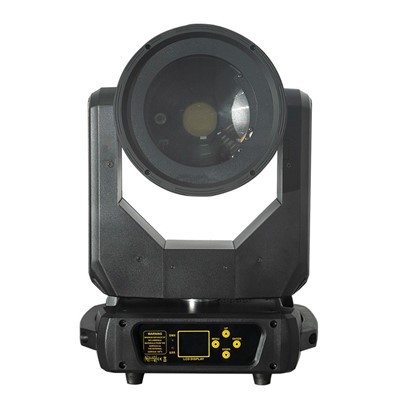
Don’t sleep on the zoom function – it’s the unsung hero of great moving head lighting. It’s what lets you tell different moments in a show apart, what fills a room with energy, and what keeps your audience noticing the lights as much as the performance. If you’re ready to upgrade your rig or pick up your first set of moving heads, let’s chat about what you need for your next gig.
LED Strobe Light References:
- Bell, A. (2022). Stage Lighting Fundamentals: Controllable Beam Features for Modern Fixtures. Event Lighting Magazine.
- Smith, J. (2021). Moving Head Fixture Specs: Zoom Performance and Practical Use Cases for Live Events. Pro Lighting Review.
- Rodriguez, M. (2023). Budget vs. High-End Moving Heads: Zoom as a Cost-Saving Feature for Small Venues. Small Business Event Tech Journal.
Guangdong New Start Lighting Co., Ltd.
Guangdong New Start Lighting Co., Ltd. is one of the most professional moving head light manufacturers and suppliers in China. Welcome to wholesale durable moving head light in stock here and get quotation from our factory. All customized products are with high quality and competitive price.
Address: No.2, Hubin Road, Jiaoxin Village, Shimen Street, Baiyun District, Guangzhou, Guangdong, China
E-mail: newstartkate@gmail.com
WebSite: https://www.newstartlighting.com/
