Hey everyone, Stamping Die
If you’re running a stamping shop or just got your first custom stamping die built for your parts, there’s one super frustrating problem that hits way too often: you fire up the press, run the first 10 parts, and half of them are uneven—some sides are thicker, some edges curve weird, and you’re left staring at a pile of scrap wondering what the heck went wrong. I’m the guy who’s been building and troubleshooting stamping dies for 12 years now, and this question is probably the most common one I get from shop owners and operators alike. Today, I’m breaking down the real reasons your stamping die is spitting out uneven parts, no stuffy engineering jargon that makes your eyes glaze over.
First off, let’s get one thing straight: uneven parts aren’t always the die’s fault. A lot of new operators I talk to automatically blame the die the second a part is off, but sometimes the root cause is way simpler. Let’s start with the basics because this is where most missteps happen.
1. The Press Isn’t Calibrated Like It Should Be
I’ve seen this so many times: a shop’s 200-ton press has been running for 5 years, no one’s checked its alignment lately, and the ram isn’t moving straight up and down. If the ram tilts even a tiny bit—like 0.002 inches over a 24-inch bed—that’s enough to make your die apply more force on one side. That force imbalance means the metal isn’t compressing evenly, so your part’s thickness will shift, or the flanges will be lopsided.
Presses also get their own wear: tie rods stretch over time, the flywheel might have a wobble, or the die’s mounting plate on the ram has loose bolts. If those bolts are torqued unevenly, the die itself isn’t sitting flat on the press bed, so one edge of the die is touching the material before the other. I once had a shop call me crying because their brake brackets were 0.010 inches thinner on one side—turns out the press’s ram was off by 0.003 inches, and no one had done a press alignment check in 18 months. Pro tip: if your press is over 5 years old, get a monthly alignment check from a service tech. It’s $150, way cheaper than scrapping 500 parts.
2. The Die’s Alignment Is Off—Even By a Tiny Amount
Your stamping die’s punch and die have to be perfectly concentric, right? But when we build dies, even a small mistake in machining, or a shift when bolting the die together, can throw this off. Let’s say you have a 1-inch punch: if it’s only 0.005 inches off-center from the die’s cavity, that means one side of the punch is hitting the material first with way more force. That extra force pushes the metal further on that side, so the wall thickness of a cup or a drawn part will be uneven.
Another thing: guide posts and bushings. Those are the metal pins that keep the upper and lower die halves moving straight. If the bushings are worn—like, after 100,000 hits, the bushing has a 0.001-inch gap around the guide post—the upper die can shift side to side when you run it. I had a client last year who was getting uneven laptop hinge parts, and we pulled the die apart to find the guide post bushing on the right side was worn 0.002 inches more than the left. Replacing the bushings fixed it in 10 minutes, no rework needed.
Wait, and let’s not forget the die’s stripper plate. That’s the plate that holds the metal flat while the punch goes through. If the stripper plate isn’t parallel to the die’s bed, it will pull the metal on one side tighter than the other, causing uneven stretch. I see this all the time with custom dies—if the machinist who built the die didn’t mill the stripper plate properly, that’s a hidden issue that shows up only when you run thin material (like 0.020-inch aluminum) which is super sensitive to that kind of pull.
3. Material Issues That You Might Be Overlooking
A lot of people think “metal is metal” but that’s not true. The most common material-related cause of uneven parts is inconsistent material thickness. If your steel coil has a spot that’s 0.050 inches thick and another spot 0.048 inches thick, the die will compress the thinner spot more, making a part that’s 0.048 inches on one side and 0.050 on the other. Even if the material’s thickness is rated to be the same, every coil has slight variations—some more than others.
Another material problem: surface imperfections or grain direction. Metals like aluminum have a grain structure, like wood. If you stamp a part across the grain, the metal will stretch more unevenly than if you stamp with the grain. Wait, no—actually, when you stamp deep drawn parts, grain direction matters a lot for uniformity. If your material’s grain is running left-right and your die is pulling the metal front-back, that uneven stretch will cause wrinkles or uneven wall thickness. I once had a shop using stainless steel that was way too grainy; switching to a finer-grain coil fixed their uneven brackets overnight.
Also, material tension when feeding. If your coil feeder isn’t set right—too tight, or too loose—the metal can shift as it’s fed into the die. If it’s too loose, the material will bow a little, so when the punch hits, one side gets more force. If it’s too tight, the metal might stretch in one spot before the die even hits it, leading to uneven parts. That’s another common one: a lot of feeders get adjusted once when they’re installed, but every time you switch material thickness, you have to retension it. I’ve seen shops run 0.060-inch steel on a feeder set for 0.040-inch aluminum—total mess, uneven parts left and right.
4. Die Wear Over Time (The Silent Culprit)
Dies don’t stay perfect forever. Every time you run a part, the punch and die cavity wear a tiny bit—especially if you’re stamping hard materials like stainless or brass. The first 10,000 parts a die runs are usually spot on, but after 50,000 hits, the punch might get a small crater, or the die cavity might wear unevenly. Let’s say your die’s edge on the left is wearing twice as fast as the right—when the metal hits, the left side has more clearance, so it flows faster, leading to an uneven flange on your part.
I had a client with a die for automotive brackets that was running great for 30,000 parts, then suddenly the parts were uneven. We measured the die and found the die cavity on the right side had worn 0.008 inches more than the left. The fix wasn’t rebuilding the whole die—just a quick regrind on the cavity, and it was good for another 40,000 parts. The key here is to do die audits every 20,000 parts. Just take calipers and check the punch and cavity dimensions, especially the edges that do the most work. That way, you catch wear before it causes scrap.
5. Die Design Flaws (The Big One For New Dies)
If you just got a new die built, uneven parts might be because the design wasn’t thought through for your specific material. For example, if you’re stamping a deep drawn cup with a die that has too much clearance on one side, the metal will flow unevenly. Or the die’s draw bead (the little ridge that controls material flow) isn’t sized right—if one draw bead is taller than the other, it stops the metal from flowing on that side, leading to a lopsided cup.
Another design issue: lack of lifters. Lifters are small pins that hold the metal flat in the die during the stroke. If you’re stamping a part with a lot of bends, and there’s no lifter on one side, the metal can lift as the punch comes down, so the bend is off by 0.010 inches. I’ve seen this so many times with custom dies—designers sometimes cut corners on lifters to save time, and it shows up as uneven parts.
Wait, and what about multiple operations? If your die is a multi-stage die (does bending, punching, and drawing all in one), each stage has to be aligned with the last. If the first punch for a hole is off by 0.005 inches, the second bend will be off too, leading to an uneven part. When I build dies, I always do a layout check before machining to make sure every stage is perfectly aligned, but some smaller shops skip that step to cut costs.
How Do You Fix This Without Scrapping More Parts?
Let’s get practical. If you’re dealing with uneven parts, start with the easiest checks first:
- Pull a part and measure its thickness with calipers—this will tell you if it’s the die, press, or material. If thickness varies more than 0.002 inches, check your press alignment first.
- Check the die’s guide posts and bushings—slide the upper die side to side; if there’s any play, replace the bushings.
- Verify your feeder tension: feed a 1-foot strip of material, mark it every 2 inches, and see if the marks line up. If they’re off, adjust tension.
- For older dies: do a quick wear check with a micrometer on the punch and cavity edges. If wear is uneven, a regrind will fix it.
If you’ve gone through all these and still can’t figure it out, it might be time to talk to a die builder who’s seen this a hundred times. I can’t tell you how many times a shop has come to me with a “mystery uneven part” and it was just a tiny misalignment no one caught on their own.
Final Note For Shop Owners
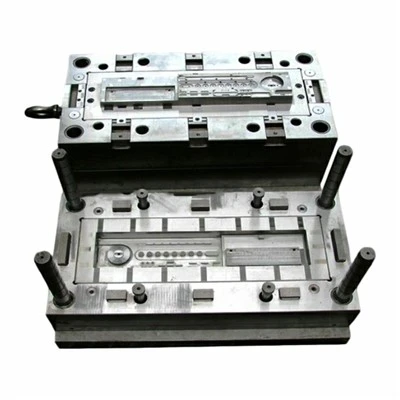
Here’s the thing: uneven parts don’t have to stop your run. Most of the time, they’re fixable with a $150 press check, a $50 bushing replacement, or a quick die audit. If you’re dealing with a die that’s been giving you trouble, or you need a custom die built that’s designed to avoid these issues, don’t overcomplicate it. Reach out to the right people—people who’ve spent years troubleshooting stamping dies, not just running them off a CAD file.
Progressive Stamping Die I get that scrapping parts kills your bottom line, so why waste time guessing? If you’re ready to fix your uneven part problem for good, connect with us to chat through your specific setup, get a quick troubleshooting plan, or talk about building a die that’s made for consistent, even parts. No pressure, just straight talk that gets results.
References
- Digital Manufacturing and Design. (2021). "Alignment and Wear in Stamping Dies: Root Cause Analysis for Uniform Part Production." Journal of Stamping Technology, Vol. 36, No. 2, pp. 45-52.
- ASM International. (2019). "Material Properties and Stamping Process Variability for Thin Gauge Metals." Stamping Process Handbook, 5th Ed., pp. 112-128.
- Society of Manufacturing Engineers. (2020). "Press Calibration Best Practices for High-Volume Stamping Operations." Manufacturing Engineering Journal, Vol. 165, No. 4, pp. 78-85.
Dongguan Ruitong Precision Mold Co., Ltd.
With abundant experience, we are one of the most professional stamping die manufacturers and suppliers in China. Please feel free to buy bulk customized stamping die at low price from our factory. Welcome to contact us for quotation.
Address: No.17, Liuwuzhou South Road, Shijie Town, Dongguan City
E-mail: ming.dg@ruitongmould.cn
WebSite: https://www.ruitongmold.com/
