Hey there! I’m a supplier of silica powder, and today I wanna chat about the mechanical properties of materials that contain silica powder. It’s a super interesting topic, and I’m excited to share what I know with you. Silica Powder
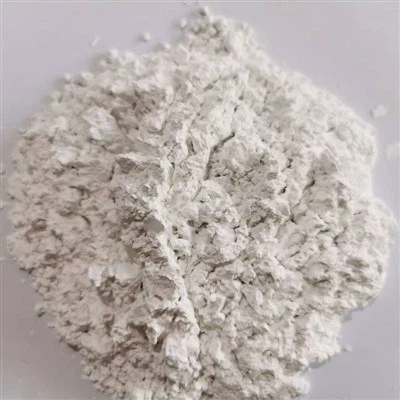
First off, let’s talk about what silica powder is. Silica, also known as silicon dioxide (SiO₂), is one of the most abundant materials on Earth. It’s found in sand, quartz, and many other minerals. Silica powder is made by grinding these materials into a fine powder. It has a bunch of unique properties that make it really useful in a wide range of applications.
One of the key mechanical properties of materials containing silica powder is their hardness. Silica is a very hard material, and when it’s added to other materials, it can significantly increase their hardness. For example, in the production of ceramics, adding silica powder can make the ceramic more resistant to wear and scratching. This is because the hard silica particles act as reinforcement, making the overall material stronger.
Another important property is strength. Silica powder can improve the strength of materials in different ways. In concrete, for instance, adding silica powder can enhance the compressive strength. The silica reacts with the calcium hydroxide in the concrete, forming additional cementitious compounds. This results in a denser and stronger concrete structure. In composites, silica powder can also increase the tensile strength. The powder helps to transfer stress between the different components of the composite, making it more resistant to breaking under tension.
Silica powder also has an impact on the elasticity of materials. When added to polymers, it can change the polymer’s elastic properties. For some polymers, silica powder can increase the stiffness, making the material less flexible. But in other cases, it can improve the elastic recovery, allowing the material to return to its original shape after being deformed. This is useful in applications like rubber products, where elasticity is crucial.
Now, let’s look at the abrasion resistance. Materials with silica powder are often more resistant to abrasion. In coatings, for example, silica powder can be added to make the coating more durable and resistant to wear from friction. This is especially important in high – traffic areas or applications where the surface is exposed to constant rubbing or scraping.
The thermal properties of materials can also be affected by silica powder. Silica has a relatively high melting point and low thermal expansion coefficient. When added to materials, it can help improve their thermal stability. In refractory materials, silica powder is used to withstand high temperatures without significant deformation. This is essential in industries like steelmaking, where materials need to be able to handle extreme heat.
In addition to these mechanical properties, silica powder can also improve the workability of materials. In some cases, it can act as a lubricant, making it easier to process the material during manufacturing. For example, in the production of plastics, adding a small amount of silica powder can reduce the viscosity of the plastic melt, making it flow more easily through the molds.
Now, you might be wondering how these properties translate into real – world applications. Well, in the construction industry, materials containing silica powder are used in everything from building foundations to high – rise buildings. The improved strength and durability of concrete with silica powder mean that buildings can last longer and be more resistant to environmental factors.
In the automotive industry, silica powder is used in tires. The addition of silica powder to tire rubber improves the tire’s grip on the road, especially in wet conditions. It also reduces rolling resistance, which means better fuel efficiency.
In the electronics industry, silica powder is used in the production of semiconductors and circuit boards. The high thermal stability and electrical insulation properties of silica make it an ideal material for these applications.
As a silica powder supplier, I’ve seen firsthand how these properties can benefit different industries. I’ve worked with companies in construction, manufacturing, and many other sectors to provide them with the right silica powder for their needs. Whether it’s a small – scale project or a large – scale industrial application, we have the expertise to help you find the best solution.
If you’re interested in using silica powder in your products, I’d love to have a chat with you. We can discuss your specific requirements and figure out the best type of silica powder for your application. We offer a wide range of silica powder products with different particle sizes, purities, and properties. Our team is always ready to provide you with technical support and advice.
So, if you’re looking to improve the mechanical properties of your materials, don’t hesitate to get in touch. We’re here to help you make the most of the amazing properties of silica powder.
Bentonite References:
- "Materials Science and Engineering: An Introduction" by William D. Callister, Jr.
- "Ceramics: Structure, Properties, Processing, and Design" by Jürgen Rösler and Jürgen M. Schneider
- "Polymer Composites" by L. A. Utracki
Lingshou County LM Mineral Products Co., Ltd.
As one of the most professional silica powder manufacturers and suppliers in China, we’re featured by quality products and good service. Please rest assured to buy customized silica powder made in China here from our factory. Contact us for more details.
Address: Dongzhuang Village, Nanyanchuan Township, Lingshou County, Shijiazhuang City, Hebei Province
E-mail: lmwtwz@163.com
WebSite: https://www.lmwtz.com/
