EPS, or Expanded Polystyrene, is a lightweight and versatile material that has found widespread use in various industries, including construction, packaging, and art. As a leading supplier of EPS cutting machines, I often receive inquiries about the capabilities of our equipment, particularly whether it can cut EPS in 3D shapes. In this blog post, I will delve into this topic, exploring the technical aspects, advantages, and limitations of using an EPS cutting machine for 3D cutting. EPS Cutting Machine
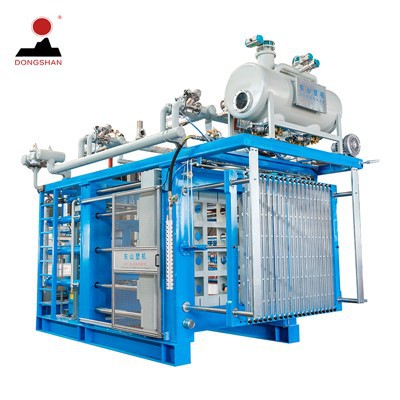
Technical Feasibility of 3D EPS Cutting
To understand whether an EPS cutting machine can cut EPS in 3D shapes, we first need to examine the underlying technology. Modern EPS cutting machines typically use hot wire cutting technology, which involves heating a thin wire to a high temperature and using it to melt through the EPS material. This process allows for precise cutting of EPS into various shapes and sizes.
For 3D cutting, the basic principle remains the same, but the machine needs to be equipped with additional features to control the movement of the cutting wire in multiple axes. Most advanced EPS cutting machines are designed with computer numerical control (CNC) systems, which can precisely control the movement of the cutting wire in three dimensions (X, Y, and Z axes). These systems use specialized software to generate cutting paths based on 3D models, allowing for the creation of complex and intricate 3D shapes.
In addition to CNC control, some EPS cutting machines also feature multi-wire cutting capabilities. This allows for the simultaneous cutting of multiple layers or sections of the EPS material, further enhancing the efficiency and accuracy of 3D cutting. By using multiple wires, the machine can create more complex geometries in a single pass, reducing the overall cutting time and improving the quality of the final product.
Advantages of 3D EPS Cutting
The ability to cut EPS in 3D shapes offers several significant advantages for various industries. Here are some of the key benefits:
-
Design flexibility: 3D cutting allows for the creation of highly customized and intricate EPS shapes that are not possible with traditional 2D cutting methods. This is particularly useful in industries such as architecture, where designers can use 3D EPS models to visualize and test their ideas before constructing full-scale buildings.
-
Cost-effectiveness: Compared to other methods of creating 3D objects, such as machining or casting, 3D EPS cutting is relatively inexpensive. EPS is a low-cost material, and the cutting process itself is fast and efficient, reducing labor and material costs.
-
Lightweight and durable: EPS is a lightweight material that is easy to handle and transport. It is also highly durable and resistant to damage, making it suitable for a wide range of applications.
-
Environmental friendliness: EPS is a recyclable material, and the cutting process generates minimal waste. This makes it an environmentally friendly choice for industries that are concerned about reducing their carbon footprint.
Limitations of 3D EPS Cutting
While 3D EPS cutting offers many advantages, it also has some limitations. Here are some of the key challenges that need to be considered:
-
Complexity of design: Creating 3D models for EPS cutting requires specialized software and technical skills. Designers need to have a good understanding of the cutting process and the capabilities of the EPS cutting machine to ensure that the final product meets their expectations.
-
Accuracy and precision: Achieving high levels of accuracy and precision in 3D EPS cutting can be challenging, particularly for complex shapes. The cutting wire may experience some deflection or vibration during the cutting process, which can affect the quality of the final product.
-
Material limitations: EPS has some inherent limitations in terms of its strength and hardness. While it is suitable for many applications, it may not be appropriate for use in high-stress environments or where a high level of durability is required.
-
Production volume: 3D EPS cutting is generally more suitable for small to medium production volumes. For large-scale production, other methods such as injection molding or extrusion may be more cost-effective.
Applications of 3D EPS Cutting
Despite its limitations, 3D EPS cutting has found a wide range of applications in various industries. Here are some of the key areas where 3D EPS cutting is commonly used:
-
Architecture and construction: Architects and designers use 3D EPS models to visualize and test their building designs. EPS models can be used to create detailed mock-ups of buildings, including interior and exterior features, and can be easily modified and updated as the design evolves.
-
Advertising and display: EPS is a popular material for creating advertising displays and promotional models. Its lightweight and easy-to-cut nature make it ideal for creating large-scale, eye-catching displays that can be easily transported and assembled.
-
Set design and prop making: In the entertainment industry, 3D EPS cutting is used to create sets, props, and special effects. EPS can be easily shaped and painted to create realistic-looking objects, making it a popular choice for movie, theater, and television productions.
-
Prototyping and product development: EPS is often used as a prototyping material in product development. 3D EPS models can be quickly and easily created, allowing designers to test and refine their product designs before moving on to the production phase.
Conclusion
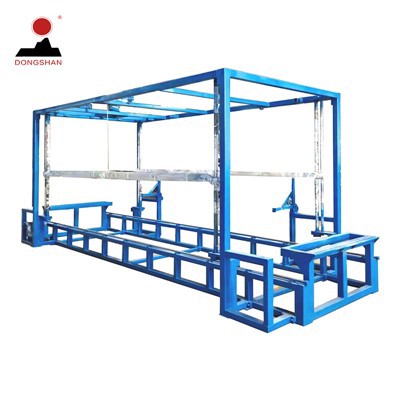
In conclusion, an EPS cutting machine can indeed cut EPS in 3D shapes, thanks to the advancements in CNC technology and multi-wire cutting capabilities. 3D EPS cutting offers several significant advantages, including design flexibility, cost-effectiveness, lightweight and durable, and environmental friendliness. However, it also has some limitations, such as complexity of design, accuracy and precision, material limitations, and production volume.
Vacuum System If you are interested in exploring the possibilities of 3D EPS cutting for your business, I encourage you to contact us to discuss your specific requirements. Our team of experts can provide you with more information about our EPS cutting machines and help you choose the right solution for your needs. Whether you are a small business looking to create custom displays or a large corporation in need of high-volume production, we have the expertise and technology to meet your needs.
References
- "Expanded Polystyrene (EPS) – Properties, Applications, and Sustainability." EPS Industry Alliance.
- "CNC Technology in EPS Cutting Machines." Journal of Advanced Manufacturing Technology.
- "3D Printing and 3D Cutting in the Manufacturing Industry." International Journal of Production Research.
Hangzhou Fuyang Dongshan Plastic Machinery Co., Ltd.
Hangzhou Fuyang Dongshan Plastic Machinery Co., Ltd. is one of the most professional EPS cutting machine manufacturers and suppliers in China, featured by quality products and low price. Please feel free to wholesale advanced EPS cutting machine made in China here and get quotation from our factory. Customized orders are welcome.
Address: 101 Guanting, Baiqian Villige, Luzhu Town, Fuyang District, Hangzhou City, Zhejiang Province, China
E-mail: xu@dong-shan.cn
WebSite: https://www.epseppmachinery.com/
