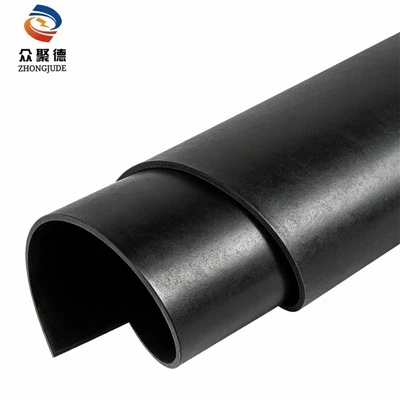
Hey there, if you’ve ever ordered nitrile rubber sheets for your industrial projects—whether it’s gaskets for food processing equipment, custom seals for plumbing, or even custom cut parts for your manufacturing line—you’ve probably seen “Shore A hardness” pop up on the spec sheet. Maybe you glossed over it, like “whatever, that’s just tech jargon, right?” But here’s the thing: that number’s way more important than you think. I’m Jake, and I’ve been selling nitrile rubber sheets for 8 years now, so I’ve heard every question under the sun about this material, and hardness is the one that trips up new buyers most. Today, let’s cut through the confusion, no stuffy lab talk, and get real about what nitrile hardness actually means, why it matters for your job, and how we at [your supplier name] pick the right hardness for each order. Nitrile Rubber Sheet

First off, let’s bust a myth right away: hardness in rubber isn’t like hardness in steel. When you grab a piece of nitrile, it’s squishy or firm, but it’s not like diamond that scratches glass. Rubber hardness is all about how much it deforms when pressed, measured via Shore durometer—99% of nitrile uses Shore A, so that’s the only one we’re talking about here. The Shore A scale runs from 0 (super soft, like a pencil eraser you just sharpened) to 100 (almost as hard as a car tire, but not quite). A nitrile sheet’s hardness is set during manufacturing, mostly by adjusting the crosslink density—think of crosslinks as tiny chemical bridges between rubber molecules. More crosslinks = tighter structure = harder rubber; fewer crosslinks = looser = softer. It’s that simple, but the tweaks make all the difference.
Now, what’s the actual range nitrile rubber sheets come in? Most of the stock we keep is 30 Shore A up to 90 Shore A, and every single number in between has a job. Let’s break down the common ones so you can stop guessing:
30 to 40 Shore A: This is the soft nitrile stuff. It’s almost like thick, squishy foam but way more durable. You’ll only see this for things that need to seal really rough, uneven surfaces—like emergency pipe repair wraps, or gaskets for lids that need to squish into gaps to stop leaks. But here’s the catch: it’s too soft for high pressure. If you try to use a 35 Shore A sheet for a hydraulic pump seal, it’ll squish out from between the metal parts in no time. It’s also prone to wearing fast if there’s friction, so not great for moving parts. We only keep small rolls of this, because most of our clients don’t need it, but when they do, they’re usually fixing an unexpected leak and need it same-day.
45 to 60 Shore A: This is the workhorse range, hands down. 90% of the orders we get fall here. Let’s use 50 Shore A as an example—feel like the grip on a new tennis racket, firm but still pliable. 55 Shore A is like the sidewall of a bicycle tire, and 60 is the tread of a car tire. This range hits the sweet spot: flexible enough to stretch and fit around flanges, shafts, or irregular edges, but stiff enough to hold its shape under moderate pressure and friction. Food processing clients love 50 Shore A gaskets for mixers because it compresses just enough to seal without leaving residue, and it’s nitrile so it stands up to grease and cleaning chemicals. HVAC technicians pick 55 Shore A for duct connectors because it bends easily to fit tight spaces and doesn’t crack when installed. For custom cut parts, this is our go-to stock, and we can ship it in 24 hours if needed.
65 to 80 Shore A: The heavy lifters. This is where hardness jumps up enough to handle high pressure, consistent friction, or constant movement. 65 Shore A is like a new shoe sole—stiff, hard to bend without effort, and built to take abuse. 70 Shore A is like a hard plastic ruler but still rubber, and 80 Shore A is almost unyielding, like a hockey puck made of rubber. We sell a lot of 75 Shore A sheets to construction companies for pump seals in concrete mixers—those pumps run at super high pressure, and soft rubber would get chewed up in minutes. 80 Shore A is for things like valve seats in industrial pipelines, where the rubber has to hold back hundreds of PSI of fluid every second. The downside here is that it’s way less flexible—you can’t bend an 80 Shore A sheet around a tight corner without it cracking, so it’s only for flat parts or large radius curves. If you try to cut a seal for a 2-inch pipe out of 80 Shore A, it won’t fit without forcing, and it’ll leak before you even turn the valve.
Wait, but why does this matter for you? Let’s say you ordered a 60 Shore A sheet for a hydraulic press seal, and it kept leaking. Could the hardness be the problem? 100% yes. If you pick too soft, it deforms under pressure and squeezes out. Too hard, it doesn’t compress enough to make a tight seal, or it cracks when the part moves. I’ve had so many clients call us frustrated because they used a generic “black rubber sheet” from a hardware store, not knowing the hardness was wrong. Last month, a guy from a local car restoration shop called—he’d bought a $10 sheet of black rubber to make gaskets for his old Chevy’s fuel pump, and it was falling apart in a week. Turned out it was 30 Shore A nitrile, meant for seals, not fuel lines. We sent him a 55 Shore A fuel-grade nitrile sheet, and he texted me a week later saying it’s holding perfect. That’s exactly why we don’t just sell you a sheet—we ask what you’re using it for, and suggest the right hardness first.
Let’s also clear up a common mix-up: nitrile hardness vs. oil resistance. People think harder nitrile is more oil-resistant, but that’s not the case. Nitrile’s oil resistance comes from the acrylonitrile (ACN) content in the rubber, not hardness. High ACN nitrile (34%+ ACN) is the oil-resistant stuff, and that can come in soft or hard. A 50 Shore A high ACN nitrile is just as oil-proof as an 80 Shore A one—they’re just built for different jobs. We once had a food truck owner who needed a soft gasket for his grease trap lid; he was worried soft rubber wouldn’t hold up to cooking oil, so he was gonna buy a hard sheet. We explained that hardness doesn’t affect oil resistance, just flexibility, so he got the 45 Shore A, and it’s lasted 6 months now with no leaks.
Another thing: how do we test hardness to make sure we’re giving you the right number? We don’t just guess when we get a batch of nitrile sheets. We use a Shore A durometer—super simple tool, looks like a tiny dial with a pointy tip. You press the tip firmly into the rubber, and the dial gives you a number. We test 5 different spots on every roll, make sure there’s less than 2 points of difference across the whole sheet—no soft spots or hard spots in the same roll, which is a problem with cheap overseas suppliers. Last year, we had a client send back a batch of hard sheets he ordered from another vendor; half the roll was 70 Shore A, half was 85, so when he cut seals, some worked and some leaked. We don’t cut corners on testing—every roll leaves our warehouse with a cert that lists the exact hardness, ACN content, and tensile strength, so you know exactly what you’re getting.
Now, what if you need a custom hardness? Wait, can you adjust nitrile hardness to something off the stock range? Sure, but it’s usually more expensive and takes longer. We’ve made 35 Shore A for a hospital’s sterile tray gaskets, and 85 Shore A for a mining company’s conveyor belt scrapers. The process is just tweaking the crosslink density during vulcanization—cooking the rubber at a specific temperature for a certain time. But unless you have a super specific job, the stock ranges we keep (40-70 Shore A for most industrial use) will work. The key is to tell us all the details of your project, so we don’t have to custom make something if you don’t need it.
Let’s recap the big takeaways so you don’t have to dig through tech docs:
- Hardness in nitrile is measured in Shore A, not like steel—lower = softer, higher = stiffer.
- For most jobs, stick to 45-60 Shore A: flexible enough for seals and gaskets, tough enough for daily use.
- Too soft = leaks under pressure, wears fast; too hard = won’t seal, cracks when bent.
- Hardness doesn’t equal oil resistance—check ACN content for that, not the Shore number.
- Work with a supplier who actually asks about your use case, not just sells you a sheet.
If you’re ever confused about what hardness you need, hit us up. Whether you’re a small business owner fixing gaskets, a maintenance tech needing seals, or a manufacturer cutting custom parts, we can walk you through it. No pressure, no weird jargon, just straight answers and the right nitrile sheet for your job. Don’t waste money on generic rubber that’ll fall apart—get the hardness right first, and your parts will last way longer.
Got questions? Need a quote for a specific hardness? Just reach out to our team anytime, we’re here to help with whatever nitrile sheet project you’ve got. Don’t guess on hardness—that’s the easiest mistake to fix, and it’ll save you a ton of time and frustration down the line.
Electrical Insulation Rubber Mat References:
- ASTM D2240, Standard Test Method for Rubber Property—Durometer Hardness
- Mark, J. E. (2007). Polymer Data Handbook (2nd ed.). Oxford University Press
- Society of Plastics Engineers. (2018). Rubber Materials and Applications Handbook
Hebei Zhongjude Power Technology Co., Ltd.
With abundant experience, we are one of the most reliable nitrile rubber sheet manufacturers and suppliers in China. Welcome to buy bulk high quality nitrile rubber sheet for sale here and get quotation from our factory. For price consultation, contact us.
Address: Shenghe Plaza, No. 88 Qilian Street, High-tech Zone, Shijiazhuang City, Hebei Province, China
E-mail: zhongjude@outlook.com
WebSite: https://www.zjdinsul.com/
