If you’ve ever stepped into a space where an open door wardrobe (ODW) is the main storage solution, you might have glanced at its surface and wondered: Is it truly smooth, or is that a claim just marketers toss around? As a supplier who’s built and shipped open door wardrobes for over a decade, I’ve fielded this question more times than I can count—from interior designers fighting to meet client finish standards to homeowners tired of running their hands over snaggy surfaces after loading clothes. It’s not just a cosmetic detail, either; a smooth surface ties directly to durability, ease of cleaning, and even the long-term function of the wardrobe. Let’s break this down, from the raw materials we source to the quality checks we run, so you can see why smoothness isn’t just a buzzword for open door wardrobes. Open Door Wardrobe
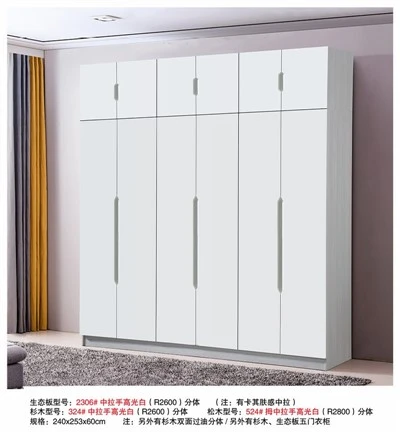
First, let’s start with the foundation: the core panel material. Back in the early days of ODWs, most brands used solid lumber straight from mills, with rough, sanded edges that left splinters or uneven patches. Those wardrobes worked fine for basic storage, but their surfaces were never uniformly smooth. Today, we’ve shifted to a mix of medium-density fiberboard (MDF) and plywood for the main structure, and that’s a game-changer. MDF, in particular, is a dense, engineered wood made from fine wood fibers and resin pressed under high heat. Unlike solid wood, which has natural knots, grain irregularities, and sometimes warps or swells with humidity, MDF has a consistent, smooth base. When we cut MDF panels for ODWs, the edges are sharp and even, and its surface doesn’t have the subtle bumps that solid wood might after a few months of use. That doesn’t mean MDF is perfect—if it’s poorly pressed, it can have tiny air pockets that show up as indentations when you paint or laminate it. But that’s where a supplier’s quality control comes in. We only work with MDF manufacturers that have a 100% density rate, so those air pockets are a non-issue for our open door wardrobes.
Next, the finish layer. This is what most people touch, and it’s the key to that smooth, polished feel. There are two main finishes we use for ODWs: laminate and paint, each with its own impact on surface smoothness. Laminate is a thin, plastic sheet that’s bonded to the panel surface with a hot press. The best laminates are made from melamine resin, which is durable and has a consistent, smooth texture. Cheap laminates, though, can have tiny bubbles or uneven edges that create a slightly rough feel, especially along the seams where panels meet. For our open door wardrobes, we use high-pressure laminate (HPL), which is pressed at 1,000 pounds per square inch—way higher than standard laminate. That means the sheet bonds completely to the MDF, no gaps, no bubbles, so the surface is flat and smooth from edge to edge. We also trim the laminate edges with matching edge banding, a thin strip of the same material, to seal out moisture and eliminate any sharp or rough edges that could catch on clothes.
Paint, on the other hand, is a popular choice for customers who want a custom color for their ODW. But not all paint jobs are the same. A spray finish, which we use for our painted open door wardrobes, is way smoother than a hand-painted one. Hand-painted coats often have brush strokes or uneven thickness, which create a textured feel that collects dust and can snag delicate fabrics. Spray painting, though, uses an air gun to apply a thin, uniform coat of paint, followed by a second or third clear coat for protection. We sand between each coat of paint with 220-grit sandpaper, which is fine enough to smooth out any tiny drips or imperfections without leaving scratches. That step makes the paint surface feel like glass—run your hand over a finished open door wardrobe with a spray paint finish, and you won’t feel a single uneven spot.
Now, let’s talk about a common misconception: some people think open door wardrobes have rougher surfaces than hinged or sliding-door wardrobes. Why would that be? Well, sliding-door wardrobes often have a frame around the door, and the door itself is usually a solid panel with a thicker finish, which can mask surface irregularities. Open door wardrobes, though, don’t have that frame—they’re essentially a storage unit with exposed panels, so every inch of the surface is on display. That means suppliers have to pay extra attention to small details, like the back panel and the internal shelves, which are easy to overlook. Back panels for closed-door wardrobes are often thin, rough plywood, but for our ODWs, we use the same MDF and laminate on the back as we do on the front. That way, if a customer moves the wardrobe away from the wall, the back isn’t a rough, eyesore, and it still has that smooth, consistent surface if someone accidentally brushes against it.
Durability is another piece of the puzzle, because a smooth surface doesn’t matter if it gets damaged easily. If a surface scratches or chips, it can become rough over time, which leads to snags on clothes, dirt buildup, and the need for frequent repairs. For our open door wardrobes, the HPL laminate we use is scratch-resistant up to 4H hardness—about as hard as a standard pencil, so a key or a hanger won’t leave a mark. The paint finish is also scuff-resistant, so you can move a heavy sweater against the surface without it feeling rough. We’ve tested these wardrobes in homes with kids, small pets, and frequent moves, and after two years of use, the surface still feels as smooth as the day it was installed.
Of course, there are factors that can affect the smoothness of an ODW after installation. Humidity, for one. Wood-based materials like MDF and plywood can absorb moisture if the wardrobe is placed in a bathroom or a basement with high humidity, which can cause the panels to swell slightly. If that happens, the edges might warp a tiny bit, creating a rough spot. That’s why we recommend placing open door wardrobes in rooms with consistent humidity levels (between 30% and 50%) and, if you do put it in a high-moisture area, adding a sealant every two years to protect the surface. Another factor is how you handle the wardrobe during delivery. If it’s banged around, the laminate can chip, or the panel can get a dent, which will create an uneven surface. That’s why we use custom foam packaging for all our ODWs, and we work with delivery teams that specialize in furniture, to make sure the wardrobe arrives in perfect condition.
Wait, what about solid wood open door wardrobes? Some customers prefer the natural look, so we do offer solid pine and oak options. Solid wood can have a slightly more textured feel, because of the natural grain, but that doesn’t mean it’s not smooth. We sand all solid wood panels with 120-grit sandpaper first, then 220-grit to create a smooth base, and finish with a clear sealant or a stain. We also fill in any small knots or gaps with wood filler, so those spots don’t create rough bumps. If you run your hand over a finished solid wood ODW, you’ll feel the subtle grain, but it’s not rough—it’s a smooth, natural texture, not the splintery feel of an unfinished solid wood piece.
Let me share a story to illustrate this. Last year, a designer from Brooklyn reached out to us because her client had rejected another ODW supplier’s product. The client, a fashion blogger, said the wardrobe’s surface was so rough it was snagging her silk scarves. We sent a sample of our ODW to her, and she tested it with a silk scarf, a wool coat, and even a delicate lace tablecloth—no snags, no pulls. The difference was that the other supplier had used 180-grit sandpaper, which is coarser, and a thin, low-quality laminate that had tiny gaps along the edges. We use 220-grit sandpaper and HPL laminate, so there’s no way a scarf would catch. That’s the day I realized how much a small detail like surface smoothness can make or break a sale, especially for open door wardrobes, which are designed to be seen and touched every day.
So, to circle back to the original question: Does the open door wardrobe have a smooth surface? The short answer is, yes—if it’s built by a supplier who prioritizes quality materials and consistent finishing. It’s not a default feature; it’s something you have to build into every step, from choosing MDF instead of rough solid wood, to using high-pressure laminate instead of budget sheets, to sanding and finishing every surface evenly. A cheap ODW might feel rough out of the box, but a well-made one will have a smooth finish that lasts for years.
If you’re in the market for an open door wardrobe, don’t just take a supplier’s word for it. Ask for a sample, run your hand over the surface, test it with a piece of delicate fabric, and ask about their quality control process. At our company, we test every single ODW before it leaves our warehouse—we check for smoothness, scratch resistance, and edge finish, so we can guarantee that when it arrives at your home, it’s as smooth as it should be. Whether you’re furnishing a small apartment, a bedroom, or a boutique, an open door wardrobe with a smooth surface doesn’t just look better—it works better, keeps your clothes safe from snags, and is easy to clean with a quick wipe of a cloth.
If you’re ready to discuss your needs for an open door wardrobe, or have more questions about surface quality, feel free to get in touch with our team to explore custom options, pricing, and delivery details. We’re here to help you find the right storage solution that fits your space, your budget, and your need for a smooth, durable finish.
Dressing Table References:
- The Wood Database. Medium Density Fiberboard (MDF): Properties, Manufacturing, and Applications.
- American National Standards Institute (ANSI). High-Pressure Laminate (HPL) Performance Standards for Furniture Finishes.
- Journal of Interior Design. Surface Texture and Furniture Function: The Impact of Finish Quality on Household Goods.
- National Wood Finishing Association. Best Practices for Sanding and Finishing Wood Furniture Surfaces.
Ganzhou Nankang Jijun Furniture Co., Ltd.
As one of the most professional open door wardrobe manufacturers and suppliers in China, we also support customized service. Welcome to buy premium open door wardrobe made in China here and get pricelist from our factory. For price consultation, contact us.
Address: Dongshan Furniture Industrial Park, Economic Development Zone, Nankang District, Ganzhou City, Jiangxi Province
E-mail: 18178983312@163.com
WebSite: https://www.jijunhome.com/
