If you’ve ever stood on the floor of a high-speed film blowing production line during a full shift, you know there’s no such thing as a “minor” component. Every gear, every die, every auxiliary unit pulls its weight to keep 100+ meters of film per minute moving, with zero defects and consistent adhesion for downstream processes like printing, laminating, or bag making. That’s why I’ve spent the last 12 years as a supplier of high-speed film blowing machines, walking alongside production managers and maintenance teams who’ve learned the hard way: skip or cut corners on the corona treater, and your entire line grinds to a halt faster than a power surge. A lot of people new to blown film production treat corona treatment like an afterthought, something you bolt on at the end of the line to “fix” adhesion issues. But after working with hundreds of lines across food packaging, agricultural films, and medical packaging, I can tell you this: on a high-speed line, the corona treater isn’t a secondary add-on—it’s a core process enabler that dictates output, quality, and bottom-line profitability. High-Speed Film Blowing Machine
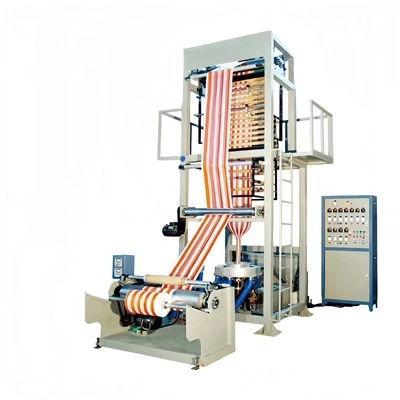
Let’s start with the basics, because a lot of misinformation floats around about what corona treatment actually does. When you extrude polymer resin into a thin film, the surface of that film is non-polar and extremely low energy. Polyethylene (LDPE, LLDPE), polypropylene (PP), and even polyester (PET) all have smooth, inert surfaces that act like a Teflon-coated countertop for inks, adhesives, or coatings—they just slide right off. On a slow film line, you might get away with slightly lower corona energy because the film sits under the treater’s electrodes for a few extra seconds. But on a high-speed line, where the film moves at 80 to 180 meters per minute, that contact time shrinks dramatically. That’s where the corona treater’s real role kicks in: it doesn’t just raise surface energy—it does so uniformly, quickly, and consistently, even as the line ramps up and down to meet production demand.
I’ve seen this play out time and again. Last year, a food packaging client I’ve worked with for seven years installed a lower-tier corona treater on a new 150 mpm high-speed line, just to save a few thousand dollars upfront. For the first two weeks, they ran it at 120 mpm, and it worked fine. But when they tried to hit their target of 150 mpm to fulfill a holiday packaging order, adhesion failures spiked. Their flexo printer was reporting a 12% defect rate, which meant they were scrapping 1 out of every 8 rolls of film. The issue? The treater’s electrode gap was too wide, so at higher speeds, the corona discharge was uneven—some areas of the film got enough energy to raise surface energy to the 38 to 42 mN/m range required for food-grade inks, and some didn’t. The film surface itself isn’t perfectly uniform either; slight variations in resin melt temperature, extrusion pressure, or line tension mean that some parts of the film respond differently to energy. A quality corona treater accounts for that variation, adjusting discharge power in real time to keep surface energy consistent across the entire width of the film, even at high speeds.
That consistency isn’t just about reducing defects. It’s about throughput. On a high-speed line, every second matters. If your treater isn’t delivering uniform energy, you can’t run the line at its maximum speed without risking downstream issues. A client in agricultural film production came to me last quarter because their line was stuck at 110 mpm, even though their machine was rated for 160 mpm. The culprit was their old treater: it couldn’t ramp power fast enough when they increased line speed, so they were forced to slow down to avoid adhesion failures in their laminating process. Once we upgraded their treater, they were able to run at 155 mpm consistently, which increased their monthly output by 27%—no new equipment, no extra labor, just optimizing the core process that already existed. That’s the kind of impact a properly sized, high-performance corona treater has on high-speed lines.
Another often-overlooked role of the corona treater on high-speed lines is surface control without damaging the film. At high speeds, the film is stretched thin as it’s blown through the die, and excessive or uneven corona energy can cause surface degradation—pitting, micro-cracks, or even chain scission in the polymer. That not only ruins adhesion but also weakens the film, leading to breaks in the blown film bubble, which are costly to fix. I’ve seen a client in flexible packaging lose an entire shift’s worth of film because their treater was set too high; the discharge was so intense that it burned tiny holes in the film, causing the bubble to collapse. A good corona treater balances energy delivery: it applies just enough to raise surface energy to the required level, but not so much that it compromises the film’s mechanical properties. On high-speed lines, where any film break can cost $10,000 or more in lost production and scrap, that balance isn’t a nice-to-have—it’s non-negotiable.
Temperature and humidity also play a big role here, and a lot of treaters don’t account for that on high-speed lines. If you’re running a line in a facility with high humidity, the corona discharge can be inconsistent because moisture in the air absorbs energy. In dry environments, static buildup on the film can disrupt the discharge, leading to uneven treatment. A quality treater for high-speed lines includes features like ionizers to neutralize static and closed-loop power control systems that adjust for ambient conditions in real time. I worked with a pharmaceutical packaging client last year that operates in a low-humidity warehouse in the desert; their old treater would lose consistency every afternoon when the humidity dropped, causing adhesion defects. After upgrading to a treater with built-in humidity compensation, their defect rate dropped from 9% to less than 1%, and they were able to run their line at full speed 16 hours a day without stopping for adjustments.
Let’s also talk about maintenance, because that’s a big part of keeping high-speed lines running reliably. On a slow line, you can swap out electrodes or clean the treater between shifts without much downtime. But on a high-speed line, which often runs 20 hours a day, seven days a week, maintenance has to be fast and non-disruptive. Poorly designed treaters require full line shutdowns to replace parts, which can cost thousands of dollars in lost production. The right treater for high-speed lines has quick-change electrodes and easy-access power modules, so maintenance teams can swap out parts in 15 minutes or less, without taking the entire line offline. I’ve seen clients cut their monthly maintenance time for the treater by 70% just by switching to a design optimized for high-speed operation.
A common question I get from new clients is: “Do I need a fancy corona treater, or will a basic one work?” The answer depends on your line speed, your end product, and your output targets. If you’re running a slow line under 50 mpm for simple films, a basic treater might be enough. But for high-speed lines (80 mpm and up) producing films for printing, lamination, or food/medical contact, the treater can make or break your production goals. I can’t tell you how many times I’ve walked into a production facility where the line itself is top-of-the-line, but they skimped on the treater, and it’s holding them back. The biggest mistake I see is treating the treater as an afterthought; it’s actually one of the most critical components for high-speed film blowing, because it directly impacts quality, throughput, and profitability.
Let’s ground this in a real example, because numbers stick. A client that produces food packaging films was running a 120 mpm line with a basic treater. Their defect rate from poor adhesion was 8%, and they were only able to run 80% of their line’s maximum speed to avoid defects. Their annual production was 12 million pounds of film, with a defect-related scrap cost of $1.2 million a year. After upgrading to a high-performance treater optimized for 150 mpm, they reduced their defect rate to 1.5%, increased their average line speed to 140 mpm, and cut their scrap cost to $225,000 a year. That’s a swing of $975,000 in annual savings—all from a $25,000 treater investment. That’s not a trivial return, and it’s why I always emphasize that the treater is not a component to cut corners on.
Another role that’s become more important in the last few years is compatibility with new, sustainable resins. As more producers switch to recycled LDPE, bio-based polymers, or blends of traditional and sustainable resins, these materials often have lower surface energy than traditional virgin polymers. A basic treater might not be able to adjust its energy output enough to work with these new materials, especially at high speeds. The right treater for modern high-speed lines has adjustable power levels and uniform discharge capabilities that can adapt to a wide range of resins, so producers can switch between materials without adjusting their setup. That flexibility is key for clients who want to pivot to sustainable products without investing in new equipment every time the resin mix changes.
At the end of the day, my team and I don’t just sell high-speed film blowing machines—we sell solutions for production teams that need to run lines efficiently, consistently, and profitably. The corona treater is a big part of that, because it’s the hidden workhorse that makes downstream processes work. It’s not something you can see easily, tucked away at the end of the line, but its impact ripples through every roll of film you produce. If you’re running a high-speed line and you’re dealing with adhesion defects, lost throughput, or unexpected downtime, the corona treater is almost always the place to start troubleshooting.
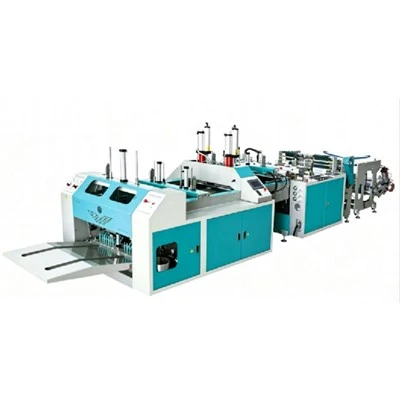
I’ve worked in this industry long enough to know that even the most well-built line will underperform if its auxiliary components aren’t matched to its speed and purpose. The treater isn’t just a piece of equipment—it’s a critical control point that ensures every inch of film leaving your line meets the quality standards your customers demand, and that your bottom line stays healthy. If you’re looking to optimize your high-speed film blowing line, or if you’re curious about how a properly sized, performance-optimized corona treater can move your production forward, don’t hesitate to reach out to our team to discuss your specific needs.
ABC Three Layer Film Blowing Machine References
- Brennan, J. (2018). Surface modification of polymer films for adhesion applications. Journal of Plastic Film & Sheeting, 34(2), 123-145.
- Gupta, S. (2020). High-speed blown film line process controls: Minimizing defects and maximizing throughput. Polymer Engineering & Science, 60(9), 2112-2121.
- Rader, C. (2019). Corona discharge treatment for polyolefin films: Energy dosage and uniformity requirements. Journal of Adhesion Science and Technology, 33(15), 1678-1695.
- American Society for Testing and Materials (ASTM). (2021). Standard test method for surface wettability of thin films by dyne pen method (ASTM D2578-21). ASTM International.
- Zhang, L. (2022). Sustainable polymer blends for blown film: Surface energy modification challenges and solutions. Journal of Renewable Materials, 10(4), 987-1002.
Ruian Jianhao Precision Machinery Co., Ltd.
As one of the most professional high-speed film blowing machine manufacturers and suppliers in China, we’re featured by quality products and good price. Please rest assured to wholesale durable high-speed film blowing machine for sale here from our factory. Welcome to contact us for customized service and quotation.
Address: No. 8, Jianshe Road, Beiyu Village, Shangwang Street, Ruian City, Wenzhou City, Zhejiang Province
E-mail: 1832333027@qq.com
WebSite: https://www.jianhaomachinery.com/
