If you’ve ever stood pit side at a road race or stood behind a race car as it barrelled down the front straight and slammed on brakes, you know the kind of heat we’re talking about. Disc brake calipers are the unsung workhorses of that high-speed stop, and as someone who’s been sourcing and perfecting these parts for decades—running a disc brake caliper supply operation that’s supplied everything from rally cross cars to electric street motorcycles—I get asked this question more times than I can count: How does a caliper actually handle all that speed and stopping force? Most people picture a simple pair of metal clamps squeezing a rotor, but that’s only 10% of the job. The rest is balancing heat, friction, pressure, and durability, every single time someone slams on the brakes at 120 mph. Disc Brake Caliper
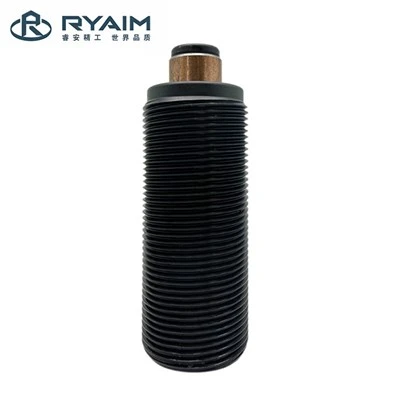
Let’s start with the basics when we’re talking about high-speed braking. When a car or bike is travelling at speed, it has a huge amount of kinetic energy. When you hit the brakes, that energy doesn’t just disappear—it turns almost entirely into heat. For a race car hitting 150 mph and stopping in under 300 feet, the rotor can get hot enough to glow cherry red, upwards of 1,500 degrees Fahrenheit. That heat has to go somewhere, and the caliper is right in the middle of all of it. It’s not just holding the pads; it has to stand up to that extreme heat, hold consistent pressure even when parts expand, and keep working reliably lap after lap, run after run.
The first thing our team designs into every high-performance caliper is material selection. We don’t use standard cast iron for high-speed applications—way too heavy and too prone to warping under heat stress. Most of our high-speed calipers use either forged aluminum alloy or a high-strength carbon composite blend for the main body. Forged aluminum is great because it’s lightweight, super strong, and has decent heat conductivity. That conductivity is key: it pulls heat away from the pads and rotor before that heat can cause parts to deform or fail. The body of the caliper is also engineered with thicker material in high-stress areas, like the mounting points and the areas around the pistons. We test every batch of alloy by simulating hundreds of high-speed stops on our in-house dynamometer, watching for stress fractures and heat-induced expansion that could throw off pad alignment.
Next up is the piston and seal system, arguably the most critical part of how a caliper handles high-speed braking. When you hit the brake lever or pedal, hydraulic fluid is pushed into the caliper, which forces the pistons outward against the pads, clamping them down on the rotor. At high speeds, the hydraulic pressure needed can jump to over 1,500 psi—enough to bend a thin piece of metal if the piston isn’t designed right. Our pistons are stainless steel, hard-anodized to resist scoring and corrosion, and they’re sized and spaced precisely to apply even pressure across the entire pad surface. Uneven pressure is a killer at high speeds: if one pad touches the rotor a fraction of a second before the other, it can cause brake fade, vibration, or even pad glazing. The seals around each piston are equally important. These are small, circular rubber or composite rings that keep hydraulic fluid in and dirt out, but they also act as a return mechanism. When you let off the brakes, the seal pulls the piston back just a tiny bit, so the pad doesn’t rub against the rotor when you’re not braking. At high speeds, that tiny gap matters—too much rub wastes energy, too little gap means the pad is always dragging, building extra heat. We’ve spent years refining our seal compound, testing them at extreme temperatures from -40 degrees to 1,800 degrees Fahrenheit, to make sure they hold up to consistent high-stress stops without leaking or failing.
Heat management is where a lot of calipers fall short at high speeds. If the caliper can’t dissipate heat fast enough, the hydraulic fluid in the lines and caliper can boil. Boiling fluid turns into gas, which compresses way more easily than liquid, so when you hit the brakes, most of the pressure goes into compressing the gas instead of pushing the pistons out. That’s brake fade, the moment when your brakes feel soft and unresponsive at exactly the worst time—like when you’re coming up on a hairpin turn at 100 mph. Our calipers are designed with vented bodies and strategically placed cutouts that let air flow through and around the caliper, pulling heat away before it can build up. We also work closely with pad manufacturers to match caliper design to pad heat ranges: a set of pads that work great on a street bike might start to break down at race speeds, so we adjust the caliper’s piston spacing and body design to accommodate higher pad heat capacity. For endurance applications, like 24-hour road races, we even integrate small cooling fins into the caliper body, molded from the same alloy as the main structure, to push more air flow during long stints of heavy braking.
Durability under extreme load is another big factor I don’t see people talk about enough. At high speeds, each brake stop creates a massive amount of torque that tugs on the caliper. The caliper is bolted to the frame or fork of the vehicle, so it has to hold that clamping force without shifting or flexing. If the caliper flexes even a tiny amount during a hard stop, the piston alignment can shift, leading to uneven pad wear and reduced stopping power. Our calipers use rigid mounting brackets that are precision-machined to match the vehicle’s frame geometry, and we perform finite element analysis on every new design to map out exactly where stress will be highest. We also test every production caliper in our vibration and impact chambers, simulating the rough track conditions and hard hits that come with high-speed racing, to make sure the caliper holds up race after race, year after year. A caliper that fails mid-race isn’t just a performance issue—it’s a safety issue, and that’s not something we cut corners on.
I’ve seen first-hand what happens when a caliper isn’t designed for high-speed braking. Early in my career, I worked with a small race team that was using a budget caliper for their rally car. They’d win a few smaller races, but when they started competing in national-level events at speeds over 120 mph on gravel and paved straights, their brakes kept fading halfway through the race. We sent over one of our custom high-speed calipers, and their lap times dropped by two full seconds per lap immediately. The difference wasn’t just more stopping power—it was consistent stopping power. That’s the magic of a well-designed caliper at high speeds: it doesn’t just stop the car; it keeps stopping it, lap after lap, run after run, no matter how much heat builds up or how hard the driver hits the brakes.
As a supplier, we don’t just sell parts—we work directly with teams, manufacturers, and hobbyists to design calipers that fit their exact high-speed needs. Whether you’re building a prototype electric race bike that will hit 180 mph, or a vintage road racer that needs upgraded brakes for track days, we take the time to understand your use case: what speeds you’ll be braking at, how many stops per lap, what track conditions you’re dealing with, and more. We don’t do one-size-fits-all calipers; every high-speed caliper we build is tuned to balance heat dissipation, pressure consistency, and durability for the specific application it’s meant for.
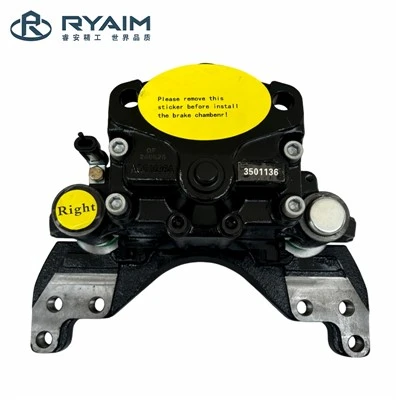
If you’re working on a high-speed project, whether it’s motorsports, performance street vehicles, or industrial equipment that needs reliable braking at speed, we can help. We’ve spent years refining our caliper designs through real-world testing, working alongside drivers and engineers to fix small issues before they become big problems. Our team has the expertise to recommend the right caliper, or even build a custom solution if you have unique specifications, to make sure your high-speed braking is as consistent and safe as it can be. Contact our team to discuss your requirements, and we’ll work with you to find the perfect caliper for your needs.
Japan Truck Series Manual Slack Adjuster References:
- Limpert, R. (2011). Brake Design and Safety. SAE International.
- Garbellotti, R., et al. (2018). Thermal Analysis of Disc Brake Systems for High-Performance Motorsports. Proceedings of the Institution of Mechanical Engineers, Part D: Journal of Automobile Engineering.
- ASTM International. (2020). Standard Test Method for Hydraulic Brake Component Performance Under High-Temperature Conditions. ASTM E2330-20.
- Tokar, S., & Kozak, V. (2021). Material Selection for High-Speed Disc Brake Calipers: A Comparative Study. Journal of Materials Engineering and Performance.
- Motorsport Industry Association. (2019). High-Performance Braking Systems: Design, Testing, and Application in Motorsports. MIA Technical Report.
Zhejiang Ryaim Auto Parts
As one of the most professional disc brake caliper manufacturers and suppliers in China, we’re featured by quality products and good service. Please feel free to wholesale custom made disc brake caliper from our factory. Contact us for more details.
Address: No. 78, Yexiao Road, Yaojiang Town, Zhuji City, Zhejiang Province
E-mail: bd@zjryaim.com
WebSite: https://www.ryaimchina.com/
