When it comes to the storage of bulk materials, silos play an indispensable role across a wide range of industries. As a seasoned silo supplier, I’ve encountered numerous inquiries regarding the capacity of a typical silo. In this blog, I’ll delve into the factors that determine silo capacity, explore different types of silos and their typical capacities, and provide insights that can help you make informed decisions when choosing the right silo for your needs. Silo

Factors Affecting Silo Capacity
The capacity of a silo is not a one – size – fits – all metric. It is influenced by several key factors:
1. Dimensions
The most obvious factor is the physical size of the silo. The height and diameter of a silo have a direct impact on its volume. The volume of a cylindrical silo, which is one of the most common shapes, can be calculated using the formula (V=\pi r^{2}h), where (r) is the radius of the base and (h) is the height. For example, a silo with a larger diameter and greater height will have a significantly larger capacity compared to a smaller one.
2. Shape
Silos come in various shapes, including cylindrical, rectangular, and conical. Cylindrical silos are popular due to their structural stability and efficient use of space. Rectangular silos are often used in situations where space utilization needs to be optimized, especially in industrial settings with limited floor space. Conical silos are typically used for storing materials that need to flow out easily, such as grains or powders. Each shape has its own advantages and disadvantages in terms of capacity and material handling.
3. Material Density
The density of the material to be stored also affects the effective capacity of a silo. Different materials have different densities. For instance, wheat has a density of around 750 kg/m³, while cement has a density of approximately 1440 kg/m³. A silo that can hold 100 cubic meters of wheat will hold a different mass of cement, even though the volume remains the same.
4. Structural Design
The structural design of a silo can impact its capacity. Reinforced silos can withstand higher loads, allowing for greater storage capacity. Additionally, the design of the silo’s roof and base can affect how much material can be safely stored. For example, a well – designed roof can prevent material from being exposed to the elements, while a stable base ensures the silo remains upright and can support the weight of the stored material.
Types of Silos and Their Typical Capacities
1. Agricultural Silos
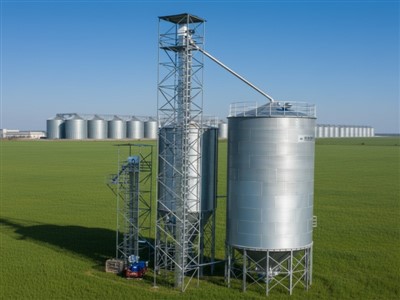
Agricultural silos are used primarily for storing grains, such as corn, wheat, and soybeans. They come in a variety of sizes, from small farm – scale silos to large commercial ones.
- Small Farm Silos: These are typically used by small – scale farmers. They can have capacities ranging from 10 to 50 cubic meters. These silos are often made of metal or concrete and are designed to be relatively easy to install and maintain.
- Medium – sized Agricultural Silos: Medium – sized silos, which are commonly found on larger farms or in local grain storage facilities, can have capacities between 50 and 500 cubic meters. They are usually made of steel and are designed to withstand the rigors of agricultural use.
- Large Commercial Agricultural Silos: These silos are used in large – scale grain storage and processing facilities. They can have capacities of over 500 cubic meters, with some reaching several thousand cubic meters. These silos are often part of a larger storage complex and are designed for efficient loading and unloading of large quantities of grain.
2. Industrial Silos
Industrial silos are used for storing a wide range of materials, including cement, coal, and chemicals.
- Cement Silos: Cement silos are crucial in the construction industry. They typically have capacities ranging from 50 to 1000 cubic meters. The capacity is determined by the size of the construction project and the demand for cement. Larger construction sites may require multiple silos or a single large – capacity silo to ensure a continuous supply of cement.
- Coal Silos: Coal silos are used in power plants and industrial facilities. They can have capacities ranging from a few hundred to several thousand cubic meters. The capacity depends on the power plant’s consumption rate and the availability of coal supply.
- Chemical Silos: Chemical silos are designed to store various chemicals, such as fertilizers and industrial chemicals. Their capacities can vary widely, from small – scale silos with capacities of a few cubic meters to large – scale silos with capacities of over 1000 cubic meters. These silos need to be constructed with materials that are resistant to chemical corrosion.
Choosing the Right Silo Capacity
When choosing the right silo capacity for your needs, it’s important to consider the following:
1. Production and Consumption Rates
Understand your production or consumption rates of the material. If you have a high – volume production process, you’ll need a larger – capacity silo to ensure a continuous supply. On the other hand, if your consumption rate is low, a smaller silo may be sufficient.
2. Storage Duration
Consider how long you need to store the material. If you need to store materials for an extended period, you may need a larger silo to accommodate seasonal variations in supply and demand.
3. Future Expansion
Think about your future growth plans. If you anticipate an increase in production or consumption in the future, it may be wise to invest in a larger – capacity silo from the start to avoid the need for costly upgrades.
Conclusion
As a silo supplier, I understand the importance of choosing the right silo capacity for your specific needs. Whether you’re in the agricultural, industrial, or any other sector that requires bulk material storage, a well – chosen silo can significantly improve your operational efficiency and productivity.
Silo If you’re in the market for a silo and need help determining the right capacity for your application, I’m here to assist you. Our team of experts can provide detailed consultations, customized solutions, and high – quality silos that meet your requirements. Contact us today to start the conversation about your silo needs and take the first step towards efficient bulk material storage.
References
- "Handbook of Silo and Bunker Design" by Andrew W. Jenike.
- "Grain Storage and Handling" published by the American Society of Agricultural and Biological Engineers.
- "Industrial Silo Design and Construction" by various industry experts in the field of bulk material storage.
Henan Oumu Intelligent Storage Equipment Co., Ltd.
As one of the most professional silo manufacturers and suppliers in China, we’re featured by quality products and good service. Please rest assured to buy customized silo made in China here from our factory. For quotation, contact us now.
Address: No. 681, Xinzhong Avenue, Hongqi District, Xinxiang City, Henan Province
E-mail: luna@oumu-silo.com
WebSite: https://www.oumu-silo.com/
