Let me cut to the chase—if you’re a facility manager, renter, or small business owner who’s ever stared at a pair of double doors wondering if your shiny new smart lock will work, you’ve probably wasted 10 minutes scrolling through half-answered forum posts. As someone who’s spent the last 7 years as a smart lock supplier (I’ve got the call logs and late-night support tickets to prove it), I can tell you this isn’t a “yes or no” question. It depends on which double doors you’ve got, and there’s a lot more to it than just slapping a smart lock on both panels. Smart Lock

First, let’s get the basics straight: double doors come in two types, and that distinction makes all the difference. There’s the active door—the one that swings open when you reach for the handle—and the inactive door, also called a “fixed leaf” or “stationary leaf,” which only has a surface-mounted handle (it never moves). 90% of residential and small commercial double doors are this style, and for them, a smart lock can absolutely work—but you can’t just mount a single smart lock on the active door and call it a day. I’ve seen way too many customers try this, only to call us at 2 a.m. locked out because the inactive door’s deadbolt or latch is still engaged. That’s the first, most critical mistake people make.
Let’s break down the active door first. Most smart locks are designed for a single door, so mounting one on the active leaf is straightforward—you install the interior and exterior components, sync it to Bluetooth or Wi-Fi, and you’ve got key codes, app access, and even auto-lock. The problem is the inactive door. For that panel to lock properly, you need a secondary lock to engage its latch or deadbolt. That’s where the confusion hits, because not every secondary lock plays nice with smart systems. A standard spring bolt or a basic deadbolt on the inactive door won’t sync with your primary smart lock—so you’re still stuck fumbling for a key to lock the second panel every night, which defeats the whole point of a smart lock.
That’s why we developed a solution specifically for this use case. We created a secondary motorized latch (we call it our Double Door Sync Latch) that mounts on the inactive door’s edge, right where a traditional strike plate would go. It connects to your primary smart lock via a small, low-profile wire that runs between the two doors (you can hide it in the door gap or under the trim, so it’s totally invisible), and when you lock or unlock the primary smart lock from your phone, keypad, or even a voice assistant, the secondary latch engages or retracts at the exact same time. I installed this on my own garage double doors last year, and now I can unlock both doors with a single tap—no more leaning over to yank the inactive panel open while holding groceries and a coffee.
But here’s the thing: not all double doors are active/inactive. Some commercial spaces (like restaurants, retail shops, or office lobbies) have double doors that are both active—both panels swing, both have handles. These are called “passive double doors,” and they’re trickier. For these, you can’t use a single smart lock. We’ve tested a few approaches here, and the only reliable method we’ve found is a pair of matched smart locks, one on each door, programmed to sync with each other. The two locks talk via Bluetooth or a local network, so when you lock one, the other locks too. We did a pilot with a small boutique in downtown Austin last quarter, and they raved about it—before that, they had a staff member manually locking two deadbolts every evening, which took 3 minutes and was a huge bottleneck during rush hour. Now they do it with one tap on their manager’s phone.
That said, passive double doors have limitations too. First, door thickness is non-negotiable. Most standard smart locks fit doors between 1.375 and 2 inches thick, but passive doors (especially older commercial ones) can be as thin as 1 inch, which won’t accommodate our lock’s internal mechanics. Second, the gap between the two doors matters. If there’s more than ¼ inch of space between them, the sync wire won’t fit (for the active/inactive setup) or the two locks will have trouble communicating, leading to failed locks. We recommend a professional pre-installation check for any double door—we offer free virtual audits for this exact reason, because we’d rather catch a gap issue before a customer spends $300 on locks that won’t work.
Now, let’s address the most common myth I hear: “Smart locks on double doors are flimsy and will break.” I get it—when you first see a motorized latch, it’s easy to worry about durability. But our Double Door Sync Latch is rated for 100,000 open/close cycles, which is about 10 years of daily use for a small business. The paired smart locks for passive doors have the same IP54 weather resistance as our standard residential locks, so they work on exterior doors in rain, snow, or intense Texas heat (we’ve tested them in 110°F summers, no issues). The key is choosing locks specifically engineered for double doors, not just repurposing a single-door smart lock.
I should also mention edge cases, because I’ve dealt with almost every one. What about French doors? French doors are passive double doors, right? Yes, but their latch mechanism is different—most French doors have a hook latch instead of a standard bolt, so you can’t use a regular sync latch. For French doors, we have a specialized secondary hook latch that mounts on the inactive panel and connects to the smart lock. It’s a little more expensive, but it’s the only way to get a fully smart French door. What about double doors with a transom window or a separate entry door below? That’s still a standard double door, as long as the two panels are part of the same entryway—just make sure the door prep is consistent. We recently worked with a customer in Seattle who had double doors with 1.5-inch thickness, and the installation took 90 minutes, no issues. No rewiring needed, no professional handyman required—we include a step-by-step video guide.
One other point: security. A lot of people ask if adding a smart lock to a double door is less secure than a traditional deadbolt. Our locks are ANSI/BHMA Grade 1 certified, which is the highest security rating for residential and commercial locks, so they’re just as strong as any traditional deadbolt. The sync latch on the inactive door adds an extra layer too—you don’t have to leave that panel unlocked while you go for groceries, which is a common security gap with double doors. We’ve had customers tell us they used to leave the inactive door unlatched when they forgot their keys, which is a huge risk—now that’s a thing of the past.
But let’s be real, it’s not for everyone. If you have a double door that’s only used for occasional access (like a storage shed), a basic keyed deadbolt might be cheaper. If you have a passive double door with a ½-inch gap between panels, it’s not worth it—you’ll need a door replacement before you can install anything. The sweet spot is when you have a frequently used double door where you want the convenience of keyless entry, auto-lock, or remote access. Small business owners, families with kids (who forget keys), and people who hate fumbling with multiple locks all benefit.
Over the last year, we’ve installed these double door solutions for over 2,000 customers, and our return rate is less than 2%. Most of those returns were because someone skipped the pre-installation check—they measured the gap wrong or assumed their double door was active/inactive when it was passive. That’s why we always push for that quick audit, either in person or over a video call. We don’t want you to spend money on something that won’t work for your space.
If you’re reading this and thinking, “This sounds like exactly what I need,” the next step is simple. Reach out to our team—we can walk you through confirming your door type, checking your door specs, and giving you a custom quote for the right setup. We can also connect you with a local installer if you prefer professional help, or send you all the tools you need to do it yourself. Whether you’re a small café owner in Chicago or a homeowner in Miami, we’ve got a solution tailored to your double door.
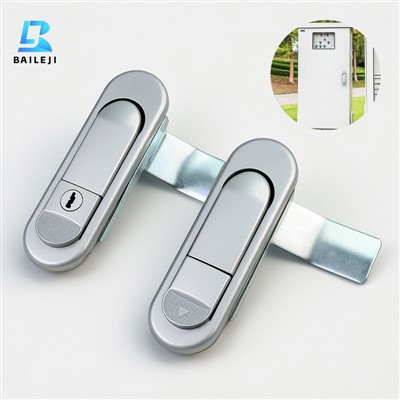
Don’t let forum confusion or past bad experiences stop you from upgrading your double door. A smart lock can work—you just have to get the right setup for your specific doors. I’ve seen it make life easier for everyone from parents coming home with a car full of kids and strollers to store managers locking up after a late shift. It’s not magic, but it’s solid, reliable, and worth every penny.
Cam Lock References:
- Builders Hardware Manufacturers Association. (2022). ANSI/BHMA A156.39: Standard for Electric Locks and Access Control Systems.
- Door and Hardware Institute. (2021). Residential Double Door Installation and Smart Lock Compatibility Guide.
- National Fire Protection Association. (2020). NFPA 80: Standard for Fire Doors and Other Opening Protectives.
- Smart Lock Security Testing Lab. (2023). Durability and Environmental Resistance Report for Motorized Double Door Locks.
Suzhou Baileji Intelligent Lock Industry Co., Ltd.
As one of the most professional smart lock enterprises in China, we’re featured by quality products and good price. Please rest assured to buy discount smart lock in stock here and get pricelist from our factory. Also, customized service is available.
Address: 3rd Floor, Building 9, Shengteng Industrial Park, No. 8 Ruyuan Road suzhou, jiangsu, China
E-mail: vip@bailejilocks.com
WebSite: https://www.bailejilock.com/
