Hey everyone, it’s Jake from [Your Diesel Engine Supplier Name] here—today we’re diving into something that’s been a total game-changer for diesel engines over the last couple decades: EGR, aka Exhaust Gas Recirculation. If you’re in the diesel game, you’ve probably heard the term thrown around at trade shows, on job sites, or even while scrolling through engine forums, but if you’re new to the scene, or just want to cut through the jargon and get the real scoop on how this works, why it matters, and why it’s non-negotiable for modern diesel builds, you’re in the right place. I’ve been selling and servicing diesel engines for 12 years now, so I’m gonna keep this real—no textbook fluff, just what I see day-to-day when we’re talking to fleets, truck operators, and heavy machinery guys. Diesel Engine

First, let’s start with the basics: when a diesel engine runs, it burns fuel (diesel) mixed with air to create power. That combustion process is hot—like, really hot. Like, hot enough to generate the energy that turns your truck wheels, moves a bulldozer blade, or powers a generator. But here’s the problem with all that heat: when fuel burns at super high temperatures (above 2,500°F, for those keeping track), nitrogen and oxygen from the air don’t just mix nicely—they react to form NOx, or nitrogen oxides. That’s the bad stuff that contributes to smog, acid rain, and all that environmental stuff we all need to care about if we want to keep our jobs and our planet healthy. Back in the day, diesel engines would pump out way more NOx than the EPA (and other global emissions boards) allowed, so we needed a fix. Enter EGR.
So what is EGR, exactly? It’s a system that takes a portion of the engine’s own exhaust gas (the stuff that’s already been burned, with all that NOx we don’t want) and routes it back into the engine’s intake manifold, where it mixes with the fresh air and fuel that’s about to burn. Wait, hold up—why would we put burned gas back into an engine? Let’s break that down. Exhaust gas is mostly inert, right? It’s got leftover CO2, water vapor, and other stuff that doesn’t help combustion. When you mix that inert gas with fresh air, it lowers the overall amount of oxygen in the combustion chamber. Less oxygen means the flame temperature drops—way down. Like, below that 2,500°F threshold where NOx forms. That’s the magic of EGR: it cools the burn, cuts NOx emissions, and helps diesels meet tight emissions standards without sacrificing too much power or fuel efficiency. It’s not perfect, but it’s the backbone of every diesel engine built since the mid-2000s, from pickup trucks to 18-wheelers to mining equipment.
Now, let’s talk about how EGR works in a diesel specifically, because it’s a little different from gasoline engines. Gas EGR is usually cooled too, but diesel EGR has to handle higher exhaust pressures and temperatures, right? On a typical modern diesel engine, you’ve got an EGR valve (that’s the control center—opens and closes to regulate how much exhaust gas gets recirculated), an EGR cooler (this is key, because if you just send hot exhaust gas back, it’s still too hot to cool the combustion enough), and sometimes an EGR filter to catch any soot that might clog the system. When the engine is idling or cruising at low power, the EGR valve opens wider—more exhaust gas goes back, less NOx. When you’re putting the foot down, like merging onto the highway or pulling a heavy load up a hill, the engine needs maximum power, so the EGR valve closes almost all the way—you don’t want inert gas messing with the combustion when you need every bit of that diesel burn for torque. That’s the balance we’re always tweaking, and it’s why modern diesels rely on a whole network of sensors (MAP sensors, O2 sensors, exhaust temperature sensors) to tell the ECU (engine control unit) exactly how much EGR to use at any given second.
But here’s the thing I always tell my customers: EGR is a workhorse, but it’s not invincible. We see so many engines come into our shop (or we get calls from fleets) with EGR-related issues that lead to downtime, which is the worst thing for anyone who depends on their diesel engine to make money. Why? Because exhaust gas has soot, right? That tiny, fine carbon particle that comes from incomplete combustion. Over time, that soot builds up in the EGR cooler, the valve, and the intake manifold. If that happens, the EGR can’t flow properly—so you get too little EGR, which means high NOx, or too much EGR, which means less power, bad fuel mileage, even rough idling. I’ve seen pickup trucks that only did city driving (short trips, so the EGR never gets hot enough to burn off the soot) get clogged EGR systems in as little as 50,000 miles, while long-haul trucks that drive cross-country at steady highway speeds might go 200,000 miles before needing a clean. That’s why regular maintenance is key—we always tell our customers to check their EGR system during routine oil changes, and if they notice symptoms like reduced power, black smoke, or the check engine light coming on, don’t wait. EGR issues only get worse, not better, on their own.
Another common question I get: “Is EGR bad for diesel engines long-term?” It’s not inherently bad, but it does add another system that can fail, and the extra soot and heat from EGR can put a little more stress on the engine if not maintained. That’s why when we design the diesel engines we supply, we build EGR systems to be durable—we use high-grade materials for the EGR cooler that can handle constant heat and soot, and we tune the ECU to adjust EGR flow without putting too much strain on other engine parts. We also pair EGR with other emissions systems (like DPF, which is diesel particulate filter, and SCR, selective catalytic reduction) because EGR alone can’t get us all the way to today’s strict emissions standards. It’s a team effort: EGR cuts NOx at the source, DPF catches soot, and SCR uses diesel exhaust fluid to break down any remaining NOx. But EGR is still the first line of defense, and without it, we couldn’t have the diesels we have today that are clean enough for cities, highways, and jobsites.
Let’s also bust a common myth I hear all the time: “Older diesels were better, they didn’t need EGR and they ran forever.” Yeah, older diesels were simple, but they pumped out way more NOx and soot—so much that in many places, you couldn’t even drive them in urban areas anymore. EGR is part of why modern diesels are 90% cleaner than they were 20 years ago, while still keeping that legendary diesel torque and fuel efficiency that people love. I’ve got a 2008 pickup with an early EGR system that I use for work—it’s got 280,000 miles on it, runs strong, and passes emissions every time. That’s because it’s maintained, same as any engine, not because EGR is some ticking time bomb.
Now, if you’re in the market for a new diesel engine, whether it’s for a truck, a tractor, a generator, or a piece of heavy equipment, you need to know that EGR is a core part of the package. Not all EGR systems are created equal, though. Cheap engines might use thinner EGR coolers that clog faster, or less precise valves that mess with performance. That’s where quality matters. When we build our diesel engines, we spend time tuning the EGR system to match the engine’s purpose—for a long-haul truck, we tune EGR for steady highway cruising to minimize fuel use and NOx, while for a construction engine that’s doing a lot of stop-and-go work, we adjust EGR flow to handle variable loads without clogging.
At the end of the day, EGR is just another piece of technology that helps diesels evolve to meet modern needs—cleaner, more reliable, and built to do the work you need them to do. It’s not perfect, but it’s a whole lot better than the alternative of pumping toxic exhaust into the air, and when maintained right, it’s going to keep your diesel engine running strong for years.
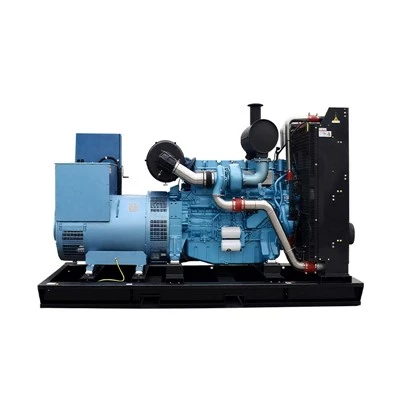
If you’re a fleet manager looking to upgrade your equipment, a truck owner needing a replacement engine, or someone who just wants to learn more about how EGR works with your specific diesel engine, feel free to reach out to our team. We’ve been in the diesel game for years, we know EGR inside and out, and we can help you find the right engine or service plan that fits your needs. Don’t let EGR issues derail your operations—let us help you keep your diesel running smooth.
Marine Generator Set Reference Sources:
- Diesel Technology Forum. (2022). Exhaust Gas Recirculation (EGR) in Modern Diesel Engines.
- U.S. Environmental Protection Agency. (2021). Heavy-Duty Diesel Engine Emissions Control Systems.
- Society of Automotive Engineers (SAE International). (2020). Performance and Durability of EGR Systems in Medium- and Heavy-Duty Applications.
- International Council on Clean Transportation. (2019). Evaluating EGR System Efficiency and Maintenance Requirements for Commercial Diesel Engines.
China Modo Investment Co., Ltd.
As one of the most professional diesel engine manufacturers and suppliers in China, our products have good reputation in the market. We warmly welcome you to wholesale advanced diesel engine in stock here from our factory. If you have any enquiry about cooperation, please feel free to email us.
Address: Boye Industrial Park,Baoding city,Hebei Province,China.
E-mail: sales@mstengine.com
WebSite: https://www.mst-engine.com/
