If you’ve ever walked into a large cosmetics warehouse, you might not have noticed the quiet, repetitive work that keeps thousands of lipsticks, serum bottles, and skincare jars moving from production lines to shipping pallets. For years, that work was done by human workers—standing for 12-hour shifts, lifting heavy cases, and making sure every pallet was stacked tightly enough to avoid damage during transit. But lately, I’ve been fielding more questions from cosmetics brand managers, production supervisors, and warehouse leads: can a palletizing robot actually fit into this delicate, detail-driven industry? As a palletizing robot supplier who’s spent the last 7 years walking alongside manufacturing teams, the short answer is yes—but it’s not a one-size-fits-all fix, and it takes understanding the unique needs of cosmetics to make it work. Palletizing Robot
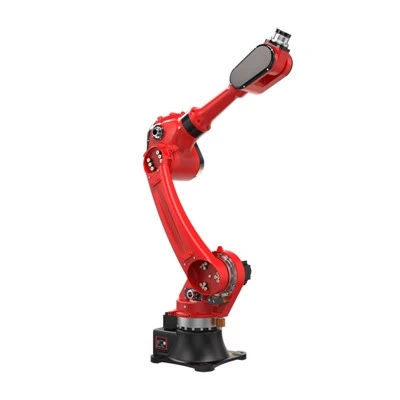
Let’s start with what makes the cosmetics industry different from the auto parts or grocery goods sectors where palletizing robots are most commonly used. Cosmetics products aren’t uniform. A lipstick case might be a hard plastic tube, a serum bottle could be a smooth glass cylinder, and a face cream jar might have a flimsy cardboard lid. Many brands also require specific packaging to protect high-value items: a 50ml bottle of hyaluronic acid serum might cost 10 times more than a standard grocery box, so a dropped or misaligned pallet can lead to thousands of dollars in losses. Hygiene is another huge factor—cosmetics are personal care products, so warehouses and production facilities need to avoid cross-contamination, residue, or even tiny particles that could end up on packaging. And unlike auto parts that run on continuous, 24-hour production, cosmetics often have shorter runs for limited-edition products, holiday collections, or new launches. That means any piece of equipment added to the line needs to switch between product types quickly, without long setup times.
For a long time, people assumed palletizing robots were too rough, too slow, or too inflexible for cosmetics. I remember a conversation two years ago with a small brand owner who tried a standard palletizing robot and had to abandon it after a month. The robot’s gripper was made of hard metal, and it kept denting the matte finish on their limited-edition lipstick tubes. It also took 45 minutes to reprogram for a new jar size, which ate into their already tight production window for a Black Friday launch. That story stuck with me because it’s exactly the kind of mistake suppliers make when they treat palletizing robots as a generic product, not a custom solution.
The good news is that modern palletizing robots have come a long way, and they’re built to address those exact pain points. Let’s break down how they align with cosmetics-specific needs. First, gripper technology—this is the make-or-break part for fragile cosmetic products. Unlike the old metal grippers, today’s robots can use soft-touch vacuum grippers with adjustable suction strength, or custom-designed mechanical grippers lined with food-grade, non-abrasive foam. I recently installed a system for a mid-sized skincare brand that packs 12 glass serum bottles per case. The robot’s gripper adjusts its suction power in real time: it uses a low, gentle pull for the 50ml bottles and a slightly stronger grip for smaller 10ml travel sizes, so there’s no chipped glass or scuffed labels. For brands that use flexible pouches or cardboard boxes, there are also bag grippers and edge grippers that don’t put pressure on the product itself.
Then there’s hygiene. Palletizing robots used in food and pharmaceuticals often have washdown-rated components—parts that can withstand high-pressure cleaning with sanitizers, which is exactly what cosmetics facilities need. A lot of cosmetics manufacturers require daily deep cleans to avoid any risk of cross-contamination between products, and standard industrial robots can’t handle that kind of moisture. The robots I supply have sealed electrical components, stainless steel exteriors, and coatings that resist chemicals, so they can be hosed down without breaking. We even worked with a natural beauty brand last year that needed to process organic ingredients, so we added a food-safe, non-toxic coating to the robot’s arms to make sure no residue would transfer to packaging.
Flexibility is another big win for cosmetics. As I mentioned earlier, cosmetics have frequent product changes, so a robot that can switch between 5, 10, or even 20 different product patterns in minutes is game-changing. Modern palletizing robots use teach pendants or software that lets operators input new pallet layouts and product dimensions without coding. That means a team can set up a pallet for lipsticks in the morning, switch to foundation bottles for an afternoon run, and then adjust to holiday-themed gift sets by the end of the day. For a brand that used to take 2 hours to reconfigure their line for a new product, that same task now takes 10 minutes—cutting down on production downtime and getting products to market faster.
But it’s not just about the robot itself. The workflow around palletizing also needs to be adjusted for cosmetics. A lot of warehouses think they can just plop a robot next to the production line and walk away, but that’s not how it works for fragile goods. For example, if a robot is stacking a case of jars, it needs to know if the next case has a heavier product, so it can adjust the stacking order to distribute weight evenly. If a case is slightly misaligned on the conveyor, the robot needs a vision system to detect that and correct its placement before picking up the product. That’s why we integrate vision cameras with every robot we install for cosmetics clients—so the robot can “see” the product before it picks it up, avoiding mistakes that would cause damage.
I also want to be honest about the limitations, because I don’t want to oversell this. Palletizing robots aren’t ideal for every small cosmetics brand. If you’re a brand that only produces 500 units a day, with 2 product lines, the cost of a robot might not be justified—human workers can handle that workload more cheaply. But for brands producing 5,000 units or more, with frequent product runs, the return on investment (ROI) usually pays for itself in 12 to 18 months. Let me give an example: a client of mine that makes 10 different face mask products used to have a team of 6 workers doing palletizing, with a 5% damage rate per run. After installing 2 palletizing robots, they cut their damage rate to less than 0.5%, and only needed 2 workers to oversee the robots—so they saved $80,000 a year in labor and reduced product waste by $25,000 a year. That’s a real number, not a sales pitch.
Another consideration is worker training. A lot of employees worry that robots will take their jobs, but in the cosmetics industry, palletizing robots are more of a tool than a replacement. The workers I’ve trained for these systems often move into roles as robot operators or line supervisors, because they’re the ones who know the products best. We keep training simple—most operators can learn the basics in a day, and advanced troubleshooting takes a week of hands-on practice. I always tell clients that the best teams are the ones where human workers and robots work together: humans handle the tasks that require attention to detail, like inspecting products for defects, and robots handle the repetitive, heavy lifting that causes fatigue.
Wait, let’s talk about one more thing that’s specific to cosmetics: sustainability. A lot of brands are switching to more sustainable packaging—lighter cardboard, recyclable plastic, or smaller boxes that use less material. Palletizing robots are actually really good at working with these lightweight, irregular packaging materials. Because they’re precise, they can stack products with less wasted space on a pallet, which means each shipping container holds more products, cutting down on transportation emissions. A client that switched to 20% lighter packaging after installing a robot saw a 10% reduction in their shipping costs and a 7% drop in their carbon footprint. That’s a big deal for brands that are trying to meet their sustainability goals.
I’ve also seen some common mistakes that brands make when they first look at palletizing robots. One is choosing a robot that’s too big—for a small production line, a compact, collaborative robot (cobot) might be a better fit than a full-size industrial robot. Cobots are smaller, can work right next to human workers without safety barriers, and are easier to move if a production line needs to be rearranged. Another mistake is not testing the robot with their actual products. I always recommend that clients send a sample of their packaging to our facility, so we can run a test palletizing run and show them how the robot handles it. We had a client last year who sent a sample of their luxury perfume boxes, and we found that the standard gripper would scratch the foil on the boxes—so we custom-made a soft foam gripper that worked perfectly. That test run saved them from wasting money on a robot that wouldn’t work for their products.
So, is a palletizing robot right for your cosmetics business? It depends on your production volume, product variety, and budget, but the answer is often yes—if you choose the right system for your specific needs. For the brands that have made the switch, the benefits are clear: less product damage, lower labor costs, faster turnaround for new products, and a safer workplace for employees who no longer have to lift heavy cases all day.
At the end of the day, palletizing robots aren’t just for big manufacturing plants. They’re adaptable, customizable, and designed to work with the unique challenges of the cosmetics industry. If you’re a cosmetics brand manager or production lead who’s been weighing whether to make the switch, I’d encourage you to reach out. We can help you assess your line, test your products, and find a palletizing solution that fits your needs without compromising the delicate, detail-driven work that makes your products stand out.

Contact us to discuss your specific production needs and explore a customized palletizing robot solution tailored for your cosmetics operation.
Palletizing Robot References
- International Society of Automation. "Hygienic Design for Industrial Equipment in Personal Care Manufacturing." 2022.
- Cosmetics and Toiletries Magazine. "Automation Trends in Global Cosmetics Warehousing." 2023.
- Robotics Industries Association. "Palletizing Robot Applications for Fragile Consumer Goods." 2021.
- Food and Drug Administration. "Good Manufacturing Practices for Cosmetic Facilities." 2022.
- European Commission. "Sustainable Packaging Guidelines for Cosmetic Brands." 2023.
Robotic Technology (GD) Co., Ltd.
Robotic Technology (GD) Co., Ltd. is one of the most experienced palletizing robot manufacturers and suppliers in China, also supports custom service and one year warranty. Please feel free to wholesale CE approved palletizing robot for sale here from our factory. Contact us for quotation.
Address: Room 102, No. 30,Hengfeng 2nd Road,Daguo, Changping Town, Dongguan City,Guangdong,China
E-mail: admin@iroboticplus.com
WebSite: https://www.rb-tic.com/
