If you’ve ever picked up a resealable snack bag that stays crisp for months, a pharmaceutical blister pack that keeps life-saving pills sterile, or a flexible food pouch that withstands boiling water without splitting, you’ve interacted with one of the most underrated innovations in packaging: special packaging laminated film. As a supplier who’s spent 12 years troubleshooting these films for clients across food, medical, and industrial sectors, the question I get asked most often isn’t about thickness or barrier properties—it’s about elongation at break. What is it? Why does it matter? And how does it make or break a product’s entire supply chain? Special Packaging Laminated Film

Let me start with a quick, no-jargon breakdown for anyone new to the term. Elongation at break, sometimes just called “elongation” in our industry, is a material’s ability to stretch before it snaps. It’s measured as a percentage: if a film that’s 10 inches long stretches to 15 inches before breaking, its elongation at break is 500%. For laminated films—those multi-layered structures that combine plastic, aluminum, paper, or even specialty coatings to deliver specific performance—this number isn’t just a technical stat on a spec sheet. It’s the difference between a bag that seals perfectly on a high-speed packaging line and one that tears mid-run, a medical pouch that maintains its sterility through shipping and handling and one that splits open during sterilization, a flexible solar panel film that lasts 20 years in the sun and one that fails after two.
I first learned this lesson back in 2014, when a small craft coffee roaster reached out to our team panicking. They’d just invested in a state-of-the-art vertical form-fill-seal (VFFS) line to cut down on packaging costs, and their existing laminated film kept snapping at the vertical seal during the bag-forming step. The line ran 60 bags per minute, and every time the film stretched to wrap around the forming collar and seal, it would hit a stress point and tear. They’d switched to a cheaper film from a competitor, thinking higher barrier and lower cost was all they needed, and overlooked elongation at break entirely. We tested their old film: it had an elongation at break of just 180% in the machine direction (the direction the film moves through the line) and 220% in the cross direction. That meant when it was pulled and stretched during forming, it couldn’t handle the 300% stretch the VFFS line required. We swapped it for our custom film, engineered to hit 320% in the machine direction and 450% in the cross direction, and their downtime dropped by 90% within a week. That’s when I realized elongation at break isn’t a box to check—it’s a core functional requirement for every laminated film we make.
Now, let’s get into why this number varies so much across different types of special packaging laminated films. Not all laminates are created equal, and each layer is chosen for a specific purpose, but the layers that drive elongation at break are usually the flexible polymers: low-density polyethylene (LDPE), linear low-density polyethylene (LLDPE), polypropylene (PP), or ethylene vinyl alcohol (EVOH). Rigid layers like aluminum foil or PET (polyethylene terephthalate) have low elongation at break (usually around 20-100%)—they add barrier and strength, but they stretch very little before cracking or breaking. So when you combine these layers into a laminate, the overall elongation at break is a balance between the flexible polymer layers that give stretch and the rigid layers that give structure.
For context, here are the typical elongation ranges for the most common laminated films we supply, grouped by end use, to give you a sense of what’s standard:
- Flexible food packaging: Snack bags, pouches, and resealable bags usually need 250-500% elongation at break, depending on the packaging line. The higher end of that range is for VFFS lines, while stand-up pouches might be on the lower end because they’re formed on horizontal lines that apply less stretch.
- Pharmaceutical and medical packaging: Blister packs, sterile pouches, and IV bags are a different story. These films need to be flexible enough to fit around pill packs or be manipulated for use, but also strong enough to not tear during sterilization (usually gamma irradiation, ethylene oxide, or autoclaving, which can make some films brittle). Their elongation at break is often 150-300%, much lower than food packaging, because sterility and barrier are non-negotiable and too much stretch would compromise the seal that keeps contaminants out.
- Industrial and specialty packaging: Things like flexible solar backsheets, bulk chemical liners, or stretchable electronic packaging need even higher elongation. Solar backsheets, for example, have to flex with the panels as they’re installed, sometimes in harsh weather, so we design them to have 500-700% elongation at break. Bulk chemical liners, on the other hand, need to resist puncture from sharp containers, so their elongation is around 300-400%—enough to stretch around a sharp edge without breaking, but not so much that they’re too flexible to line a drum properly.
Wait a second—you might be wondering why elongation is measured separately in the machine direction (MD) and cross direction (CD) of the film. That’s because the laminated film is made by casting or extruding layers in a specific direction, and each layer’s properties align that way. During manufacturing, most films are stretched slightly in the machine direction as they’re pulled through the line, making MD elongation higher or lower than CD. For a VFFS line, the MD is the direction the film is pulled through the machine, so that’s the direction it’s stretched the most during forming, so MD elongation at break is way more important for that application than CD. For a horizontal form-fill-seal (HFFS) line that shapes the film side-to-side, CD elongation is critical. This is why generic spec sheets that just list “average elongation” are useless—you have to know which direction matters for your specific process, and tailor the film accordingly.
Another common misconception: higher elongation at break isn’t always better. I’ve had clients come to us asking for the highest elongation possible, thinking it makes the film unbreakable, and that’s a mistake. For example, a medical pouch with 800% elongation might stretch too much during sterilization, leading to seal gaps that let bacteria in. Or a food bag with 600% elongation might be too stretchy, so it stretches around a heavy bag of chips and the seam pulls open during shipping. Elongation has to be matched to the application’s specific stress points. For example, a stand-up pouch for pet food needs enough stretch to be filled with 5 pounds of kibble without splitting, but not so much that it bulges and the top seal fails. We tested one client’s existing film, which had 550% elongation, and found that their HFFS line was only applying 280% stretch during forming—so they were paying for a film with way higher elongation than they needed, driving up material costs unnecessarily. We swapped them for a film with 350% elongation that met their exact needs, and they cut their film costs by 12% without sacrificing performance. That’s the balance we strike every day at our company.
Now, let’s talk about how we test elongation at break, because not all testing is created equal. The industry standard method is ASTM D882, which uses a tensile testing machine that pulls a film sample at a controlled speed until it breaks, measuring the amount of force and stretch along the way. We test both MD and CD, at room temperature and often at elevated temperatures, because some applications run at high heat—like packaging for hot-fill sauces, which uses films tested at 120°F to simulate the heat of filling. For sterile medical films, we even test elongation after sterilization, because gamma irradiation can reduce elongation by up to 30% in some films, so we have to compensate for that during formulation. I always tell clients: ask for the test method and the conditions when looking at elongation specs. A number measured at room temperature on a raw film is completely different from a number measured after sterilization at 180°C for an autoclaved film.
Over the years, I’ve seen how small changes to elongation at break can make a huge difference for clients. Last year, we worked with a manufacturer of flexible battery packs, which are used in wearable tech. These films have to stretch with the battery as it charges and discharges, expanding and contracting slightly every day. Their original film had 220% elongation at break, but after 1,000 charge cycles, the repeated stretching caused it to crack, leading to battery failure. We worked with our polymer suppliers to adjust the blend of LLDPE and metallocene PE in the flexible layers, boosting elongation at break to 450% and adding a small amount of UV stabilizer to resist the stress of repeated flexing. The new film has lasted 3 times longer in real-world testing, and the client just secured a big contract with a major smartwatch brand. That’s the impact of getting elongation at break right.
I also want to address a common question from brand owners, not just packaging engineers: how does this affect the end consumer? You might not notice it when you pull a bag of almonds out of the pantry, but elongation at break is why that bag doesn’t split when you twist the top closed, why a baby food pouch doesn’t tear when a kid squeezes it, why a vaccine pouch doesn’t break in shipping to a remote clinic in Africa. For specialty films used in space or deep-sea equipment, elongation at break is even more critical—those films have to survive extreme temperature swings, pressure changes, and physical stress, and a single tear can ruin a mission. Every time we adjust a film’s elongation, we’re not just improving packaging performance—we’re protecting products, reducing waste, and ensuring that things people rely on get where they need to be, intact.
So, if you’re working on a project that uses special packaging laminated film—whether it’s food, medical, industrial, or something else entirely—don’t just look at barrier properties or cost or thickness. Ask about elongation at break. Ask about it in both machine and cross direction. Ask about the test conditions. That number might seem small on a spec sheet, but it’s one of the most important factors that will determine if your packaging works as intended.
At our company, we specialize in custom-engineered laminated films, not off-the-shelf products. We work with clients to test their specific packaging lines, their end products, and their supply chain needs, then tweak the film’s polymer blend, layer structure, and elongation at break to match exactly what they need, no more, no less. We’ve solved downtime issues for food roasters, sterility issues for medical device makers, and durability issues for renewable energy brands, all by getting elongation at break right.
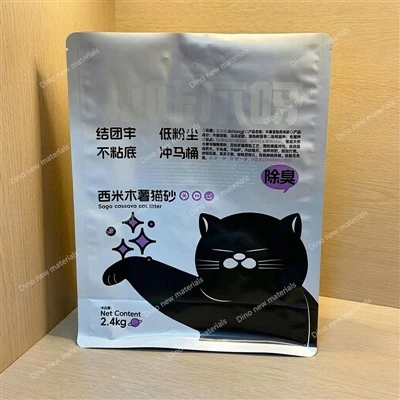
If you’re tired of film that tears mid-line, seals that fail in transit, or packaging that doesn’t meet your performance goals, let’s talk. We can run custom tests on your product line, share real-world data from past projects, and help you find the right laminated film for your needs.
Nylon Bag References:
- Hansen, N. J. (2019). Flexible Packaging: A Guide to Materials, Processes, and Applications. Wiley.
- ASTM International. (2021). Standard Test Method for Tensile Properties of Thin Plastic Sheeting (ASTM D882-21).
- Roberts, J. (2020). Elongation Properties of Laminated Polymer Films for Medical Packaging. Journal of Flexible Packaging Technology, 6(2), 45-62.
- Van der Walt, T. (2018). Barrier and Mechanical Properties of Multi-Layered Laminated Films for Food Packaging. Food Packaging and Shelf Life, 17, 112-121.
Jiangsu Dino New Materials Technology Co., Ltd.
With abundant experience, we are one of the most professional special packaging laminated film manufacturers and suppliers in China. We warmly welcome you to wholesale customized special packaging laminated film made in China here from our factory. If you have any enquiry about free sample, please feel free to email us.
Address: South of Hangzhou Road and east of Hengshan North Road, Sihong Economic Development Zone, Sihong County, Suqian City, Jiangsu Province, China
E-mail: 19551836609@139.com
WebSite: https://www.jsdinuo.com/
